
FHFA believes Fannie and Freddie using this model will help rural borrowers and will reduce closing costs
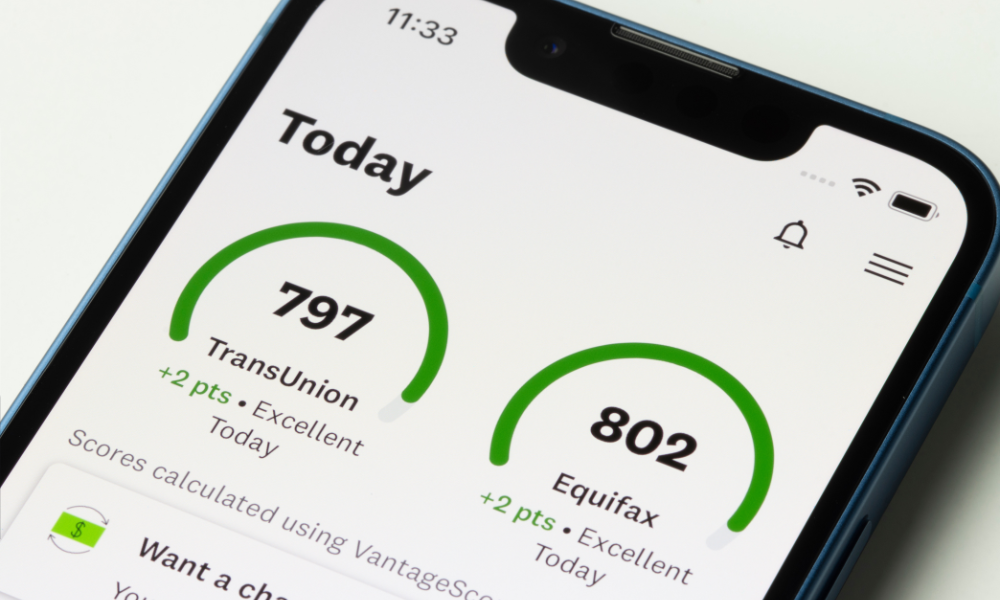
The director of the Federal Housing Finance Agency (FHFA) has been promising reform regarding the increasing cost of credit checks for mortgages. On Tuesday, he announced that Fannie Mae and Freddie Mac will allow lenders to use the VantageScore 4.0 and retain Tri-Merge scores.
According to VantageScore’s website, the scoring method was introduced by the three major credit bureaus — Equifax, Experian, and TransUnion — in 2017. It is a system that uses machine learning to predict future credit default.
The announcement was made by William J. Pulte, director of the FHFA, on his X account.
“Effective today, to increase competition to the Credit Score Ecosystem and consistent with President Trump’s landslide mandate to lower costs, Fannie and Freddie will ALLOW lenders to use Vantage 4.0 Score with no current requirement to build new infrastructure (stays Tri Merge),” Pulte posted on X.
VantageScore claims to be the first credit scoring model to incorporate rent payment data when present in the consumer credit file, eliminate paid collections and all medical collections, provide transparency on the inputs that make up the credit score, and offer commercially available credit scores to customers at no cost.
“We are expanding credit access to millions of forgotten Americans — people who live in rural areas, renters who pay their rent on time every month — and bringing down closing costs,” Pulte said.
Better for borrowers with limited credit
One of the major advantages of VantageScore is its willingness to assign a credit score to borrowers with a limited credit history. The company’s website said that 21% of millennials have “thin files,” making it hard for them to be scored by traditional means.
The company stated that its system can score borrowers who are new to credit, use credit infrequently, or have only external collections, public records, and inquiries on their credit file.
The traditional Fair Isaac Corporation (FICO) score typically required six months of credit before a borrower would be assigned a score. Because of this, VantageScore believes its 4.0 model can score “approximately 33 million more consumers who typically are not scored by conventional models without relaxing standards.”
With all three major credit bureaus now receiving full reports, Jim Nabors of NAMB asks if a tri-merge is still necessary, especially as costs skyrocket. This impacts even those who don't qualify for a loan. https://t.co/zVfjwoQDac
— Mortgage Professional America Magazine (@MPAMagazineUS) June 3, 2025
FICO recently announced changes to its credit report, including the decision to include buy-now-pay-later (BNPL) loans in its credit report. Most experts believe that this move, along with recent efforts to collect on delinquent student loans, could lead to a decline in credit scores.
FICO in the crosshairs
This move follows criticism from Pulte and other mortgage experts of the skyrocketing cost of FICO credit scores. Pulte foreshadowed Tuesday’s move in an X post from early June.
“Still not happy with FICO,” Pulte said. “We should be making some decisions on all related items in next 1-3 weeks.”
Jim Nabors, president of the National Association of Mortgage Brokers (NAMB), discussed the issue with the FHFA earlier this year.
“We met with the FHFA on numerous issues, but one of them was the cost of credit,” Nabors told Mortgage Professional America. “The cost is just constantly going up. When you look back at 2010, a tri-merge was $15 to $20. And yet now, in many cases, it’s over $100. Why? So far, the answer is, ‘Cybersecurity. We’re trying to prevent fraud.’ So you have to increase your cost 500% just to upgrade cybersecurity? I just don’t think so.”
Nabors noted that while lenders used to eat the cost of credit reporting as a perk for its potential customers, the rising costs made that impossible.
“In 2010, a tri-merge cost $15,” Nabors said. “Everybody in the world ate that cost. It was the cost of doing business. But now that it’s $100, now you want the money up front. So, it’s costing not only people who are getting loans. It’s costing money for people to find out that they don’t qualify for a loan.”
Stay updated with the freshest mortgage news. Get exclusive interviews, breaking news, and industry events in your inbox, and always be the first to know by subscribing to our FREE daily newsletter.


