Johns Hopkins expert cites Russia and Turkey as warnings that meddling with central banks can fuel inflation and spike borrowing costs

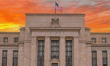
The Federal Reserve has a new chair, a president who wants lower interest rates, and an inflation problem that says the opposite is needed. That tension is going to come to a head at the first Federal Open Market Committee (FOMC) meeting under Kevin Warsh, and a rate cut under political pressure could spook the Treasury market and push mortgage rates higher.
Nicolas Jabko (pictured top), a political science professor at Johns Hopkins University who has spent years studying the internal politics of central banks, has been watching this closely. He knows the history of what happens to Fed chairs who say no to Trump.
"(Jerome) Powell did not give in to this pressure," Jabko told Mortgage Professional America. "But that's why Trump basically soured on Powell, because he didn't do what Trump wanted him to do. That's a lot of political pressure to take for a Fed chair."
Warsh has pledged he will be independent. Jabko is not ready to take that at face value.
"He said during his hearings that he's not going to do what Trump asks him to do, that he's going to be independent," Jabko said. "So we'll have to not take him at his word, actually, this time, but really look at what he does and what the Fed does."
Dangers of meddling in monetary policy
The history of what happens when governments take control of their central banks is not encouraging, Jabko noted. In Russia, political interference in monetary policy has repeatedly produced inflation that the state could not contain. In Turkey, President Recep Tayyip Erdogan's pressure on the central bank was so destabilizing that the country went through multiple governors in a matter of years as inflation hit triple digits.
Jabko has a simple explanation for why that pattern keeps repeating.
"In a dictatorship, it is very often the case that dictators don't really care so much about monetary stability," he said. "They care about basically staying in power. And very often, if you look around the world, places like Russia or Turkey are places where the autocrat (Vladimir) Putin or Erdogan basically take over monetary policy, and then you get very high inflation."
The central bank rate in Russia is 14.5%, and in Turkey it is 37%. Jabko is careful not to say the US is headed in the same direction as Russia and Turkey. But he warns that a reduction in Fed independence could cause lasting impacts.
"You could get basically a long-term loss of credibility of the Fed, a long-term ratcheting up of inflation and therefore of interest rates," he said.
Jabko said that if the Fed cuts under political pressure before a midterm election might produce a short-term benefit. However, the inflation that follows and the higher rates that come with it could then land later, possibly under someone else's watch.
He goes back to the 1980s to show what it costs when that credibility has to be rebuilt. When then-Fed-chair Paul Volcker drove rates into double digits to break inflation, the pain was severe, and it fell hardest on anyone in the business of lending money.
"You're not going to be able to sell many mortgages if rates go to double digits," Jabko said. "It would definitely not be good."
What made Volcker’s correction necessary was the policy drift of the previous decade. Jabko sees echoes of it now.
"Partisan party politics is about winning the next election," he said. "Whereas what monetary policy should be about is really improving the growth potential and the monetary stability of the economy."
Watch the first meeting
Warsh arrives at a fractured FOMC. Inflation is running well above the Fed's 2% target, oil prices are up sharply following US and Israeli military strikes on Iran, and the last vote before his confirmation told the whole story: only one governor, Stephen Miran, voted for lower rates, while three others pushed to drop forward guidance that suggested a cut was coming at all.
Warsh has publicly called for lower interest rates, arguing that AI will create a productivity boom large enough to keep inflation in check. Most economists are skeptical of that new position.
"I think most economists are very skeptical of Warsh's new argument," Jabko said. "They don't necessarily believe that the arrival of AI in the short term is going to do away with inflationary pressures."
Warsh was nominated by a president who wants lower rates and has made that pressure public, but he has also pledged independence. Those two things are going to collide at the first FOMC meeting.
"If they lower rates, I think markets will be very attentive to that, including mortgage brokers," Jabko said. "That will be a sign that the independence of the Federal Reserve is really in question."
When the Fed cuts short-term rates, but the market doubts its commitment to fighting inflation, long-term rates tend to rise, taking 10-year Treasury yields and 30-year fixed mortgage rates with them. Jabko said the cut intended to help borrowers ends up doing the opposite, and he believes that would draw the ire of Trump.
"If mortgage rates go up, he'll certainly blame the Fed for that," Jabko said. "So it's a bit of a catch-22 situation."
Stay updated with the freshest mortgage news. Get exclusive interviews, breaking news, and industry events in your inbox, and always be the first to know by subscribing to our FREE daily newsletter.