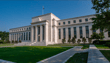
A paradox facing Kevin Warsh — act hawkish to deliver the rate relief the White House craves, or risk losing the bond market altogether

Kevin Warsh stepped into the Federal Reserve chair's office last Friday to find bond vigilantes already rearranging the furniture.
On his first official day leading the central bank, the US Treasury market sold off, driving the 30-year yield above 5.12% and the 10-year note to 4.59% — levels not seen in more than a year.
The signal from fixed-income markets was unambiguous: the macroeconomic backdrop no longer supports an easing posture, and investors intend to enforce discipline with or without the Fed's cooperation.
Ed Yardeni, president and chief investment strategist at Yardeni Research, laid out the stakes in a Monday morning briefing.
He expects the Fed to hold rates unchanged at the June 16–17 Federal Open Market Committee meeting but believes a 25-basis-point hike is "likely" in July.
Read more: Fed's Kashkari says 'series' of rate hikes may be needed to tame oil shocks
Markets are moving in the same direction, if not quite as swiftly.
The CME Group's FedWatch tool showed the probability of an increase by year-end rising to roughly 42%, up sharply from where it sat just weeks ago when traders were still debating the timing of cuts.
"Warsh is going to be the odd man out," Yardeni wrote. "But he is the new Fed chair, and the bond market is reacting badly to his dovish stance."
Warsh arrived at the Fed having publicly argued that current inflation pressures are transitory, partly because he believes artificial intelligence is boosting underlying productivity. That view puts him at odds with the rest of the FOMC, which is data-dependent and, in Yardeni's reading, is already arriving at the conclusion that a pivot toward tightening is overdue.
Jerome Powell, whose four-year term as chair expired on May 15, broke with 75 years of tradition by announcing he will remain on the Board of Governors, citing the Fed's ongoing headquarters renovation and his concerns about central bank independence.
A paradox at the heart of policy
The deeper argument Yardeni is making is counterintuitive. Warsh was installed, at least in part, because president Donald Trump wants lower borrowing costs.
Trump has been vocal in demanding that the Fed ease. But Yardeni contends that a hawkish pivot by Warsh would actually accomplish that goal faster and more durably than the dovish path the new chair appeared to favor.
Read more: Explainer: How the new Fed chair could go about cutting interest rates
The logic runs as follows: long-term Treasury yields — which set the floor for 30-year fixed mortgage rates — are running higher partly because investors are pricing in what Yardeni calls a "Warsh risk premium."
In other words, the market fears Warsh will cave to White House pressure and allow inflation to run.
If Warsh instead leads the charge to remove the easing bias at June's meeting, he would likely shrink that premium and take some of the upward pressure off long-dated yields.
"By acting hawkishly, Warsh might have a chance of delivering what the White House wants: lower real-world borrowing costs," Yardeni wrote.
"Mortgage rates could fall, corporate financing would ease, and Trump can point to declining long-term yields as the economic win."
The Mortgage Bankers Association currently projects the 30-year fixed mortgage rate will hold between 6.1% and 6.3% through 2026, with economists noting that rates have already moved more than 30 basis points higher over the past several weeks as longer-term yields absorbed the inflation shock.
For mortgage brokers, the trajectory matters enormously. As brokers previously said, they do not "need rates to fall out of the sky" to originate business, but clearer guidance from the Fed is critical for pipeline planning and borrower expectations.
Why the bond market is winning the argument
Yardeni lays out several reasons the case for tightening is building. The closure of the Strait of Hormuz has delivered a sustained energy supply shock, with oil above $100 a barrel, and the ripple effects are bleeding into downstream manufacturing costs, petrochemicals, and fertilizers.
Core inflation already plateaued at a stubborn 3.0% before the Strait closed, meaning the Fed was not on a clean trajectory toward its 2.0% target to begin with.
The April consumer price index showed annual inflation running at 3.8%, the highest reading since May 2023, while producer prices surged 6% year-over-year.
A resilient labor market — where Baby Boomer retirements and restrictive immigration policy are constraining supply even as demand recovers — limits the Fed's room to argue that a soft landing justifies patience.
Read more: Inflation forecast nearly doubles to 6%, raising pressure on mortgage rates
The bond market selloff is also global. The UK's 10-year Gilt yield crossed 5.00% last week for the first time since 2008, Germany's 10-year Bund rose to 3.15%, and Japan's equivalent climbed to 2.73%, its highest since 1997.
As domestic yields rise abroad, foreign investors have less incentive to park capital in US Treasuries, forcing Washington to compete harder for buyers at a moment of large fiscal deficits, adding still more upward pressure on long-term US borrowing costs.
"The Fed must catch up to the bond market to avoid losing control of borrowing costs and to appease the Bond Vigilantes," Yardeni wrote.
"By now, they might need to see a tightening stance rather than a neutral stance. A surprise FFR rate hike might actually please them!"
To be clear, Yardeni's July hike call is well outside consensus. Futures markets currently imply only a 4.2% probability of an increase specifically at that meeting, per FedWatch.
Meanwhile, markets have priced in a 98% probability that the Fed holds steady at June's meeting, and the FOMC itself has been divided: at its most recent gathering, three members voted to remove the easing bias from the policy statement entirely, a sign of internal tensions that Warsh will now need to manage.
Stay updated with the freshest mortgage news. Get exclusive interviews, breaking news, and industry events in your inbox, and always be the first to know by subscribing to our FREE daily newsletter.