Policymaker plays down risk of a rate increase amid Iran war shock
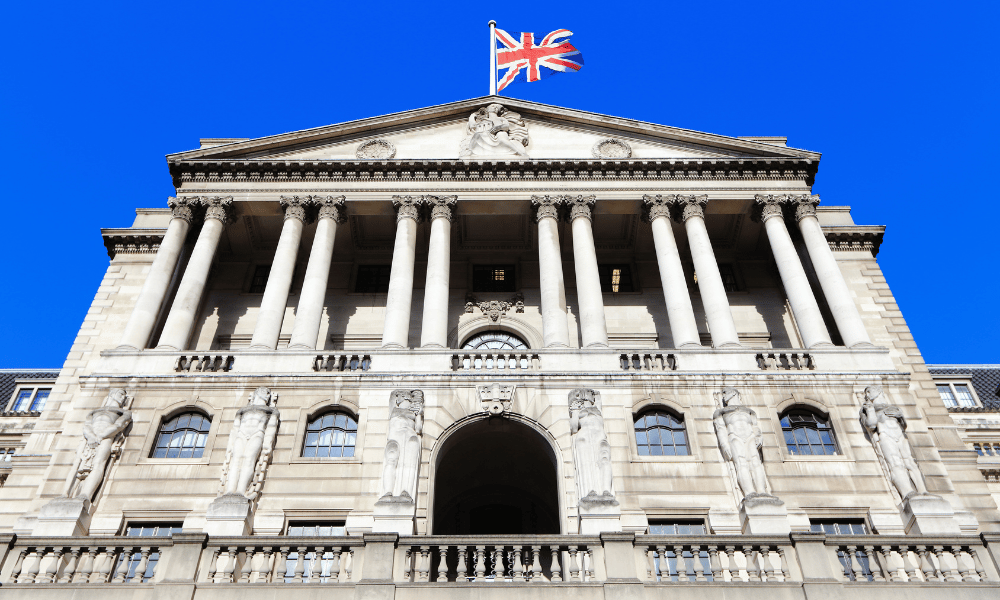
 The UK's subdued economy and loose labour market reduce the likelihood that the central bank will need to raise interest rates in response to inflationary pressures stemming from the Iran war, according to Bank of England deputy governor Sarah Breeden (pictured right).
"We have a softish economic outlook; we have slack in the labour market," Breeden said. "Those two things mean that that shock is less likely to become embedded and lead to inflationary dynamics that we might need to lean against."
Breeden, who made the comments in an interview with Bloomberg TV, was among the seven members of the Monetary Policy Committee (MPC) who voted to hold rates at the most recent meeting. She said that she would back higher borrowing costs should evidence emerge of a self-reinforcing price spiral.
Where Bank Rate stands
The Bank of England base rate was held at 3.75% at the MPC meeting last month, when the committee voted 7–2 to maintain borrowing costs. Two members voted for a 0.25 percentage point increase to 4%. Rates were gradually reduced by 1.5 percentage points in total between August 2024 and December 2025, following a previous cycle of increases that peaked at 5.25% in August 2023.
In its June statement, the MPC said global energy prices had fallen since its previous meeting in response to events in the Middle East, but remained higher than pre-conflict levels and continued to be volatile.
CPI inflation stood at 2.8% in May, above the MPC's 2% target. The Bank had previously expected inflation to fall to around 2% from April and stay close to that level for the rest of the year. However, it now expects CPI to reach "a little under 3%" in the third quarter of 2026 and "a little over 3.25%" in the fourth quarter, though that is lower than it had forecast in April.
The governor's position
Governor Andrew Bailey has signalled he is in no rush to raise interest rates, arguing it is too soon to judge the full economic impact of the war in Iran. He described the conflict as a "very big energy shock" but said the length of the war would be a key factor in the central bank's thinking on inflation.
Bailey has acknowledged that "higher energy prices of the past four months mean there's already some inflationary pressure in the pipeline," but added that the Bank's role was to ensure that pressure did not turn into sustained inflation above the 2% target.
Speaking at a conference in late May, Bailey said the MPC had already effectively tightened monetary conditions by removing market expectations for rate cuts, and that the Bank was prepared to tolerate a period of above-target inflation rather than risk further damage to an economy already feeling the strain of higher energy costs, weaker consumer spending, and a softening labour market.
"Given the context of softness in the real economy and uncertainty around the scale and duration of the shock, tolerating temporarily above target inflation to provide some support for the real economy is an appropriate way to approach the trade-off," he said. "But that tolerance would weaken if signs of second-round effects begin to emerge."
Division within the MPC
The June vote exposed a widening rift among rate-setters. Chief economist Huw Pill, who voted for an increase at both the April and June meetings, has said interest rates will need to rise to keep inflation under control. "I am concerned that we've been running the economy a little bit hotter than the supply side," he said. At the June meeting, Pill called for "prompt but modest action."
External member Megan Greene also voted for a hike in June, advocating a "risk management strategy" in light of current economic conditions. Greene had previously indicated a more cautious stance.
MPC member Alan Taylor has taken a different view, saying rates at their current level are already acting as a restraint on the economy and that he sees no case for tightening further. "I feel comfortable where we are unless we get the worst-case scenario," he said.
Mortgage market implications
The two-year fixed mortgage rate is already around 80 basis points higher than before the conflict began. The Bank views this tightening as doing work in the background, reducing the pressure to raise Bank Rate directly.
Major lenders including NatWest, Barclays, TSB, and Santander have continued to reduce fixed mortgage rates despite earlier sharp rises, with sterling swap rates easing through April and May as market expectations that Bank Rate will remain near current levels solidified.
Most forecasts point to one or two quarter-point cuts in 2026, potentially bringing Bank Rate to around 3.25% to 3.00% by year-end, though some analysts expect fewer reductions if inflation proves persistent. The MPC's next decision is scheduled for 30 July.
Want to be regularly updated with mortgage news and features? Get exclusive interviews, breaking news, and industry events in your inbox – subscribe to our FREE daily newsletter. You can also follow us on Facebook, X (formerly Twitter), and LinkedIn.