Economist says the MPC has not been restrictive enough and warns against complacency on above-target inflation
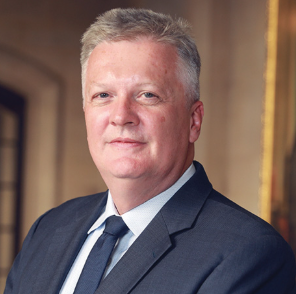 Bank of England chief economist Huw Pill (pictured right) has said interest rates will need to increase to keep inflation under control, adding to pressure on the Monetary Policy Committee (MPC) ahead of its July meeting.
Speaking on the BBC's Walescast programme, Pill was asked whether rates would need to rise in the coming year. "The short answer is yes," he said.
"I am concerned that we've been running the economy a little bit hotter than the supply side."
Pill is one of two MPC members who voted to raise Bank Rate from its current level of 3.75% at last month's meeting. The committee's next decision is scheduled for 30 July.
He has backed a rate increase at each of the past two MPC meetings. In April, he was the sole dissenter in favour of a rise, and was joined in June by external member Megan Greene.
Speaking separately to the Press Association, Pill cautioned that policymakers "should not be complacent" about Consumer Prices Index inflation, which he said risked being pushed higher by rising oil and gas prices linked to the US-Israeli conflict with Iran. CPI stood at 2.8% in May, unchanged from April.
Pill pointed to what he described as "underlying inflation dynamics" in the UK economy and suggested that monetary policy decisions may have "fuelled some of this strength and momentum." He indicated that, on balance, policy had not been sufficiently restrictive in recent years, implying that rates may have been reduced too quickly.
Bank Rate has fallen gradually from a peak of 5.25% in the summer of 2024 but has held at 3.75% for six months. The outbreak of the Iran conflict in late February effectively halted further cuts.
Pill said the fact that inflation had previously reached 11% carried a risk that policymakers had grown too comfortable with a rate of around 3%, adding: "I think it should be seen as problematic, because our mandate is very clear; inflation at 2% at all times."
At the June MPC meeting, Pill called for "prompt but modest action," while Greene favoured a "risk management strategy" given current economic conditions. The majority of the committee, however, voted to leave Bank Rate unchanged.
Governor Andrew Bailey, who voted to hold, acknowledged that "higher energy prices of the past four months mean there's already some inflationary pressure in the pipeline".
Prior to the Middle East conflict, markets had been pricing in two rate cuts in 2026. Expectations shifted dramatically, with traders at one point in March anticipating as many as four increases at the height of the uncertainty.
Major lenders including NatWest, Barclays, TSB and Santander have continued to reduce fixed mortgage rates despite the earlier sharp rises. Sterling swap rates eased through April and May, reflecting market expectations that Bank Rate will remain near current levels rather than increase — a softening that has allowed lenders to trim fixed pricing even as Bank Rate itself has not moved.
The Bank and most economists expect the cost of living to rise throughout 2026 as higher energy prices filter through the economy, though by less than was initially feared.
Want to be regularly updated with mortgage news and features? Get exclusive interviews, breaking news, and industry events in your inbox – subscribe to our FREE daily newsletter. You can also follow us on Facebook, X (formerly Twitter), and LinkedIn.