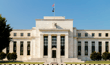
Weinberg says the eerie calm in his own portfolio, record volume and defaults holding, may be the last quiet before a very long storm

Trying to pinpoint all of the factors causing headwinds in the mortgage lending space in 2026 can be challenging.
One of the major challenges has been energy inflation, which has pushed 10-year Treasury yields higher. This forced 30-year mortgage rates higher as well, causing some buyers to hold off on a new home purchase.
A growing concern is a softening of the jobs market. weaker-than-expected jobs report last week, combined with corporate layoffs, is now adding pressure to the other side of the Federal Reserve’s dual mandate.
Some of the future problems in the mortgage space often show up in consumer credit and hard money lending first. The conditions that typically precede a credit deterioration are already visible in the broader economy. However, one private lender said some of the early warning signs aren’t showing up yet in his portfolio.
Glen Weinberg (pictured top), COO and partner at Fairview Commercial Lending, said the calm in his portfolio is the part that worries him.
"It's kind of an eerie calm," Weinberg told Mortgage Professional America. "Our lates and defaults are trending about where they have been the last 2 or 3 years. I'm not seeing any credit impact in our portfolio, which you would think I'd start seeing it by now, just with everything macro going on in the economy."
A growing stagflation risk
Weinberg said the July jobs report was the turning point in how he thinks about where the economy is heading. After months of strong headline numbers, the report showed a sudden loss and downward revisions.
After watching inflation pull the Fed one direction, Weinberg wonders if the jobs data is now pulling the other direction. While most headwinds are being dismissed as a one-off issue, he isn’t sure that’s accurate.
"I actually think we could be in a stagflation-type environment, which would be detrimental," he said. "The Fed should have raised rates like a year ago. And now everything gets explained away. This is one-off, this is one-off. Well, everything is one-off now. The one-off is the new normal."
He said the jobs numbers themselves are increasingly unreliable as a measure of economic health, since the way jobs are surveyed does not account for gig workers, underemployment, or people who have stopped looking.
"Are we even measuring jobs correctly?" he said. "Because of the way the economy works with gig workers, which is why we're having more volatility in the jobs report. The unemployment rate isn't changing much because fewer people are working and people are dropping out and stopping looking.
“You can't really just gauge the unemployment rate as your factor of the health of the economy because that metric is not a good metric. It's the number of people employed."
Weinberg said the root cause runs deeper than the jobs report, tracing it to a fundamental shift in the Federal Reserve's mandate, from focusing purely on inflation to incorporating employment and equity goals into its decision-making.
"The Federal Reserve got away from its core mission of inflation," he said. "And that and runaway government spending is what has led us to where we are. The government deficits should not be where they are now based on the economic cycle we're in. We should be paying the deficit down right now."
Fed independence and volatility
Weinberg said the Federal Reserve's political vulnerability is compounding an already difficult macro environment. The president's ongoing effort to remove Fed officials, including Lisa Cook, adds another layer of volatility.
"I think that there's going to be more volatility in the mortgage market because policies are going to change too frequently based on the administration," he said. "It's going to be very difficult for long-term investments."
Investor Michael Burry has predicted a major downward correction in the stock market, and Weinberg said that is a reasonable projection with real downstream consequences for housing and labor markets.
"There's a correlation between the wealth effect and spending," he said. "If you get a 20% reset in the market, does that mean we're going to have a 10% reset in housing prices? Or could that trigger a recession? Consumer spending is really the only thing driving this economy right now. If consumer spending takes a drastic fall, hiring has to also have a correlating fall."
Weinberg said the consequence of those compounding policy errors could stretch far longer than most people expect.
"This could be like a 10 to 20-year stretch of just difficulty in the economy," he said. "If you look at 2008, were there excesses that needed to get out? Absolutely. But 2008 was a rip the Band-Aid off type event, and it allowed us to have about 18 years of growth. Because we got those excesses out. We haven't done that here."
Stay updated with the freshest mortgage news. Get exclusive interviews, breaking news, and industry events in your inbox, and always be the first to know by subscribing to our FREE daily newsletter.