A new study reveals a deeply divided housing market, with Austin at 110 days and San Jose at just 12

The American housing market is grinding slower. Homes across the country are now sitting on the market for a median of 66 days in 2026. That's nine days longer than the 57-day median recorded last year, according to new research from Best Interest Financial and Clever Real Estate.
The findings, drawn from data across the 100 most populous US metros, paint a picture of a market that is, in the words of analysts, deeply divided, with the gap between the fastest- and slowest-selling cities wider than it has ever been.
A tale of two markets
At one extreme, homes in San Jose, California, sell in a median of just 12 days, followed by San Francisco at 14 days, Rochester, New York, at 15 days, Lancaster, Pennsylvania, at 17 days, and Seattle, Washington, at 26 days.
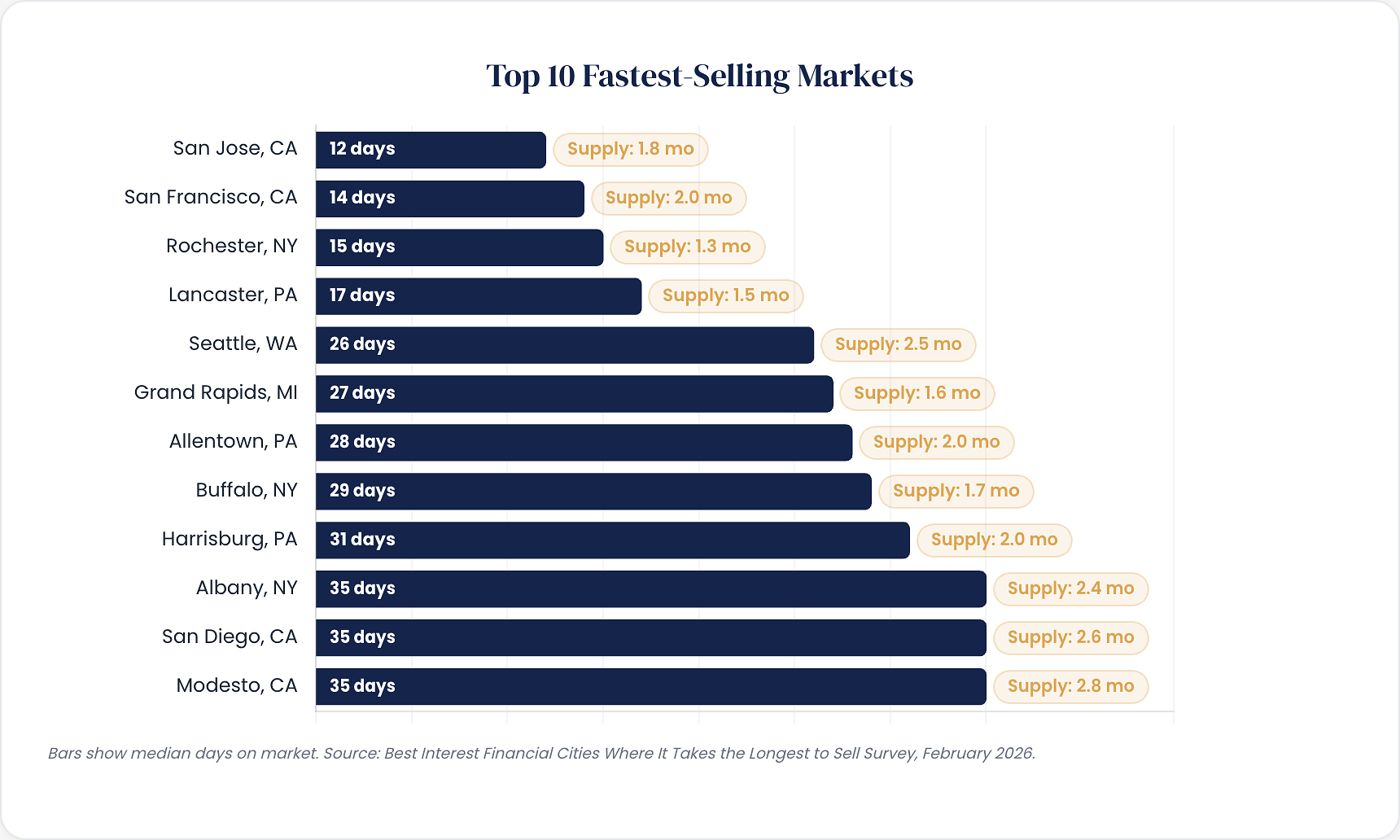
Among all 100 metros studied, only nine recorded faster home sales year over year, and only Jackson, Mississippi posted a double-digit improvement, dropping 10 days.
The study noted that spring, traditionally the busiest season for real estate, has gotten off to a sluggish start in 2026, with the conflict in Iran sending mortgage rates higher and rattling consumer confidence.
Read more: Homebuyers return as mortgage applications climb despite five-week rate high
The divergence between regions is striking. All seven New England metros in the top 100 most populous US cities sell faster than the national average, with an average of 46 days on market and 2.6 months of housing supply.
At the other, Austin, Texas, leads the slowest markets at 110 days, trailed by San Antonio at 109 days, Miami at 105 days, Honolulu at 100 days, and Nashville at 97 days.
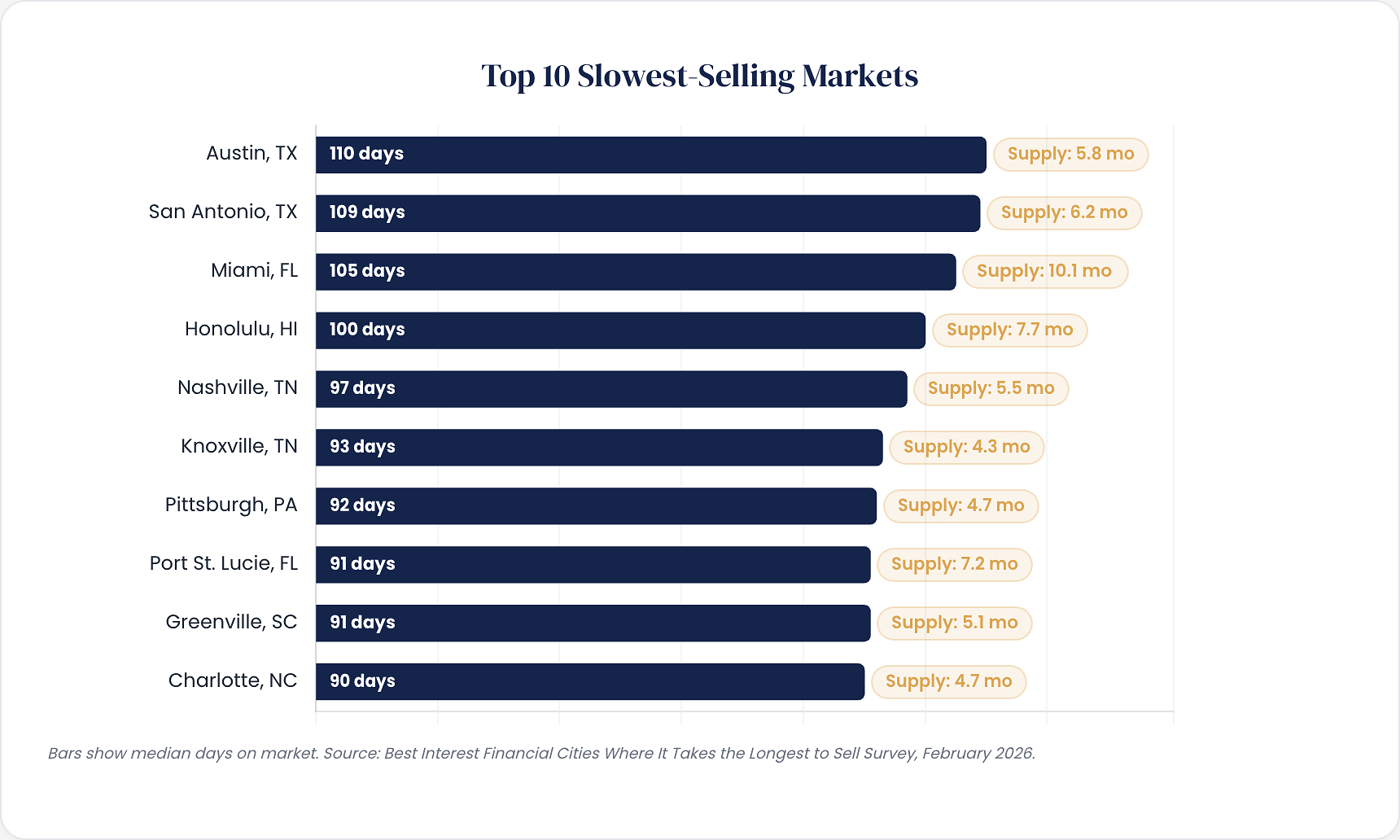
Where the market is breaking down
Texas tells perhaps the most cautionary story. All six Texas metros in the 100 most-populous cities have more housing supply than the national average of 3.9 months, and at least 30% of sellers in Houston, San Antonio, Dallas, and Austin each had to lower their list price.
McAllen leads the nation in unsold inventory at 10.4 months of supply.
San Antonio's median days on market have increased by 28 days year over year — the second-largest deceleration among all cities studied — despite a median list price of $321,670, well below the national median of $458,710.
The inability of discounted pricing to stimulate activity in that market suggests structural issues beyond affordability alone, including high property taxes and elevated carrying costs.
Florida is contending with its own headwinds. All 10 Florida metros in the top 100 most-populous cities carry more housing supply than the national average, and Miami is especially saturated with 10.1 months of supply. Rising insurance premiums have added to buyer hesitancy across the state.
North Port leads all 100 cities in price reductions, with 35% of home sales involving a price cut, followed by Cape Coral and Tampa at 34% each.
Read more: Revealed: The worst housing market in the US
The slowdown in North Carolina has been dramatic. Raleigh posted the largest year-over-year rise of any city, with homes now sitting on the market 30 days longer than in 2025, and all five of North Carolina's metros in the top 100 added double digits to their median days on market year over year.
Where demand still burns hot
Not every market is cooling. California's Bay Area continues to defy broader trends, driven by extreme housing scarcity and concentrated technology wealth.
There are only 0.76 homes available per 1,000 residents in San Jose and even fewer in San Francisco at 0.29, and despite list prices well above $1 million, more than 60% of homes in each of those two metros sell above the asking price.
San Francisco, despite a median list price above $1 million, saw the highest share of sales above asking price at 62%, while the broader California market still carries four of the top 10 fastest-selling metros in the country.
Affordable Northeast cities are driving fast sales for different reasons. Cities including Rochester, Buffalo, Albany, Lancaster, Harrisburg, and Allentown have a low inventory of homes listed below the national median that get snapped up by buyers priced out of more expensive coastal cities.
Nationally, 34% of homes are still off the market within two weeks, and approximately 23% of US homes sell above the asking price against a median listing price of $458,710, compared to 17% that see price reductions.
At the state level, Montana is the slowest-selling state with a median of 121 days on market, while Massachusetts moves the fastest at 39 days.
Stay updated with the freshest mortgage news. Get exclusive interviews, breaking news, and industry events in your inbox, and always be the first to know by subscribing to our FREE daily newsletter.