Veros projects modest national appreciation through mid-2027

America’s housing market is holding together, but only just. The Q3 2026 VeroFORECAST from Veros Real Estate Solutions, a Santa Ana, California-based provider of enterprise risk management and collateral valuation services, projects that US home prices will rise just 1% over the next 12 months.
That single figure does not describe a single market. It is the average outcome of a landscape increasingly divided between regions gaining value and regions beginning to give ground.
Mortgage brokers have spent much of the year navigating the conditions that now underpin the Veros data. Rates that pushed above 7% and a persistent affordability ceiling have together kept transaction volumes historically depressed.
Sellers with substantial equity have largely declined to cut prices enough to revive buyer participation at scale, so recorded sale prices in closed transactions have held firmer than underlying demand conditions might suggest.
A divided housing market beneath the headline
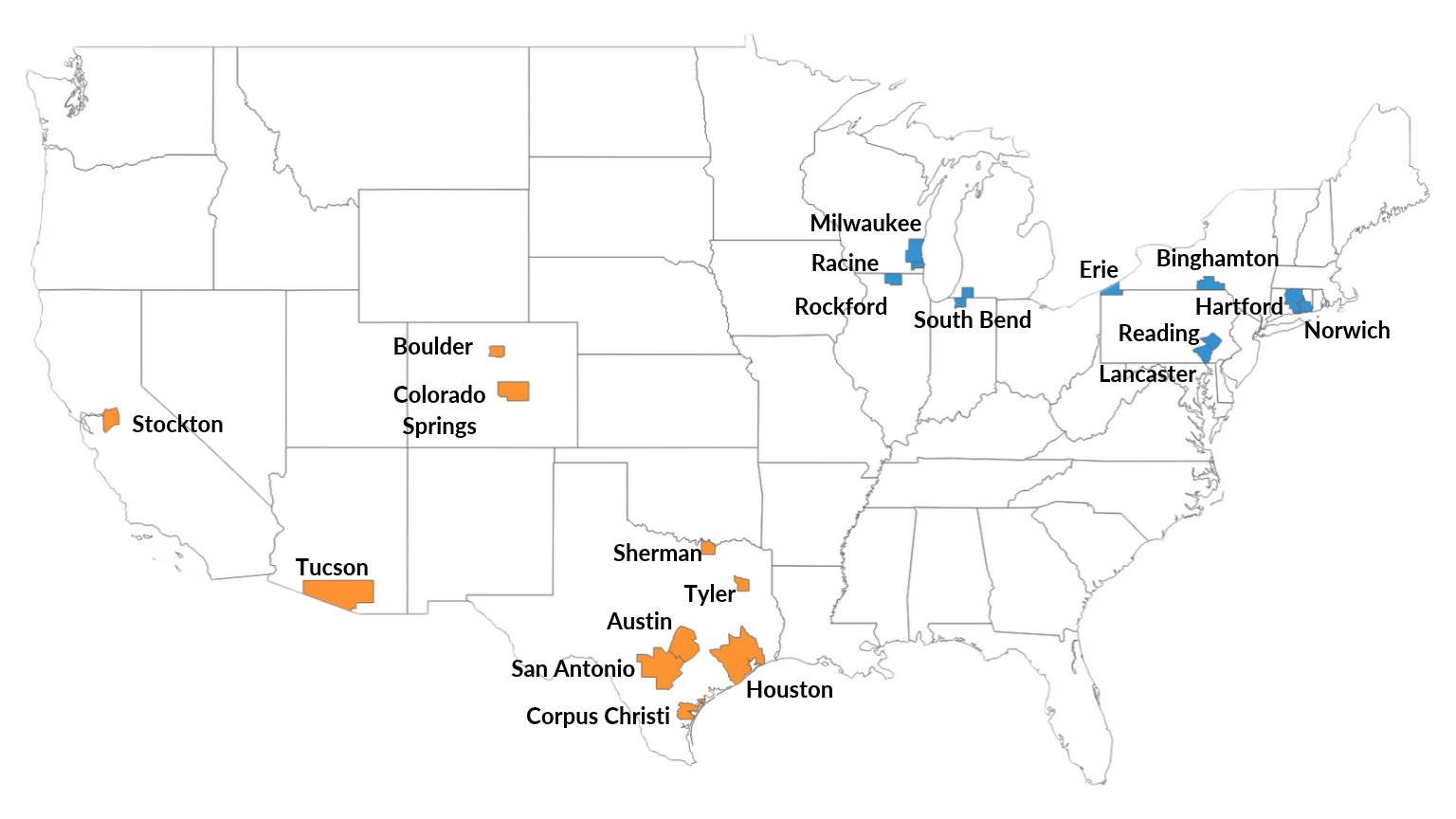
The markets forecast to see the strongest price growth are concentrated in the Northeast and Midwest. Rockford, IL leads the 324-MSA forecast at 4.7% projected appreciation, followed by Norwich-New London-Willimantic, CT (4.3%), and Hartford, CT; Racine, WI; and Erie, PA (each at 4.0%).
Binghamton, NY; Lancaster, PA; Milwaukee, WI; South Bend, IN; and Reading, PA complete the top ten, with gains ranging from 3.5% to 4.7%. These markets share favorable income-to-price dynamics and supply conditions that have not been overwhelmed by inventory growth.
Texas dominates the bottom of the forecast. Six of the ten weakest-performing markets are in the state — Corpus Christi at -1.1%, Tyler at -1.0%, Sherman-Denison at -0.9%, Austin at -0.9%, Houston at -0.7%, and San Antonio at -0.5%.
Stockton, CA (-1.0%), Boulder, CO (-0.5%), Colorado Springs, CO (-0.5%), and Tucson, AZ (-0.5%) also appear among the underperformers.
The Texas results reflect an inventory surplus that has shifted pricing power toward buyers, consistent with the housing market reset that analysts had forecast for Sun Belt markets heading into 2026.
What the numbers mean for brokers
At the local level, the divergence grows more pronounced still. Higher-priced properties have generally held firmer than entry-level homes, partly because wealthier buyers face less rate pressure, a pattern Veros captures across 17,882 ZIP codes and 975 counties nationwide.
Mike Fratantoni, chief economist at the Mortgage Bankers Association (MBA) in Washington, DC, put the broader context plainly in Mortgage Professional America’s coverage of the MBA’s 2026 rate and affordability outlook: “We expect that wages are going to be growing faster than rents, and going to be growing faster than home prices.”
Stay updated with the freshest mortgage news. Get exclusive interviews, breaking news, and industry events in your inbox, and always be the first to know by subscribing to our FREE daily newsletter.