Realtor.com cuts its 2026 home price forecast as geopolitics keep mortgage rates elevated
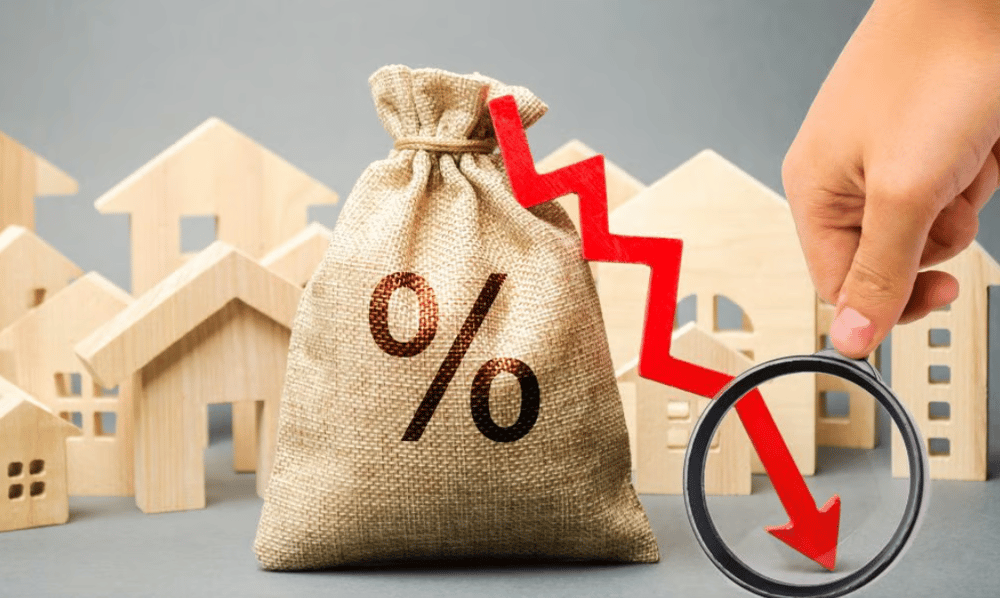
The American housing market is still moving, just not fast enough to outrun inflation. Realtor.com has revised its 2026 midyear forecast, cutting its home price growth projection to 1.2%, down from the 2.2% it predicted in December 2025, and below the expected inflation rate of 3.4% for the year.
In practical terms, that means home prices are shrinking in real terms even as they tick nominally higher — a dynamic that is, slowly, working in buyers' favor.
"The housing market is inching forward as sellers reset expectations, price growth cools, and buyers gain more negotiating power," said Danielle Hale, chief economist at Realtor.com.
"Looking ahead, we expect momentum to build through the second half of the year as more sidelined buyers and sellers find terms that work for both sides."
The forecast also trimmed existing-home sales to 4.10 million for the full year, down slightly from the 4.13 million projected in December, but still representing a 1.0% gain over 2025.
Sales tracked only 0.2% ahead of last year's pace through May, yet the market avoided the pullback many feared when conflict in the Middle East sent rates higher in late February. Deals got done. Sellers adjusted.
"Buyers and sellers have shown a lot of staying power this year," Hale said.
"This is a market where people are adjusting and showing up rather than giving up. Sellers are meeting the market with more realistic asking prices, which is helping deals get done."
For brokers, the message from this forecast is one of incremental progress rather than a breakthrough.
As Matt Gouge, mortgage broker and founding partner at UMortgage, told Mortgage Professional America in an earlier interview, buyers navigating today's affordability challenges need to recalibrate their expectations.
"They have to start thinking about housing, especially their first house, as a stepping stone, not a forever home," Gouge said.
That sentiment tracks closely with what Realtor.com's data now confirms: the market is not resetting dramatically, but it is gradually becoming more navigable.
Geopolitics and inflation keep mortgage rates anchored
The mortgage rate outlook is unchanged at 6.3% for the year. Inflation hit a three-year high of 4.2% in May 2026, driven in part by the oil price shock following the February strikes on Iran, erasing that month's wage gains and pushing the Federal Reserve into a hawkish posture.
Markets, which had priced in one to two rate cuts by December, now expect one to two hikes instead — a near full-point swing.
High mortgage rates are keeping the US housing market subdued through much of 2026, with the 10-year Treasury holding between 4% and 4.5% and the 30-year fixed rate settling in the 6%–6.5% corridor.
Despite that ceiling on rates, the affordability picture has improved more than the headline numbers suggest. The typical 2026 buyer's monthly mortgage payment is projected to come in 1.9% below last year's — better than the 1.3% drop originally forecast — as slower price growth combined with steady rates and stronger income gains to reduce the share of a paycheck needed for housing.
Real house prices fell 7.2% between April 2025 and April 2026, while consumer house-buying power rose 8.1% over the same period, according to First American Financial Corporation data.
Kevin Warsh reiterated that inflation remains above target and emphasized the central bank's focus on restoring price stability, offering little indication of near-term rate cuts.https://t.co/1AIgCCzCNo
— Mortgage Professional America Magazine (@MPAMagazineUS) July 1, 2026
Private listings emerge as a wildcard for the market
One development worth tracking in the second half of 2026 is the expansion of private listing networks — homes marketed and sold outside the Multiple Listing Service (MLS), either temporarily or permanently.
Realtor.com flagged the trend as a wildcard with limited data so far, but with meaningful structural implications.
"Keeping listings off the open market changes the equation for everyone involved," Hale said.
"Sellers who go private are trading away visibility and competition among buyers, and that competition is usually what pushes a sale price up. For buyers, it means they aren't seeing every home or the whole market, making it harder to know what a fair price even looks like. That's a real cost with real consequences."
Elsewhere, rental markets are expected to continue softening, with Realtor.com forecasting a 1.2% decline in rents for 2026.
Vacancy rates stood at 7.3% in the first quarter, close to the long-term average of 7.2% from 2013 to 2019. The national homebuilding deficit remains approximately 4 million homes, with the Northeast and Midwest offering the greatest unmet opportunity.
Stay updated with the freshest mortgage news. Get exclusive interviews, breaking news, and industry events in your inbox, and always be the first to know by subscribing to our FREE daily newsletter.