Nearly a third of Metropolis units sit empty as Greenland faces a fresh EB-5 lawsuit

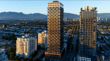
Nearly a third of the condominiums at Metropolis — a four-tower complex in downtown Los Angeles — are vacant, according to an investigation by Realtor.com and independent journalist Yoonj Kim.
For mortgage professionals who serve foreign investor clients, the findings are a case study in how EB-5-funded developments can mask structural risk for years.
The complex was built by Greenland USA, the American arm of Shanghai-based Greenland Holding Group, a company 46% owned by the Shanghai municipal government.
Seven years after completion, Greenland still holds hundreds of unsold or unoccupied units across both condo towers at 889 Francisco and 877 Francisco in downtown LA.
Property tax records underscore the vacancy. Only 71 of 844 units claimed a homeowners exemption in 2025, against an exemption rate of 50% to 60% at comparable buildings nearby.
At 877 Francisco, the rate was 6%; at 889 Francisco, 13%, consistent with absentee foreign ownership, or units still held by the developer itself.
EB-5 financing under scrutiny
Approximately $100 million of the project's funding was raised through the federal EB-5 immigrant investor program, which offers foreign nationals a path to permanent residency in exchange for a minimum investment of $1,050,000 and proof of creating or preserving ten full-time US jobs.
In August, 220 investors filed a federal suit alleging the offering was built to fail. A 2015 appraisal placed the hotel's value at $202.2 million against a disclosed project cost of $216.5 million, making full repayment from the asset alone "structurally implausible," the suit claims. More than $4 million in investor capital has not been returned.
Greenland's exposure extends to New York. In 2025, the company lost control of the Atlantic Yards development in Brooklyn after defaulting on more than $286 million in EB-5 loans.
Vacancies in a city short on housing
The empty towers sit inside a city facing a housing shortfall estimated at around 500,000 units. In the first quarter of 2026, international home demand in Los Angeles has fallen from 7.9% to 4.6% of all global online views since Q1 2020, a six-year slide attributed to climbing insurance costs, California's tax burden, and the thinning of the social networks that once made LA a must-own address.
Chinese buyers spent $7.6 billion on US properties in 2026, according to National Association of Realtors data, far below the $22 billion they deployed in 2013 when Greenland announced its $1 billion LA investment.
Shane Phillips, an urban planner with the UCLA Lewis Center Housing Initiative, noted that absentee owners still contribute roughly $15 million annually in property taxes.
"Vacancies are bad," he told Realtor.com. "We should minimize vacancies. But the one little kind of silver lining there is if people are not living there, they're not really using services, and so they're just paying a bunch of money into the city's general fund budget."
For brokers navigating a contracting market for foreign investor clients, the declining Chinese and international buyer spending in American real estate provides context, and the Metropolis case is a reminder that EB-5 disclosure documents warrant scrutiny well beyond the pitch.
Stay updated with the freshest mortgage news. Get exclusive interviews, breaking news, and industry events in your inbox, and always be the first to know by subscribing to our FREE daily newsletter.