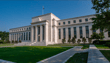
Kevin Warsh is now America's central banker, but the path to lower mortgage rates runs through a committee, an inflation crisis, and a credibility test

Kevin Warsh officially became the 17th chair of the Federal Reserve on Wednesday after a 54-45 Senate confirmation vote that fell almost entirely along party lines.
President Donald Trump finally has his man at the helm of the nation's most powerful economic institution. What he may not have, at least not soon, are the rate cuts he has loudly demanded for more than a year.
For mortgage professionals, the stakes are immediate. The 30-year fixed-rate mortgage has been stubbornly entrenched above 6% for most of 2026, and homebuyers and their brokers have been forced to reckon with a market that refuses to ease.
The question now is not simply whether Warsh wants to cut — it's whether the data, the committee, and the broader economic environment will let him.
The answer, based on his public record and current conditions, is complicated.
What Warsh has said — and what he hasn't
Warsh came into his confirmation hearing on April 21 under enormous pressure to telegraph rate relief. Instead, he was deliberate about avoiding any such commitment.
He stressed discipline and independence, and made clear that Trump's vocal preferences have not shaped his policy views.
"The president never once asked me to commit to any particular interest rate decision, period," Warsh said then.
"Nor would I ever agree to do so if he had. ... I will be an independent actor if confirmed as chair of the Federal Reserve."
Amir Nurani at Left Coast Leaders says markets may be overestimating the likelihood of rapid rate cuts, pointing instead to inflation pressures and policy discipline that could keep rates elevated for longer.https://t.co/bkgTEXKhf8
— Mortgage Professional America Magazine (@MPAMagazineUS) May 8, 2026
That statement was widely read as a signal that rate cuts are not imminent and markets responded accordingly. The CME FedWatch tool shows investors now pricing in no more than one rate cut for all of 2026.
Warsh's position on rates has evolved over time. During his first stint as a Fed governor from 2006 to 2011, he was widely regarded as a hawk — skeptical of inflation and inclined toward tighter policy.
More recently, he has leaned dovish, arguing that artificial intelligence-driven productivity gains could help bring inflation under control without requiring excessively restrictive policy. That optimism, anchored in technology, is what gives housing economists some cause for hope.
But optimism alone does not move the federal funds rate.
Why it's not a one-man decision
Even if Warsh wanted to cut rates at his first Federal Open Market Committee meeting — scheduled for June 16-17 — he would need to persuade a majority of the 11 other voting members to go along with him.
As Amir Nurani, broker-owner at Left Coast Leaders, explained to Mortgage Professional America ahead of the confirmation: "What everybody is expecting is that the new Fed chair comes in, and rates automatically drop. The part that the public doesn't understand is that when a new Fed chair comes in, he's still got to convince all the other Fed governors, or at least the majority of them."
Former Fed chair Janet Yellen underscored the same point. She said that she believes Warsh would have a hard time swaying the committee.
Jerome Powell, whose eight-year term as chair has now ended, is staying on as a board governor, with a term that runs until 2028. He will be in the room.
The FOMC has held rates steady at three consecutive meetings this year, with the federal funds rate sitting in the 3.5% to 3.75% range.
Even Trump-aligned board member Stephen Miran, who has consistently dissented in favor of deeper cuts, was not able to move the needle. That is the institutional reality Warsh inherits.
Sam Williamson, senior economist at First American, told MPA recently that the second half of 2026 looks more plausible than any near-term move.
"For now, policymakers are still waiting for clearer signals from the data while navigating tariff-related inflation effects and newly elevated uncertainty around energy prices," Williamson said.
"If those pressures fade, the backdrop could become more supportive of easing later in the year."
The inflation wall
The most immediate obstacle to rate cuts is the data. The Consumer Price Index jumped to 3.8% year-over-year in April — the highest level in nearly three years — and exceeded the 3.6% annual increase in wages.
The energy shock tied to the ongoing US-Israeli conflict with Iran has pushed oil prices to their highest levels in four years, and analysts warn the inflationary peak may not yet have arrived.
The Mortgage Bankers Association removed all expectations for rate cuts this year. MBA chief economist Mike Fratantoni now projects inflation near 4% by year's end. That's nearly a full percentage point above the organization's original forecast.
He also said that the federal funds rate is likely to hold at current levels well into 2027.
Read more: Homebuyers shake off inflation fears despite hotter CPI print
Richard de Chazal, macro analyst at William Blair, put it bluntly: "Inflation was already broadly accelerating before the closing of the Strait of Hormuz, and this recent supply shock just exacerbates that underlying trend. New Fed Chair Kevin Warsh will certainly have a harder time framing the case for rate cuts in this environment."
What a Warsh-led Fed means for housing
Cotality chief economist Dr. Selma Hepp offered a nuanced view of what the leadership change means in practice.
She said the implications for housing hinge less on where rates sit today than on how policy gets communicated going forward.
"A Warsh-led Fed matters for housing less because of where rates are today and more because of how policy is communicated going forward," Hepp said.
"At his confirmation hearing, Warsh repeatedly emphasized discipline, independence, and the need for the Fed to 'stay in its lane,' while avoiding any pre-commitment on rate cuts. For housing, that likely means fewer sharp policy pivots but a longer period of rate uncertainty."
Hepp added that Warsh's skepticism of an oversized Fed balance sheet and his openness to rethinking how the Fed communicates could keep mortgage rates volatile even if the policy rate gradually moves lower.
"The risk for housing is that affordability remains trapped: rates may ease only gradually while prices stay elevated due to limited supply," she said.
The longer-term opportunity, Hepp argued, is a more stable financing environment.
"If Warsh succeeds in restoring Fed credibility, the result could be a steadier long-term financing environment that allows builders, lenders, and buyers to plan with greater confidence."
Stay updated with the freshest mortgage news. Get exclusive interviews, breaking news, and industry events in your inbox, and always be the first to know by subscribing to our FREE daily newsletter.