The Hilton-branded project was foreclosed. Now the listing agent faces the heat
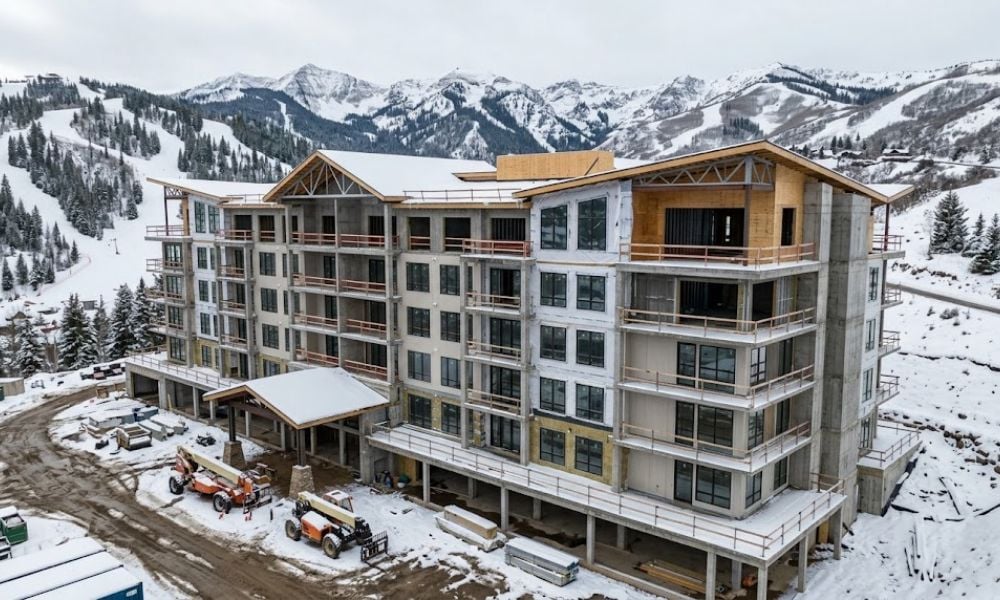
A group of 28 investors has filed a federal lawsuit against Sotheby's International Realty, alleging the luxury brokerage marketed condotel units at a Park City, Utah ski-resort project as safe, Hilton-backed investments - without telling them the developers behind the project could not afford to finish it.
The suit, filed on October 9, 2026, in the US District Court for the Central District of California, claims combined losses exceeding $7.5 million. The project at the center of the case - The Ascent at Park City, a 120-unit condominium-hotel branded under Hilton's Tapestry Collection - still sits unfinished. It was foreclosed upon in August 2026.
A Hilton name, a ski-slope pitch
According to the filing, Sotheby's served as the designated listing agent for the Ascent project and pitched the condotel units not as places to live but as investment opportunities. Buyers would own units in a Hilton-managed property where vacation rentals would generate returns through what the filing describes as a rental management program operated by a Hilton franchisee with "over 50 years of hotel and hospitality management experience."
The lawsuit alleges Sotheby's leaned heavily on the Hilton association. Marketing materials included the branding "THE ASCENT PARK CITY, TAPESTRY COLLECTION BY HILTON" and the tagline "THE BIGGEST BRAND IN DESTINATIONS HAS YOUR BACK," the filing states. The units were "residences in name only," according to the suit, and the buyers did not expect to live in them.
That brand connection, the lawsuit claims, was the hook. The filing describes the project as being presented to buyers as "a safe investment opportunity" on a "perfectly-located vacation rental property available at a special early-bird discounted rate."
What the buyers say they were not told
The central allegation is simple: the investors say Sotheby's failed to tell them the project's original developer - a Utah entity called T S 1, LLC - did not have the money to finish building it. The filing alleges Sotheby's, as the designated listing agent, "should have been aware the Ascent project was not yet sufficiently capitalized for it to be making any such representations."
The investors come from California, Arizona, Nevada, Utah, New York, Illinois, and Puerto Rico. Each made deposit payments to the original developer in 2021 following what the filing describes as sales pitches by Sotheby's.
A project that changed hands and then collapsed
The timeline laid out in the filing gets progressively worse.
According to the suit, a second developer group purchased the half-finished project in late 2022 for what the filing calls "a paltry $2,550,000." That group took on at least $10 million in additional loans and raised $12 million from 38 individual investors in 2024 through a Regulation D filing with the SEC, the lawsuit alleges.
Yet the project's property taxes went unpaid - more than $191,000 in unpaid taxes, interest, and penalties, according to Summit County Treasurer records cited in the filing. Contractors filed liens: Rock Construction for $310,000 in concrete work, Quality Fire Protection for $104,000. The suit says unpaid contractor bills exceeded $14 million total.
The project's primary lender, a Park City-based real estate investment group called OKOA Capital LLC, had extended what the filing describes as at least $50 million in construction loans to the successive developer groups. In August 2026, OKOA foreclosed. Its winning bid at auction was $24 million, according to a trustee's deed in Summit County records cited in the filing.
The investors' interests, the lawsuit says, were wiped out.
The original and second developer groups and their principals are not defendants in this lawsuit. The sole named defendant is Sotheby's International Realty Affiliates, LLC.
The securities question
What makes this case worth watching for real estate professionals is the legal theory at its core. The plaintiffs argue the condotel units were not ordinary real estate deals but investment contracts - meaning securities under both federal and California law. The test comes from a 1946 US Supreme Court case, SEC v. W.J. Howey Co.: if buyers invest money in a shared venture expecting profits from the work of others, what they bought is a security, not just a piece of property. Here, the plaintiffs say, the profits were supposed to come from the developer's Hilton-operated rental management program - not from anything the buyers themselves would do.
The suit brings nine claims, including alleged violations of Securities Exchange Act Section 10(b) and Rule 10b-5, California and Utah securities code provisions, breach of fiduciary duty, and common law fraud.
The filing also alleges Sotheby's played a role in keeping investors from discovering the project's problems. The suit claims Sotheby's arranged for a construction manager to publish 37 YouTube progress videos over the project's construction timeline, which the plaintiffs allege were intended "to induce Plaintiffs to believe the condotel project would shortly be producing profit."
The Salt Lake Tribune published a series of investigative reports on the Ascent project beginning in March 2026, which the filing credits with bringing the scope of the developers' financial difficulties to public attention.
For real estate professionals, the case raises a practical question worth following: when a listing agent markets property as an investment opportunity, where does brokerage end and securities territory begin?
None of the allegations in the lawsuit have been proven or tested in court. No court has ruled on any of the claims.