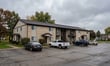
Three missed payments, unpaid taxes, and radio silence. Fannie Mae isn't waiting around

Fannie Mae is asking a federal court to put a receiver in charge of a Michigan apartment complex after the borrower stopped paying.
The government-sponsored enterprise filed suit on September 30, 2026, in the US District Court for the Eastern District of Michigan against Silver Creek SPE, L.L.C., a Michigan limited liability company that borrowed $1,566,000 in October 2023 to finance a multifamily property at 5100 S Elms Road in Swartz Creek, Michigan.
The loan was originated by Greystone Servicing Company LLC and later assigned to Fannie Mae. According to the filing, the borrower missed its monthly payments due June 1, July 1, and August 1 of 2026. The suit also alleges the borrower failed to deliver required financial statements and certifications and failed to pay property taxes.
Fannie Mae's counsel sent a notice of default and acceleration on August 31, 2026, declaring the entire loan balance due and owing. The borrower has not cured the default, the filing states.
As of September 1, 2026, Fannie Mae says the outstanding balance stands at $1,618,837.35, with interest, default interest, fees, and costs continuing to pile up.
This is not a foreclosure case. Fannie Mae is not asking the court to sell the property to satisfy the debt. Instead, it wants the court to hand operational control to a receiver - a move that sidesteps the foreclosure timeline entirely and gets the lender's hands on the income stream right now.
The suit asks the court to appoint M. Shapiro Management Company, LLC, as receiver to take over day-to-day operations at the property - collecting rents, leasing units, paying taxes, making repairs, insuring the building, and marketing it for sale.
According to the filing, the borrower agreed to all of this at closing. The mortgage contains language stating the borrower "expressly consents to the appointment of such receiver, including the appointment of a receiver ex parte, if permitted by applicable law."
The mortgage also includes what the filing describes as a present, absolute, and irrevocable assignment of all rents and leases to the lender. In plain terms: once the borrower defaulted, it lost the right to collect rent. That money belongs to Fannie Mae now, the suit argues.
On top of the receivership, Fannie Mae wants a preliminary injunction barring the borrower and its agents from transferring, spending, hiding, destroying, or otherwise running down the property or any collateral Fannie Mae holds a lien on. That includes rents, profits, and revenues.
The Federal Housing Finance Agency - Fannie Mae's conservator since 2008 - supports the receiver appointment on the proposed terms, according to the filing. FHFA did reserve its rights on any terms it has not pre-approved.
Silver Creek SPE is structured as a single-purpose entity whose sole member and manager is Silver Creek Village, Inc., a Michigan corporation. The guarantors on the loan are domiciled in Roswell, Georgia, according to the suit.
The borrower has acknowledged its default, according to the filing, which references an exhibit described as an express agreement and acknowledgment.
For multifamily lenders and servicers, the case is a clean illustration of what happens when receivership and rent-assignment clauses in the loan documents are not just boilerplate - and what it looks like when Fannie Mae decides to enforce them.
The allegations in the suit have not been proven, and no court has ruled on any of the claims.