An independent review found deep cultural failures inside the Fed's bank oversight apparatus
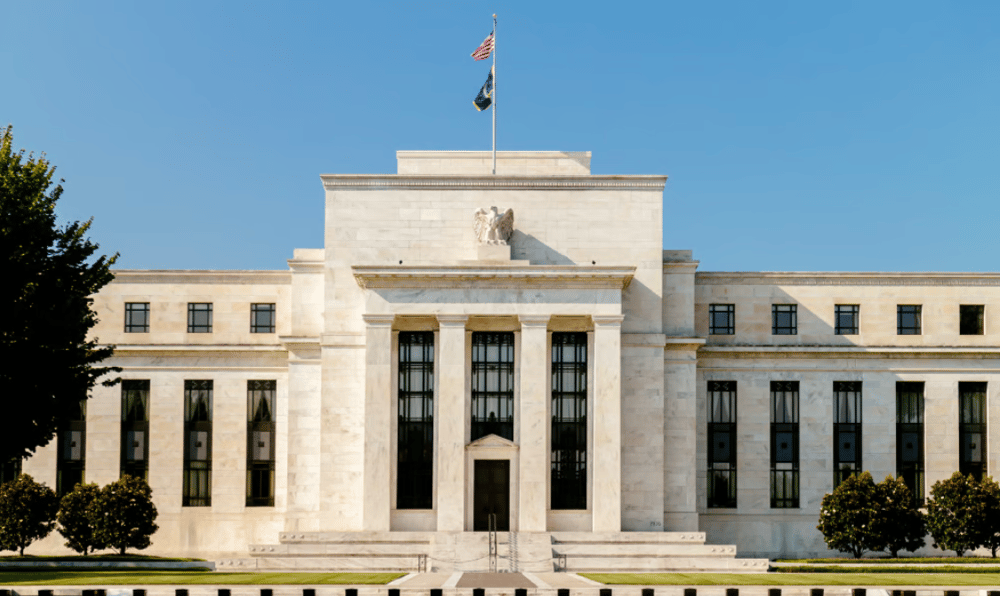
Federal Reserve supervisory staff knew or should have known that Silicon Valley Bank (SVB) was sitting on serious vulnerabilities more than a year before its collapse, according to an independent review unveiled Friday.
The findings represent the most direct indictment yet of the central bank's oversight failure ahead of the second-largest bank failure in American history.
Michelle Bowman, Vice Chair for Supervision at the Federal Reserve, delivered the preliminary findings of the review — conducted by consulting firm Starling Advisory Group — during a speech in London.
The conclusions were unsparing: "Our supervisory staff knew, or should have known, about these vulnerabilities as early as March 2022," Bowman said, summarizing the report.
SVB's deposit base was 94% uninsured and concentrated heavily among venture capital-backed technology companies, according to the review, as reported by Bowman.
When the bank announced a $1.8 billion loss on securities sales and sought additional capital, depositors fled, triggering a run that regulators could not contain.
Federal officials, including the Federal Deposit Insurance Corporation (FDIC) and the Federal Reserve, moved to shutter the institution and extend deposit protection beyond the standard $250,000 limit.
A culture of caution that proved costly
The review identified a "long-standing culture of risk aversion" as a central driver of supervisory inaction.
Examiners, the report found, believed it was personally safer to take no action than to risk acting incorrectly, a dynamic compounded by ambiguity over decision-making authority within the Fed's supervision structure.
For mortgage lenders and brokers monitoring how the Fed's balance sheet decisions shape borrowing costs, the SVB episode is a reminder that supervisory culture, not just rate policy, can have cascading effects on financial stability.
The Fed currently holds rates at 3.5% to 3.75%, following its September 15–16 meeting, and recent signals from Federal Reserve district presidents point to the possibility of further rate movement before year-end, a backdrop that makes the quality of bank supervision all the more consequential.
The review also cleared social media of blame for the bank run. An analysis by Charles River Associates, commissioned by Starling, found no evidence that social media triggered or accelerated the deposit flight.
According to Bowman's summary of the findings, 96% of social media activity related to the run appeared only after SVB's failure was already inevitable.
What changes, and what remains contested
The report rejected two previously cited explanations for supervisory failure.
The 2018 regulatory tailoring law that reduced oversight requirements for large regional banks was not a cause, Bowman said: "The delays in supervisory action were not caused by the regulatory tailoring mandate."
The review also cleared former Vice Chair for Supervision Randal Quarles of responsibility.
"In fact, the former Vice Chair had stepped down in October 2021, well before 2022, when SVB's vulnerabilities became most apparent," Bowman said.
Bowman framed the exercise differently. "This review is not about assigning blame," she said.
"Instead, it is about learning lessons from the past to avoid repeating them in the future."
Senator Elizabeth Warren, the ranking Democrat on the Senate Banking Committee, was less measured.
She said Bowman had "wasted taxpayer resources to hire what appears to be her partisan friends" and called the report "an embarrassing attempt to rewrite history designed to pave the way for more dangerous deregulation that will lead to the next Silicon Valley Bank disaster."
Bowman has already moved to restructure the Fed's supervisory apparatus, reducing the Division of Supervision and Regulation by approximately 30%.
In response to the Starling findings, the Fed said examination teams will now be required to submit monthly reports directly to supervision leadership flagging any matter where examiners were uncertain whether action was warranted.
The Fed did not release the full Starling report. Starling co-founder Erich Hoefer confirmed the firm was "unable" to share the document "unless and until authorized by our client."
Stay updated with the freshest mortgage news. Get exclusive interviews, breaking news, and industry events in your inbox, and always be the first to know by subscribing to our FREE daily newsletter.