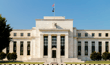
Former Fed chair Jerome Powell sounds alarm on central bank credibility while accepting a courage award in Boston

Jerome Powell delivered his most pointed public remarks since leaving the Federal Reserve chairmanship on Sunday, May 18, 2026.
The former chair described the central bank as undergoing a political "stress test" — one he warned, if left unchecked, will permanently erode the institution's credibility and destabilize the United States economy.
Accepting the John F. Kennedy Profile in Courage Award at the JFK Library in Boston, Powell placed the Fed alongside courts, universities, and Congress as institutions straining under pressure from the Trump administration.
"Democratic institutions take much time, effort, and patience to build but can be torn down all too quickly," he said.
The stakes for mortgage professionals
Powell's argument was direct: if presidents can remove central bankers over policy disagreements, markets will price in political risk every time the Fed sets rates. That has immediate consequences for the 30-year fixed mortgage, which has remained above 6% for most of 2026 as uncertainty persists.
As banking giants have revised their Fed rate expectations for 2026, the Mortgage Bankers Association's chief economist Mike Fratantoni told Mortgage Professional America that mortgage rates are likely to hover in the 6%–6.5% range through the year.
Finance professor Robert Johnson previously told MPA that the independence of the Federal Reserve from political pressure is "paramount to a sound economy and financial markets," calling it a "big mistake" for any Fed chair to bend to presidential demands.
"If any administration finds a way to remove Fed officials over policy differences, then future administrations will do so as well," Powell said.
"The public would lose faith that the central bank will make decisions based only on what's best for all Americans."
Selma Hepp, Chief Economist at Cotality, says incoming Fed Chair Kevin Warsh faces competing pressures from inflation, political expectations, and rising long-term yields that are more influential for mortgage rates than short-term policy changes.https://t.co/1DXpGiHNYl
— Mortgage Professional America Magazine (@MPAMagazineUS) May 31, 2026
What triggered Powell's remarks
Powell catalogued the pressure he faced during his eight-year tenure. In January 2026, the Department of Justice launched a criminal investigation into the $2.5 billion renovation of the Fed's Washington, D.C., headquarters. The probe was dropped in April 2026 and referred to the Fed's inspector general.
The White House also moved to remove Fed governor Lisa Cook, though the Supreme Court granted her the right to remain at the central bank while her case proceeds.
"Partisan political differences are normal — indeed essential — in a thriving democracy," Powell said.
"But we ought to be united in our commitment to the higher principles that define our nation. Chief among them is respect for the rule of law."
Powell's successor, Kevin Warsh, was sworn in as the 17th Federal Reserve chair at the White House on May 22, 2026. Trump, speaking at the ceremony, said he wanted Warsh "to be totally independent."
Read more: Explainer: How the new Fed chair could go about cutting interest rates
Powell made history by remaining on as a Fed governor after his term as chair concluded — a position analysts say complicates Warsh's credibility as the new Fed chief, with his governor seat running until 2028 and retaining a voting role on the Federal Open Market Committee (FOMC).
Odeta Kushi, deputy chief economist at First American, told MPA that "leadership changes in 2026 are unlikely to materially alter the Fed's policy direction," noting that "although the chair influences communication and risk framing, policy is ultimately set by a committee where the chair holds just one vote."
Stay updated with the freshest mortgage news. Get exclusive interviews, breaking news, and industry events in your inbox, and always be the first to know by subscribing to our FREE daily newsletter.