Brokers should brace for deeper property slump as Sydney already double-digits lower from peak

Australian house prices could fall 15% from their peak before the downturn ends, AMP chief economist Shane Oliver has warned, after Cotality data showed national home values dropped another 1.2% in October.
It was the seventh monthly fall in a row and the slide is showing no sign of slowing, with Cotality says this is the fastest housing downturn in 40 years.
"The rapid decline, more rate hikes than expected and rising unemployment combined with the structural change associated with the tax hikes on investors suggest that the top to bottom fall is now likely to be around 15%," Oliver said of the figures.
The data lands as the Reserve Bank of Australia (RBA) is expected to slap another rate rise on the table tomorrow.
Sydney leads, but slump is spreading
Prices fell in every capital city except Hobart and Darwin last month. Sydney has dropped over 10% since February 2026 – already more than Melbourne lost in its entire downturn since 2022.
Brisbane and Perth, the boom markets of recent years, are now falling fastest from month to month.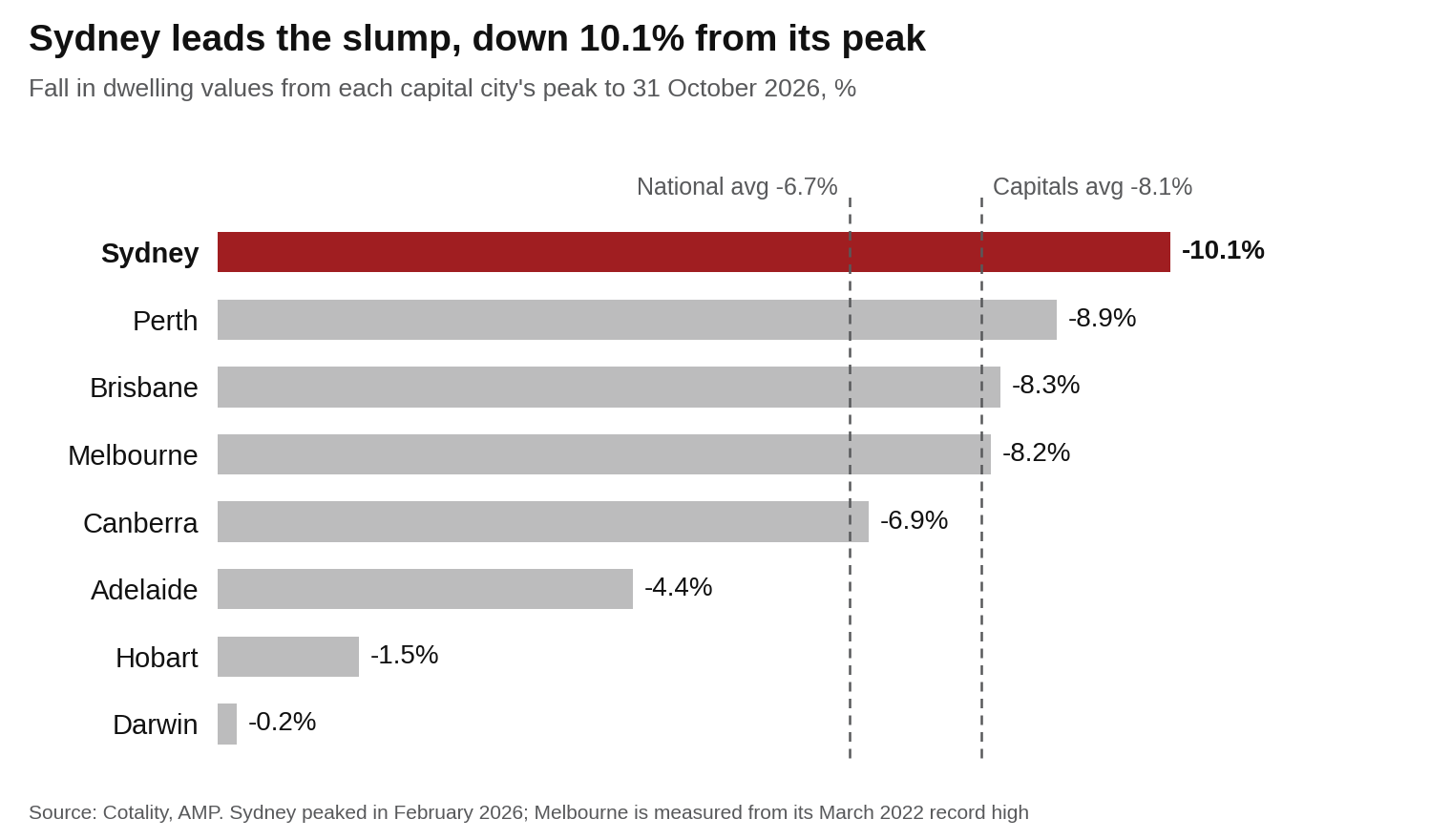
Buyers are stepping back too. Cotality's October 2026 Home Value Index shows sales well down on a year ago, auction clearance rates stuck below 50% and homes taking longer to sell.
Cotality research director Tim Lawless said buyers have more choice and more bargaining power, yet "despite this being a buyer's market, they are noticeably absent".
Why are house prices falling so fast?
Oliver blames a "perfect storm": rising interest rates, the Budget's tax changes for property investors, poor affordability and weak buyer confidence. Together, they outweigh the support from Australia's housing shortage and the expanded 5% Deposit Ccheme for first home buyers.
Interest rates are doing the most damage. The RBA has raised rates four times this year, and all four major banks passed the September rate rise on in full. Each rise shrinks how much buyers can borrow – by AMP's estimate, the four hikes so far have cut about $45,000 from what a single buyer on average earnings can spend on a home.
Mortgage stress nears a tipping point
Existing borrowers are feeling it too. Oliver estimated that another hike would take the rise in monthly mortgage interest since January 2026 to about $550.
Few homeowners are being forced to sell yet, but Oliver warned a weakening jobs market could change that. "The weaker jobs market and rising unemployment risks also adding to distressed sales as some homeowners may experience a loss of income or will be less able to work more hours to cover their extra mortgage payments," he said.
Brokers have already told MPA the RBA's fourth rate rise is reshaping client conversations and cutting into borrowing capacity.
Investors, meanwhile, are holding back. The Budget changes to negative gearing and capital gains tax have cut their after-tax returns, and Oliver expects many to wait for lower prices or higher rents before buying again.
When will house prices bottom out?
AMP expects prices to bottom around the September quarter of 2027 – a little later than when it first raised the prospect of a 15% fall in October – followed by a modest recovery as the RBA starts cutting rates.
That relief is some way off. Oliver doesn't expect a rate cut until late 2027, though a sharper fall in prices could bring it forward.
He expects houses in Sydney, Brisbane and Adelaide to fall furthest. Perth is "already proving weaker than expected", while Melbourne and Hobart should get off more lightly.
Looking further ahead, Oliver questioned whether Australia's 30-year property boom is over, given higher rates, the loss of investor tax breaks and lower immigration – though the ongoing housing shortage made it "hard to be definitive".
What it means for brokers
Oliver doesn't expect a crash unless unemployment rises much more sharply. But the risks are tilted to the downside, and named interest rates, confidence, jobs and investor demand as the things to watch.
How exposed clients are depends heavily on where they bought. Cotality noted that Perth homeowners are sitting on large equity buffers after years of strong growth, while Sydney and Melbourne values are no higher than they were five years ago – leaving recent buyers there with much less cushion.
The RBA will make its next cash rate decision on Tuesday afternoon.