Rate hikes, investor tax changes and weak buyer confidence are a perfect storm for the property market, with values tipped to bottom out mid-2027

Australian house prices could fall as much as 15% from their peak before the downturn runs its course, reckons AMP chief economist Shane Oliver (pictured), who has deepened his forecast after new data showed national home values fell again in September.
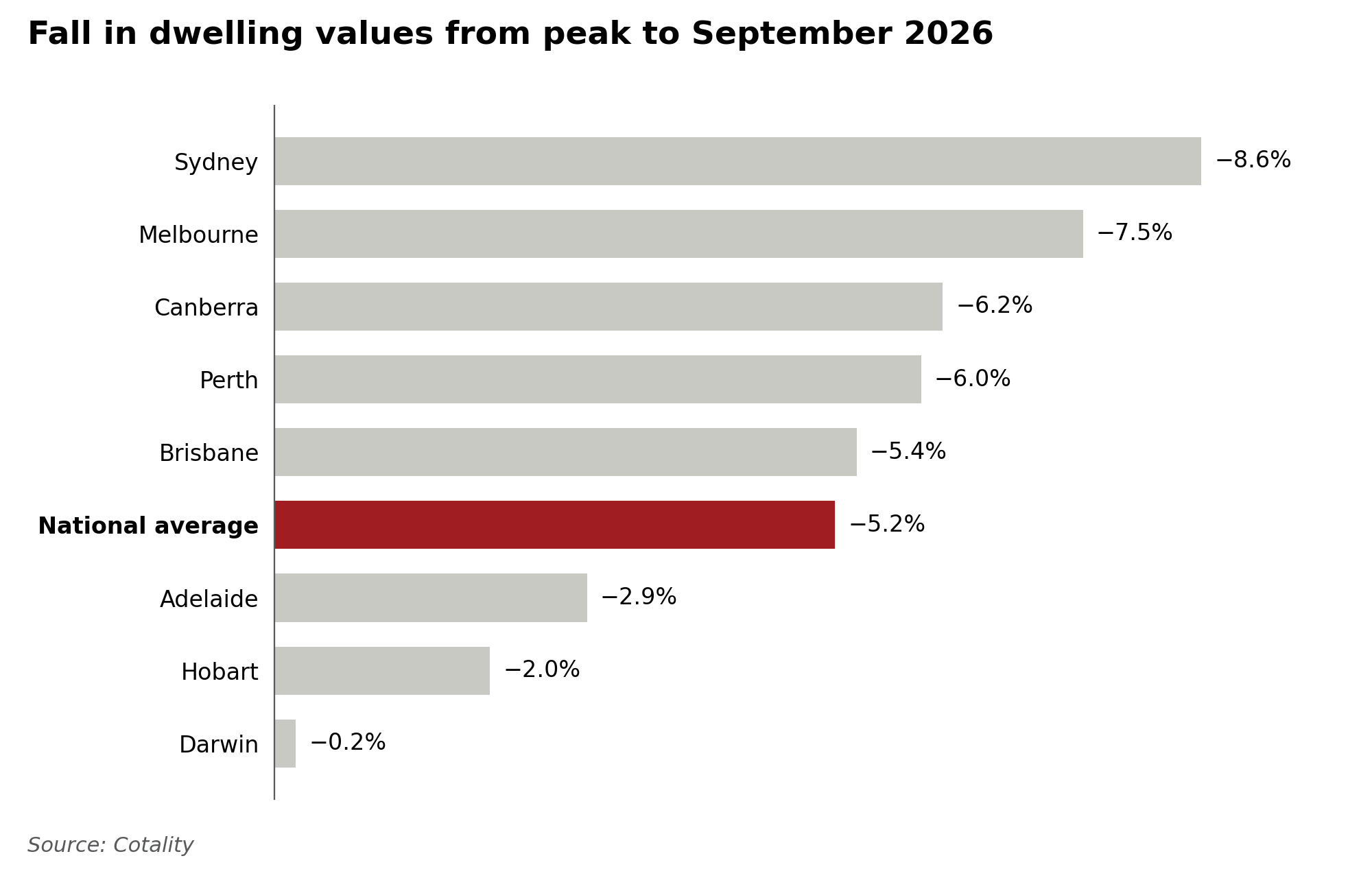
It was the sixth straight monthly decline and leaves national prices 5.2% below their high, although other estimates put the peak-to-trough fall at a more conservative 3.3%.
On Oliver's numbers, the housing market may not yet be halfway through its correction. AMP had been expecting a 10% top-to-bottom fall. It now expects a range of 10-15%, with a midpoint of 12.5% – a sharp escalation from the 6% peak-to-trough decline it was tipping as recently as July.
"With a perfect storm continuing to hit the property market, further price falls are likely," Oliver said.
What's driving the house price downturn?
Oliver pointed to four forces working against the market at once: rising interest rates, the Federal Budget's tax changes for property investors, record-poor affordability and weak buyer confidence.
The pressure from rates has just intensified. The Reserve Bank of Australia (RBA) lifted the cash rate again this week – its fourth hike of 2026 – taking it to its highest level in 15 years, a move all four major banks had tipped ahead of the September meeting.
For a buyer on average earnings with a 20% deposit, the latest hike cuts what they can pay for a home by another $11,000, bringing the total hit this year to nearly $45,000.
Existing borrowers are feeling it too. The latest move adds roughly $110 a month to mortgage interest payments (depending on the size of the loan) – and about $440 a month since January.
That "is quite an impost and runs the risk that we may be close to a tipping point for some mortgage holders”, said Oliver.
Investors, meanwhile, are stepping back after the Budget moved to curtail negative gearing – the ability to offset a loss on a rental property against other income – and to change how capital gains are taxed.
"It makes sense for investors to sit on the sidelines until they see lower prices or higher rents or some combination of the two resulting in a higher starting point rental yield before they invest to compensate for the higher tax rate they now face," Oliver said.
Which cities face the deepest house price falls?
Sydney is leading the slide, with values down 8.6% from their peak. Every capital except Darwin is now going backwards, and 97% of capital city suburbs recorded a fall over the past three months, according to Cotality.
Oliver expects Sydney, Brisbane and Adelaide to see the deepest falls from here, while Melbourne – which didn't rise as much in recent years – is likely to have a shallower decline.
Houses are far more exposed than units. Measured against long-term, inflation-adjusted price-to-rent ratios, AMP estimates houses are about 35% overvalued nationally, compared with just 8% for units.
Units and cheaper properties should hold up better. They didn't rise as much, they're more affordable, and they're getting a lift from the expanded 5% Deposit Scheme for first home buyers.
What's stopping a bigger fall?
Three things, according to Oliver: a housing shortfall of an estimated 200,000 to 300,000 dwellings, vendors who aren't yet under pressure to sell thanks to low (albeit rising) unemployment, and the first home buyer scheme propping up entry-level stock.
But he sees the risks tilted to the downside. Listings have plunged as sellers hold outfor better prices, and that resolve will be tested as the spring selling season heats up against weak demand. Any further rise in unemployment could also push more owners into distressed sales.
When will the housing market bottom out?
AMP expects prices to bottom around the June quarter of 2027, followed by a modest recovery through 2027-28 as the RBA shifts to rate cuts. Oliver doesn't expect cuts until the second half of 2027, though a sharp fall in home prices could bring them forward.
"So, absent a crisis, rate relief is a long way off," he said.
Longer term, Oliver questions whether Australia's 30-year property "super cycle" is over, pointing to a rising trend in mortgage rates, the removal of most property tax concessions, record-poor affordability and a political shift towards lower immigration.
Negative equity risk
For brokers, the fallout lands on two fronts. Client borrowing capacity keeps shrinking with every hike, and recent buyers with small deposits face a growing risk of negative equity – where the mortgage is worth more than the home securing it.
Negative equity will only bite if an owner has to sell, but it could become an issue for those who bought around the end of 2025 with small deposits (including under the 5% Deposit Scheme) if unemployment rises. The banks are well capitalised to absorb bad loans, noted Oliver, but weaker demand for credit has been weighing on their share prices.