Bank of England may need deep mortgage rate cuts to reach fixed-rate borrowers, strategist warns

The Bank of England only raised rates last week, but one City strategist says the bigger question for mortgage borrowers is how far rates would have to fall the next time the Bank needs to prop up the economy.
Mike Bell, head of market strategy at RBC BlueBay Asset Management, wrote in the Financial Times this week that "monetary policy in the UK doesn't work the way it used to". He puts it down to two changes in how Britons own their homes. Almost every mortgage is now on a fixed rate, and a growing share of owners have paid theirs off.
Last week's rise
On 5 November the Monetary Policy Committee voted 8–1 to lift Bank Rate from 3.75% to 4%, the first increase since August 2023. Catherine Mann wanted a half-point rise, as our recap of how the Bank of England voted to raise rates showed. Inflation was 3.5% in September and the Bank now expects it to reach about 5% next year. The next decision is on 17 December.
Read next: Remortgage searches surge 37% as rate shock forces borrowers to act
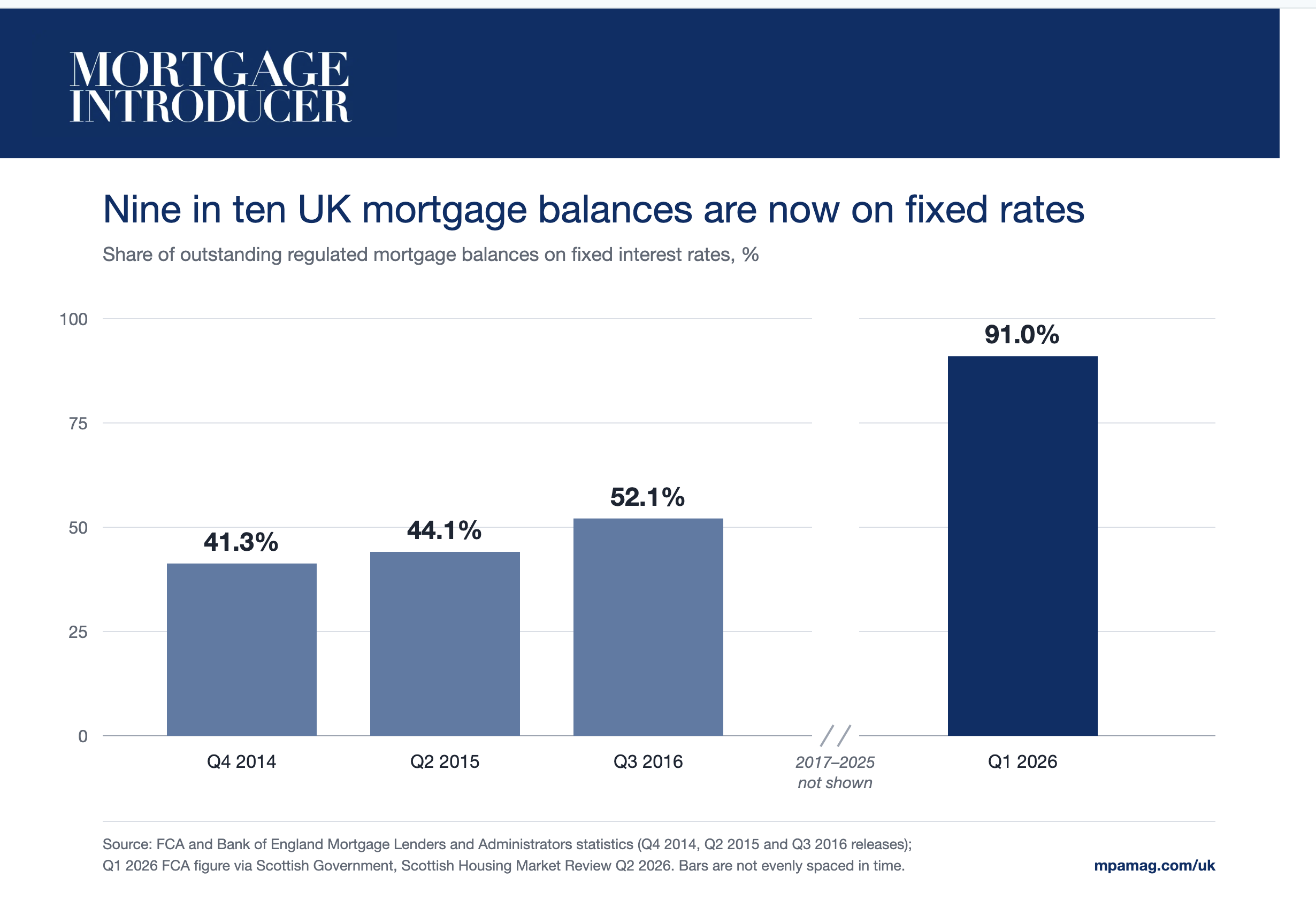
Tracker and standard variable rate customers will pay more within weeks. Most borrowers won't notice anything yet. In the first quarter of 2026, 91% of outstanding regulated mortgage balances and 92% of new lending were on fixed rates, according to FCA figures published by the Scottish Government. Lenders had also repriced fixed deals on swap rates well before the vote, as we covered in what the Bank of England rate rise means for mortgages.
Bell, citing Bank of England data, says hardly anyone had a fixed rate when rates rose in the late 1980s. In 2004 only a quarter of mortgages were fixed, and by 2006 the share was still under 40%. By 2022 it was above 80%, and almost 60% of those fixes ran for five years.
More owners with no mortgage
In England, 55% of owner-occupiers now own their home outright, according to the English Housing Survey 2024-25. Bell puts the figure at 39% in 1988.
His argument is that this mix delays and distorts the effect of rate changes. When the Bank pushed rates up between 2022 and 2024, interest on household savings rose faster than the total mortgage bill, because most borrowers were sitting on fixes. On his reading, households as a group came out ahead early in the hiking cycle.
From 2024 savings income fell, while the total paid on mortgages kept climbing as cheap fixes ended. Around 1.8 million fixed deals end this year, and nearly a million of those borrowers are refinancing for the first time since rates jumped in 2022, according to our report on the 37% surge in remortgage searches.
Pandemic movers
Bell picks out households that moved during the pandemic in search of more space and took five-year fixes. Those deals started expiring in mid-2025, and he says the number of homes for sale in the South East has risen sharply since. With the jobs market weakening, he thinks prices in the region could come under pressure.
Small cuts, small effect
When the Bank does cut, Bell expects the average rate paid by existing borrowers to fall slowly, since most are locked in. Savers would lose income much faster. A run of quarter-point cuts could take money from savers without doing much for borrowers.
Read next: Tracker demand triples as borrowers hedge against uncertainty
He argues that a quick lift to the economy would need a cut big enough to make paying early repayment charges worthwhile for borrowers who want to refinance. That would mean the Bank moving in far larger steps than the quarter-point moves brokers have got used to.
Borrowers are already shortening their horizons. Bell says about 65% of new fixed-rate borrowers now take two-year deals. Trackers made up 12% of mortgage choices in April 2026, against 4.1% a year earlier, according to Stonebridge figures in our report on tracker demand tripling. The more borrowers on short fixes or trackers when the next cutting cycle starts, the sooner cuts will reach them.
AI and jobs
Bell also flags the chance that AI cuts well-paid jobs. In Deloitte's Q3 2026 CFO Survey, 52% of the 66 finance chiefs polled said they expect AI to reduce headcount in their own business within 12 months. If that happens widely, Bell says, even large rate cuts may not revive demand for workers and homes, and the Bank could need less conventional tools.
For now the market is more focused on whether further rises come first. Earlier this autumn traders were pricing in three Bank of England rate rises over two years. Bell's point to investors is that they should also be asking how low rates may need to go next time.