New FCA analysis maps flood exposure across England’s mortgage book, with risks to insurance costs, property values, and resale
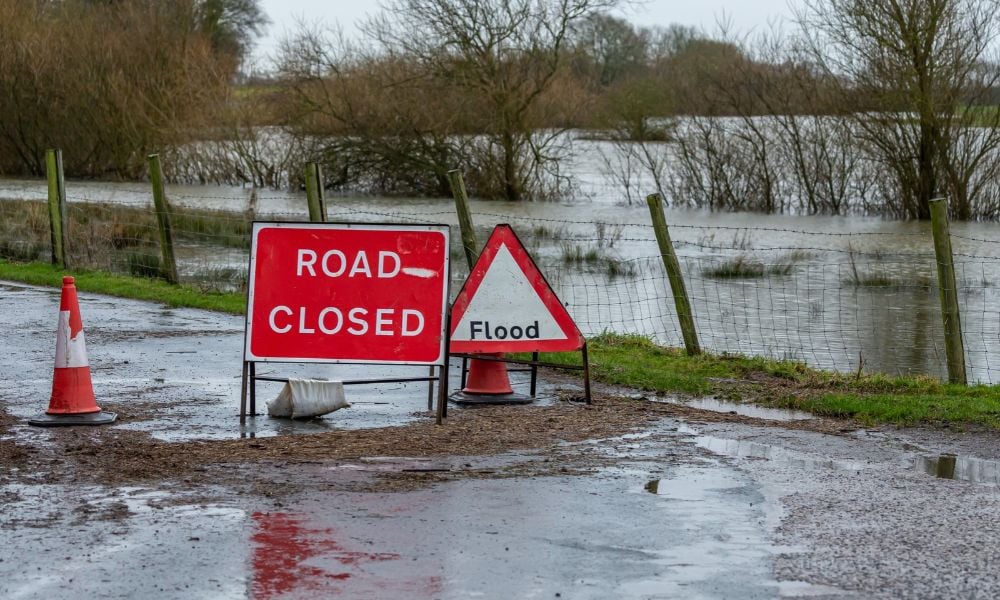
More than 15% of mortgaged properties in England are tied to a postcode carrying some degree of flood exposure. That is the headline finding of new analysis published by the Financial Conduct Authority (FCA) on 26 October 2026. The report mapped regulated mortgage contracts against Environment Agency datasets covering rivers, sea, and surface water flooding.
The FCA mapped those contracts against flood risk classifications at postcode level, not individual property level. The analysis found that 15.5% are linked to postcodes with some level of flood exposure — a measure of aggregate risk, not a tool for assessing specific homes.
Stay ahead of the UK mortgage market. Subscribe to the Mortgage Introducer daily newsletter for broker news, rate updates, and the industry latest delivered to your inbox every morning.
Where flood risk is concentrated in England’s mortgage market
Exposure is not evenly spread. For surface water flooding — driven by overwhelmed drainage during heavy rain — inner London carries the highest concentration. Some 24% of mortgage contracts in Inner London West and 21% in Inner London East are linked to at-risk postcodes.
Essex stands out further: 6.5% of its mortgage postcodes fall into the high-risk surface water category, the highest proportion of any sub-region in the analysis.
For flooding from rivers and the sea, East Yorkshire and Northern Lincolnshire face the greatest exposure. Some 38% of mortgage contracts there are linked to postcodes carrying some level of waterway or coastal flood risk. Lincolnshire follows at 28%.
The FCA also examined whether high loan-to-value (LTV) lending clusters in flood-risk areas. It found no reliable pattern, complicating any assumption that the risk sits with less creditworthy borrowers.
Flood risk and the broker conversation
Around one in five clients currently obtains home insurance through their mortgage adviser. The FCA’s new data gives that gap a sharper edge. A client in East Yorkshire, Lincolnshire, inner London, or Essex may already own a property where buildings insurance is difficult to price. Flood cover in those areas may become harder to obtain over time.
Raising that risk with homeowners — and directing them to insurance specialists where needed — should be part of every client conversation. The FCA reaffirmed mortgage advisers’ signposting duties on protection in 2026, making clear that directing clients toward appropriate cover sits within existing expectations.
Data showing only one in five clients gets home insurance through their broker suggests most of those conversations are not yet happening.
“The scale of flood risk across England’s mortgage market raises serious concerns for homeowners who could see their properties become harder to insure or sell, and lenders facing increasing financial risks across their mortgage portfolios,” said Richard Pinch, senior director at banking and credit advisory consultancy Broadstone.
“For homeowners, the consequences of flood risk can be severe — from soaring insurance premiums and falling property values to difficulties remortgaging or selling. In the worst cases, households could find themselves trapped in properties that are increasingly difficult to insure or finance.”
Lenders and the wider market
Pinch also cautioned that the pressure extends beyond individual client files.
“Flood risk also presents a significant challenge for mortgage lenders, threatening property valuations and potentially eroding the value of the security backing their loans,” he said. “As extreme weather events become more severe, lenders could face greater credit losses and increased risks across their mortgage portfolios.”
Pinch argued that the solution lies not in tightening lending criteria in affected areas. Better climate risk modelling, stronger flood defences, and closer working between lenders and insurers are where he said the focus should sit.
The FCA framed the publication as a high-level overview, stating that the analysis does not introduce new regulatory requirements or supervisory expectations. Brokers who bring this data into client conversations protect both the people they advise and their own advice standards.
With home insurance accessibility under growing scrutiny across the UK mortgage market, flood risk is a question the file should answer — not one left for the client to discover later.
Read the full flood risk report on the FCA website