Losses to bank transfer scams hit a first-half record of £316m in 2026, with advance fee cons more than doubling. Brokers may want to warn clients who are saving for a home

Banks are blocking more card fraud than ever, so criminals are spending less time stealing card details and more time persuading people to send them money.
Figures published by UK Finance today show £659.5m was lost to fraud and scams between January and June 2026, up 8% on the £608.9m lost in the same period of 2025. The number of confirmed cases fell 14% to about 1.78 million.
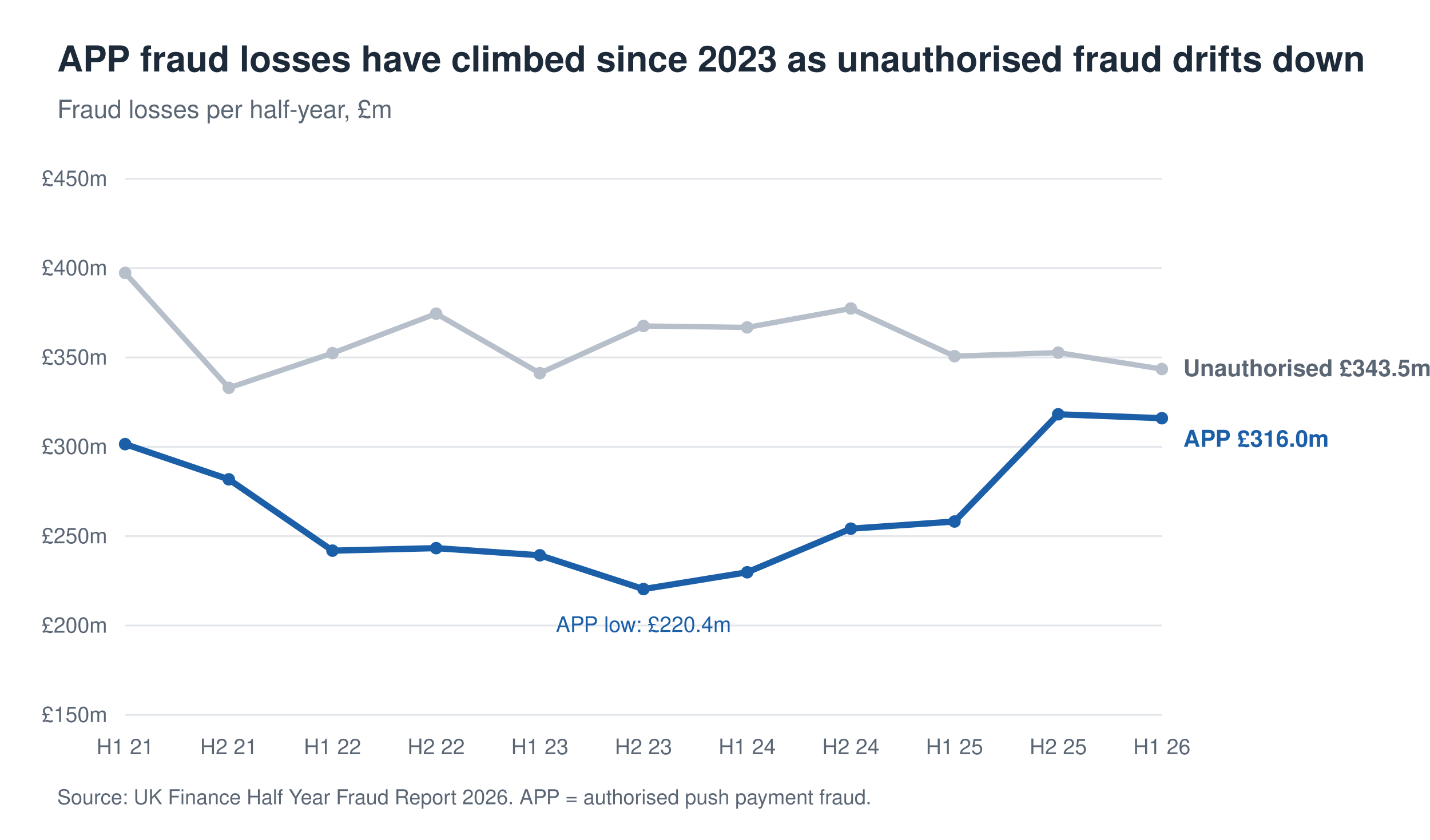
The rise came almost entirely from authorised push payment (APP) fraud, in which victims are tricked into transferring money to a criminal themselves. APP losses rose 22% to £316m and cases rose 25% to 138,345. Both are the highest first-half figures UK Finance has recorded.
Ruth Ray, managing director of economic crime at UK Finance, said fraud "remains one of the biggest threats facing the UK", according to Press Association coverage carried by LBC. The trade body's report says fraud accounts for around 47% of all crime in the UK.
Advance fee scams double
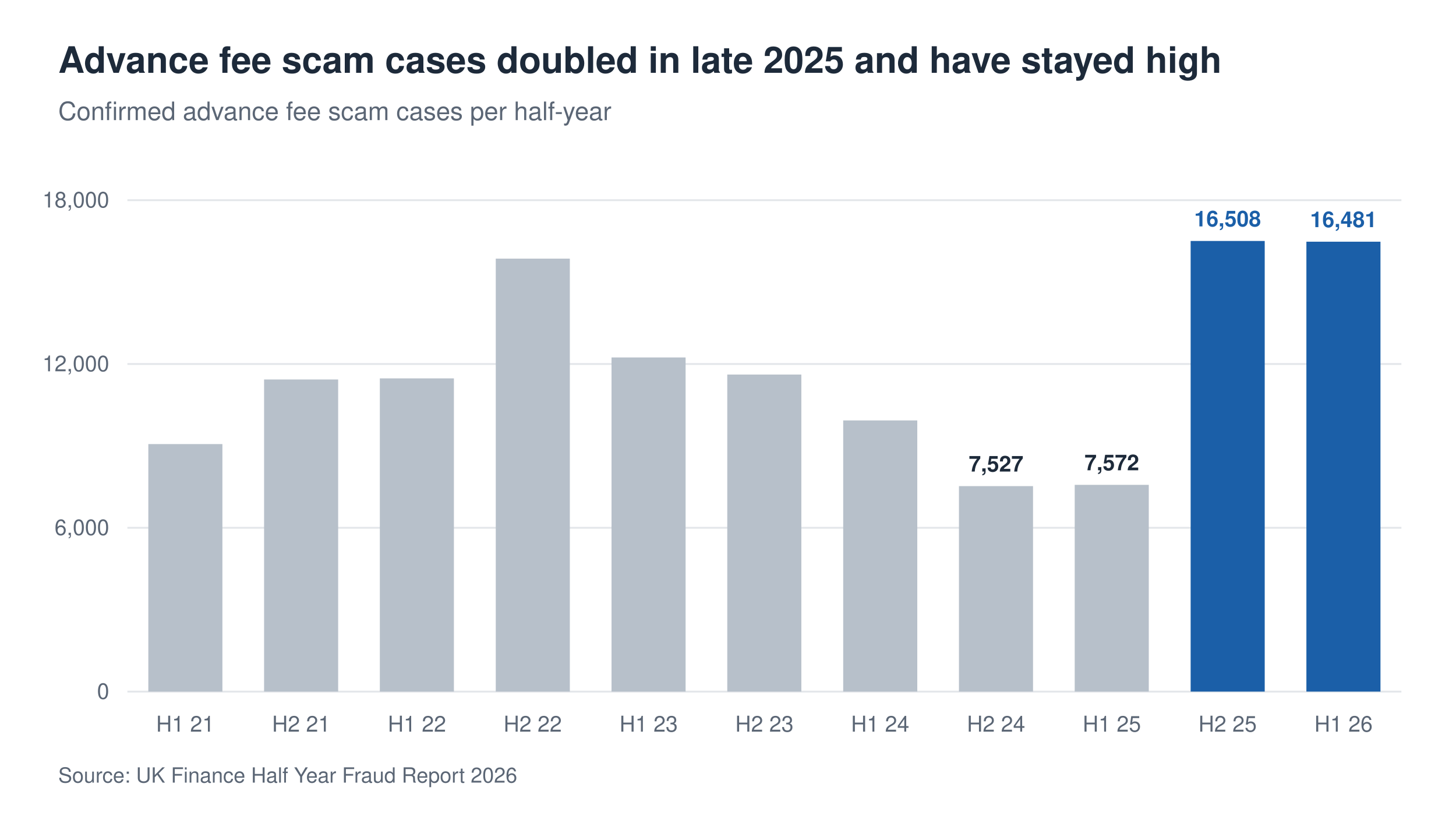
The biggest jump was in advance fee fraud, where a victim pays upfront for something that never arrives. Cases rose from 7,572 to 16,481 and losses climbed 73% to £34m. The number of payments made to fraudsters rose 85% to 51,229, which UK Finance said suggests victims are paying repeatedly over longer periods before they realise.
Some of the examples in the report will be familiar to brokers. In a loan fee scam, a borrower is told their credit has been approved but must first pay an arrangement fee, insurance premium or processing charge, and the loan is never paid out. In a deposit scam, the victim pays to reserve a car, boat or other expensive item that does not exist.
UK Finance also reported more recruitment scams, in which fake jobs advertised on social media are used to take upfront fees or collect personal information. Stolen personal data of this kind is often used later in identity fraud, including fraudulent credit applications.
Read next: The £66 million Meta fraud problem facing your clients
Conveyancing and impersonation risks
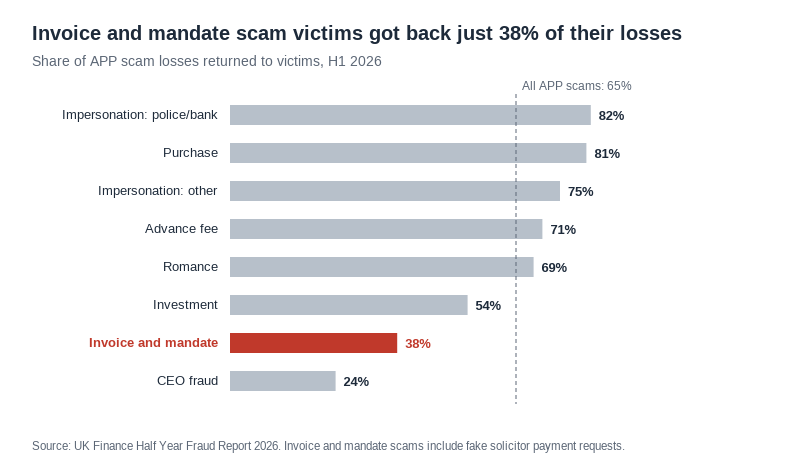
Invoice and mandate scams, where criminals pose as solicitors, builders or suppliers and claim their bank details have changed, cost victims £18.7m, 8% less than a year earlier. Only 38% of that money was returned, the lowest rate of any APP scam type except CEO fraud. Business accounts, which fall largely outside the mandatory reimbursement rules, took £14m of the losses.
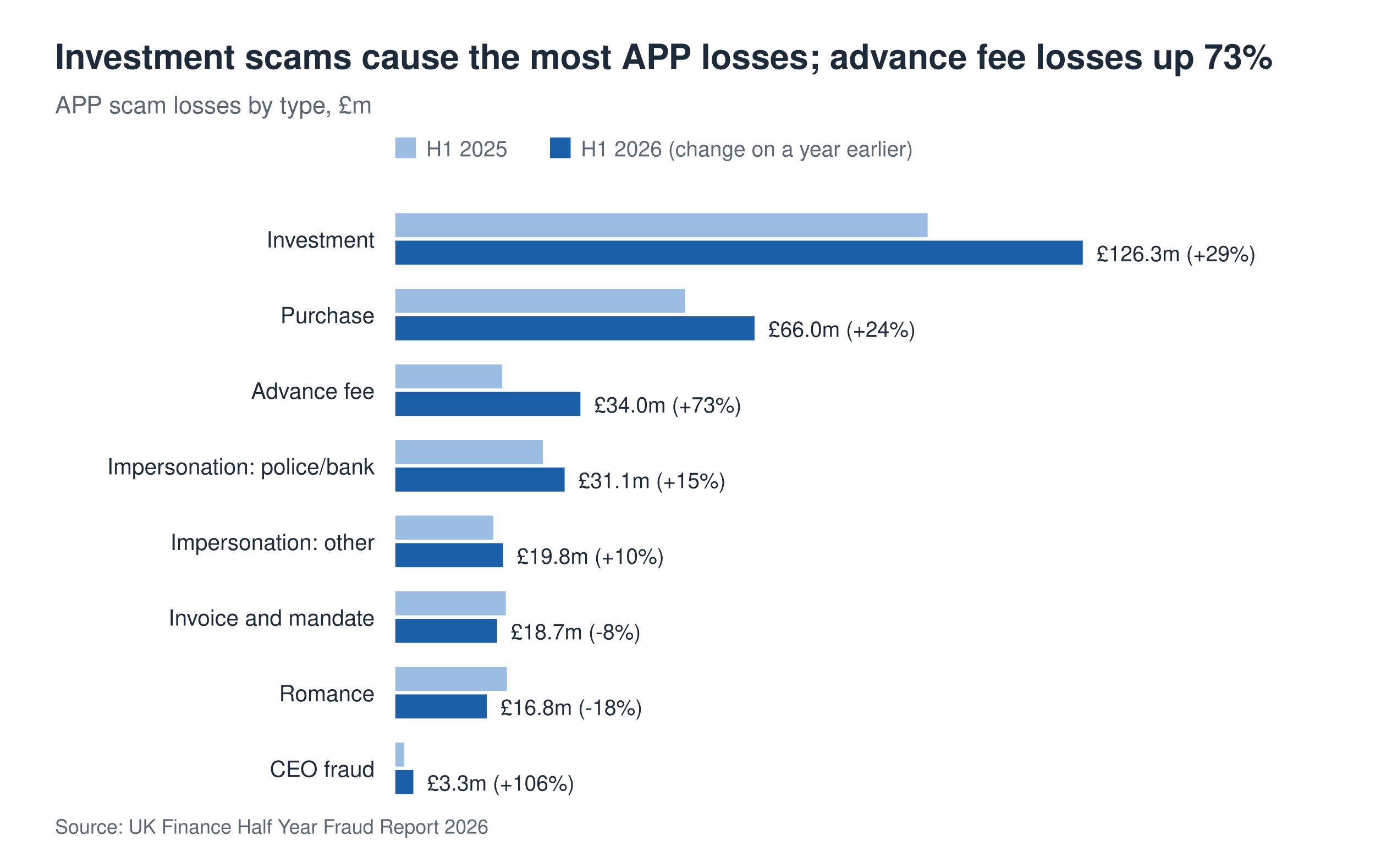
Scams in which fraudsters pose as police officers or bank staff rose for the first time in several years. Cases increased 29% to 4,073 and losses rose 15% to £31.1m. CEO fraud, where a criminal poses as a senior executive to push through an urgent payment, more than doubled to £3.3m, although from a low base.
The trend fits with earlier warnings to the mortgage market. Lloyds data shows two-thirds of UK purchase fraud now starts on Meta's platforms, and first-time buyers are among those losing deposit savings to social media scams.
Investment fraud remains the costliest
Investment scams caused the most damage by value. Losses rose 29% to £126.3m, about 40% of all APP losses. There were 7,805 cases, up 21%, so the average victim lost more than £16,000, compared with £2,284 across all APP scam types.
UK Finance said these scams often run for months before victims realise, so some of the money counted in 2026 may have been paid out earlier. Common lures include gold, property, cryptocurrency, land banks and wine.
Purchase scams, in which people pay for goods that never arrive, remain the most common type. There were 95,830 cases, about 69% of all APP fraud, and losses reached £66m, the highest since UK Finance began collecting the data in 2020. Banks returned 81% of purchase scam losses.
Most scams start outside the banking system. Online platforms were the starting point for 58% of APP cases and about a third of losses. Phone calls and messaging services accounted for 16% of cases but 33% of losses, because they are often used in higher-value impersonation and investment scams. UK Finance could not identify where 21% of cases began.
Mobile banking apps were used to send £177.5m of APP losses, up 40% and more than half the total. Payments sent abroad rose 32% to £39.2m, and the number of international scam payments rose 69%. Money sent overseas is much harder to recover.
Card fraud falls, but social engineering grows
Unauthorised fraud, where a criminal takes money without the account holder's permission, fell 2% to £343.5m and cases dropped 17% to 1.64 million. The industry stopped a further £810.5m, about 70p of every £1 attempted. Card fraud losses fell 4% to £286.4m, helped by a 10% drop in online and phone "card not present" fraud.
That still averages just under 10,000 cases and about £1.9m of losses a day. UK Finance said the fall does not mean the threat is shrinking. Criminals are increasingly persuading people to make card payments themselves, which are not counted in the unauthorised figures.
Fraud through mobile banking apps hit a first-half record. Losses rose 18% to £25m and cases rose 61% to 15,873, the highest since the series began in 2015. Telephone banking fraud is small by comparison, but cases more than doubled.
Reimbursement rises, but prevention is the priority
Banks returned £205.7m to APP victims in the first half, about 65% of the money stolen, up from 62% a year earlier, according to the PA report. Mandatory reimbursement, introduced in October 2024, covers personal, micro-business and charity payments of up to £85,000 made by Faster Payments or CHAPS within the UK.
An independent review published by the Payment Systems Regulator in July estimated the rules had cut APP losses over Faster Payments by around 21%, or £73m a year. The PSR is due to be consolidated into the Financial Conduct Authority.
UK Finance said reimbursement cannot replace prevention, because by the time a victim is refunded the criminal already has the money. It wants stronger obligations on technology and telecoms companies. It is also urging Ofcom to act against the platforms scammers use most, and wants online marketplaces to verify sellers and keep payments on their own systems rather than allowing bank transfers.
Chris Ainsley, head of fraud prevention at Santander UK, said households are "bombarded with fraud attacks and scam content every day". He said other sectors need to do more to stop scams at source.
The half-year figures follow UK Finance's 2025 annual report, which showed £1.28bn stolen through payment fraud, with APP losses up 19% to £576.4m.
For brokers, the risk goes beyond clients losing money. A client who loses savings to a fake deposit or a bogus loan fee may come back short of their deposit target, and some may be tempted to hide the shortfall on an application. Brokers have previously called on the FCA to do more to help them tackle mortgage fraud.
Read next: Brokers tell FCA it must up its game to combat mortgage fraud
Five things to tell your clients
-
Lenders do not charge a fee to release an approved loan. If someone asks for an upfront arrangement or insurance fee before paying out, treat it as a scam.
-
Check any change to payment details by phone. Before sending a deposit or completion money, call your solicitor or conveyancer on a number you already have, not one from the email.
-
Be wary of pressure to pay a deposit quickly. Being told to act fast to secure a car, holiday or rental is a common advance fee tactic.
-
Your bank and the police will never ask you to move money to a "safe account". Hang up and call the number on the back of your card.
-
Stop and check before you pay. The banking industry's Take Five to Stop Fraud campaign has more advice.
Read next: HSBC hit with "first of its kind" multimillion-dollar fine