Tax and SMSF lending overhauls, AI-driven fraud risk and shifting client priorities are converging – and commercial brokers are stepping up as true partners, not just dealmakers

CAFE SYDNEY’S dining room was packed to the rafters for MPA’s 2026 Commercial Roundtable, as 13 senior figures from every corner of the industry gathered for a deep dive into the forces reshaping commercial lending.
The mood in the room was equal parts urgency and opportunity. May’s Federal Budget, paired with the tightening of residential SMSF lending, has investors rethinking whether their capital belongs in residential property at all – and whether commercial property is set to benefit.
Fraud, too, cast a long shadow over the discussion: AI-generated documentation has already rattled the wider mortgage finance industry, and few around the table believe commercial will be spared for long.
Then there was the million-dollar question – what next? With rates, inflation and confidence all up for debate over the coming 18 months, the panel weighed where the surprises might land, and just how far broker market share of commercial lending could climb.
Over the course of the discussion, the participants continually reverted to one theme: the commercial broker is fast becoming less a facilitator of transactions and more a trusted partner clients can lean on to navigate the complexity ahead.

How have the sweeping tax overhauls announced in the May budget changed the game for commercial lending?
If there was one point of consensus around the table, it was this: the tax overhauls announced in the budget, coupled with the tightening of residential SMSF lending, mark a genuine inflection point for commercial lending rather than a temporary disruption.
Every participant, from major bank to boutique broker, described some version of the same shift: business owners and investors are reassessing whether their capital should keep flowing into residential property or pivot towards commercial real estate and owner-occupied premises instead.
Nobody around the table framed this as bad news for the sector. If anything, the mood was closer to cautious excitement, with a widely shared view that the changes will accelerate demand for genuine advisory relationships, reward brokers who understand structure rather than just rate, and ultimately grow the commercial lending pie.

Where opinions diverged was on timing and depth. Some expected the shift to show up in deal volumes within months; others cautioned that meaningful capital reallocation would take until well into next year. But on the direction of travel, the room spoke with one voice.
Chris Thomas at NAB set that tone from the opening exchange. “There’s a real sense that business owners are reassessing where their capital sits right now,” he said. He predicted a pivot towards commercial real estate as business owners look to build wealth “outside of their trading businesses”.
“The changes to the tax regime announced in the budget will create opportunity for brokers to provide lots of fresh new advice”
Chris Thomas, NAB
“The Australian business community is very adept at change, and they will work through these different changes … but they’ll still continue to find ways of building prosperity,” added Thomas
George Lyall, general manager at Millbrook Group, whose focus is development finance, agreed that the SME and commercial sector had proven resilient through recent volatility, and expects the budget changes to compound existing tailwinds.
For Siobhan Williams, head of mortgages, retail broker at Pepper Money, the budget is doing more than nudging investment decisions; it’s shifting the entire conversation clients are having with their brokers. “There will be many SMEs looking at the structure of their business and asking, ‘does this still serve me?’” said Williams. “A lot of SMEs are going to be reviewing their position, their cash flow and their future investments. For Pepper Money, we do really provide a lot of value when SMEs need to review their cash flow position, whether they’ve started to accumulate tax debt, whether they’ve got business debts, or maybe they’re finding a little bit of restriction on their loan terms and they want to stretch that out to improve their cash flow position.”
Off the back of that, Pepper Money is already seeing a lift in refinance activity as clients move early to restructure ahead of the changes, alongside a growing preference for established commercial property given its “consistent, reliable income and lower complexity”. There is also strong owner-occupier demand, she added, particularly from SMEs looking to take control of their long-term cost bases – and established property under $7 million sits squarely in Pepper Money’s sweet spot, especially where clients need to move quickly on a refinance or restructure.
The budget’s ripple effects extend to brokers themselves, Williams noted, not just their clients. Brokers are “feeling the same pressures as their SME clients”, she said, citing rising costs, increasing compliance and a growing reliance on technology and scale. That pressure is accelerating the shift towards a more professional, advisory-led model, with brokers “stepping beyond transactions into strategy” and leaning further into commercial lending as a genuine diversification play.
Grant Smith, chief lending officer at ORDE Financial, framed the current mood through the lens of SME lending relationships built over years, noting that commercial property was largely untouched by the budget compared with residential investment. “For SME businesses, they’ll be looking to assess and review their position,” Smith said.
“Residential property investment might have been [SMEs’] strategy before ... they’ll seek advice, they’ll look at options, and they’ll reassess their positions”
Grant Smith, ORDE Financial
Joel Harrison, head of partnerships and distribution at Thinktank, went further, arguing that brokers and borrowers alike will need to become considerably more strategic in how they plan. “Today’s decisions need to support tomorrow’s strategy. That’s why borrowers are taking a much closer look at structure and seeking the right advice from the outset,” Harrison said, pointing to company, trust and SMSF structures as decisions clients can no longer make on autopilot. He also sees a practical driver behind the shift to owner-occupied commercial property: “When the cost of ownership starts to look comparable to the cost of renting, it’s only natural that more business owners begin considering owner-occupied property.”

At Resimac, Michael Stavroulakis, head of product, A&E and SBLs, said the structural incentives had flipped almost overnight. For investors looking to buy residential property personally or through an SMSF now facing new disincentives, “investing through corporate structures as well as investing in commercial property are now looking a lot more attractive”, he said.
Stavroulakis expects that shift to flow directly into demand for Resimac’s secured business loan products – a relatively streamlined, property-backed commercial facility – and argued that brokers now need a clear sense of where that kind of product sits in their toolkit as an alternative for clients navigating the new settings.
Matthew Heinnen, group manager, commercial at Liberty, acknowledged the opportunities while emphasising the growing challenges clients now face. “It’s become more complex in our environment post-budget, and customers’ businesses are increasing in complexity too,” Heinnen said. He believes the story isn’t the tax changes themselves but how business owners and lenders respond. “We’re now going to see a greater emphasis on flexibility and resilience,” Heinnen said. “And the broker’s role in understanding the full picture has become increasingly important.”
Representing the aggregator perspective, Stephen Scahill, group executive, commercial finance and NSW/ACT state director at LMG, predicted the changes would draw an entirely new cohort of investors into commercial property, who will reshape what brokers are actually asked to do. “Advisory is going to play a greater role in the broker’s duties,” Scahill said. “The more sophisticated, knowledgeable brokers are likely to thrive in this environment.”
Kaz Carter, general manager, commercial third party at BOQ, drew attention to another positive outcome of the budget. The permanent $20,000 instant asset write-off “gives small businesses more incentive to invest in equipment, technology and productivity improvements”, she said, although businesses will still be selective, investing “where it improves productivity, reduces cost or protects cash flow, not simply because the tax setting is available”.
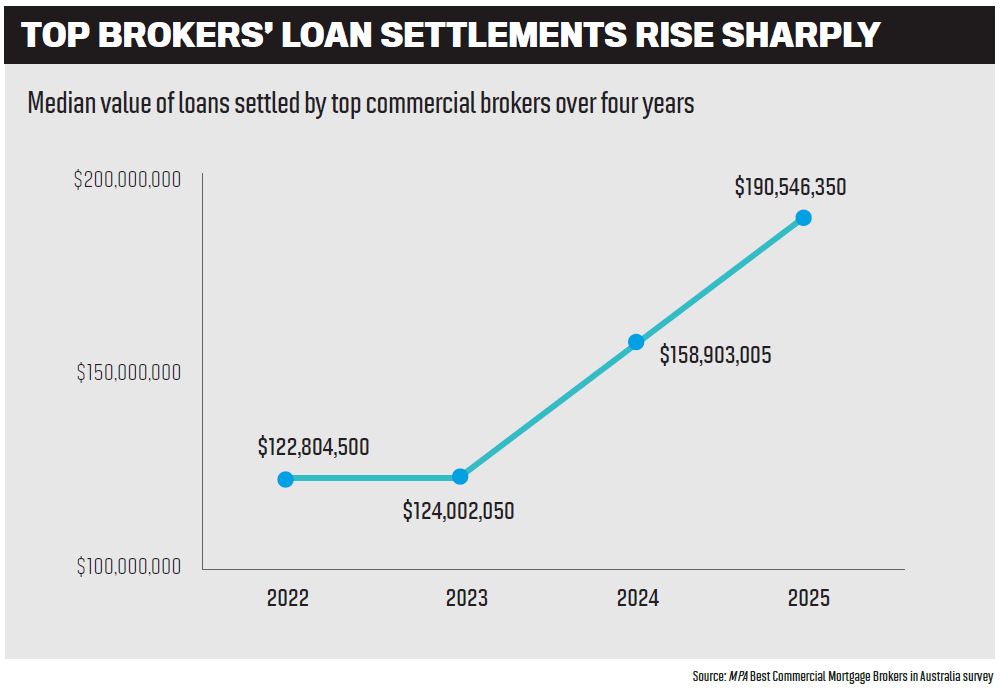
For brokers with the right expertise, Carter sees the real opportunity in advice-led lending. “The strongest brokers will be the ones helping customers understand what this means for my cash flow, my structure and my next lending decision,” she said, arguing that the value now lies in helping clients stress-test what happens if rates stay higher, costs remain sticky or consumer demand softens – and how to maintain adequate liquidity throughout.
Ben Mckell, head of commercial lending at Brighten, brought an overtly bullish voice to the table. “I’m actually excited – where there’s chaos, there’s opportunity,” he said, pointing to a rising tide of investors diversifying into specialised commercial assets such as boarding houses, medical suites and childcare centres. “They’re very sticky transactions,” Mckell said, citing yields of 6–8%. “It’s really exciting.”
“We see some real tailwinds over the next 12 to 18 months, specifically in the commercial space, industrial, with strong fundamentals in the economy, with immigration, which will really underpin that growth”
George Lyall, Millbrook Group
“Demand for commercial lending looks normal for now,” Cory Bannister, chief lending officer at La Trobe Financial, said of the impact of the budget changes. He shared others’ optimism but added a clear note of caution, warning the shift would take longer to materialise than the room might like. “Net, there’s a material tailwind for the commercial sector and for the broker sector for all the reasons given,” Bannister said. “However, I think the impact of that will take longer than we expect … I don’t think we’ll see an instant rotation of capital.”
Bannister continued, “It’s a significant reshaping of tax reform and how we think about investing. With so much uncertainty in the market right now, I expect to see little change in activity levels between now and year-end – other than a potential slowdown in the residential investment space.”
The two commercial brokers at the table offered a view from the coalface. Mhairi MacLeod, director at Astute Ability Group, described a market that has softened in the short term as clients work through uncertainty. “Clients are unaware, unsure of themselves on where they should be directed,” MacLeod said, noting that many of her small business clients are relying on more sophisticated accountants, as well as their brokers, before making any move.

MacLeod didn’t understate the importance of speaking to an accountant worth their salt, “because I can’t work with an accountant that’s flipping and flopping and umming and ahhing when there’s so much change happening”.
She conceded that the budget “is going to slow our business up”, but “it’s going to push it forward probably after this quarter”.
How have SMEs’ lending needs evolved in response to ongoing concerns like surging supply chain costs, skill shortages, cash flow constraints, plummeting consumer sentiment and payday super, and how are you adapting your products to address these needs?
If responses to the first question established that the budget was reshaping strategy, replies to the second made clear what that strategy now revolves around: cash flow. Almost every participant used some version of the phrase “cash flow is king”, and the consensus went further than just terminology.
Across banks, non-banks and brokers alike, the message was that rate has slipped down the list of client priorities, replaced by questions of structure, certainty and staying power over the next two to three years. Lenders described products engineered specifically around easing repayment pressure – extended terms, interest-only options, higher loan-to-value ratios – rather than competing purely on price.
Harrison set the framing that much of the room returned to throughout the discussion. “Cash flow will be king over the next few years,” he said, noting that “rate still matters, but it’s no longer the first question. Increasingly, clients want to know whether the structure will support their business over the long term.”
“Cash flow will be king over the next few years”
Joel Harrison, Thinktank
For Harrison, it’s not about planning for today. “Clients are thinking about where their business will be in two, three or even five years’ time”. That’s why involving brokers, accountants and lenders early on is so important. The right structure from the outset can make all the difference.
Carter said cost inflation, more than any single rate movement, is the real pressure point for most businesses, and one that smaller firms are least equipped to absorb. Many SMEs are now building working capital buffers through revolving facilities or cash reserves to manage supply chain costs, wage pressure, energy, insurance, stock delays and slower customer payments.
“Cash flow flexibility matters more than headline rate,” said Carter, arguing that businesses want lending that matches their trading cycle rather than products that assume steady monthly income. For BOQ, that means leaning into practical solutions: simpler refinance pathways delivered with speed; asset finance that supports productivity; and closer broker–lender conversations up front “so the deal is structured properly the first time”.
For SME customers with borrowings under $10 million, Carter pointed to BOQ’s proposition of LVRs up to 90%, terms up to 30 years and interest-only options where appropriate. With the instant asset write-off now permanent, she also expects more SMEs to finance equipment, vehicles, technology and fit-outs while preserving cash – provided it’s a genuinely productive investment. Brokers, she noted, can add real value here by helping customers weigh the feasibility of electric or hybrid vehicles against their running and maintenance profile, and by identifying opportunities to leverage unencumbered or low-geared property for working capital or investment purposes.

Williams described SMEs operating in a compressed-margin environment, with rising input and labour costs, ongoing supply chain pressure and higher rates all weighing on serviceability, and regulatory changes like payday super further tightening cash flow and reducing flexibility. Despite that, she is seeing a clear shift towards more growth-focused demand, with increased activity around expansion, equipment and owner-occupied property.
“SMEs are prioritising certainty and flexibility, not just access to capital,” said Williams, arguing that is precisely where non-bank lenders like Pepper Money can play an important role, particularly when deal structuring or timing gets complicated. In commercial lending specifically, that’s translating into stronger refinance demand to release equity, stabilise cash flow and simplify structures, alongside continued momentum in owner-occupier acquisitions.
Williams also touched on accreditation trends on the broker side. “We’re seeing an increase in residential brokers who are wanting to become commercially accredited, and they’re crying out for education in this space,” she said, citing more than 26,000 registrations for Pepper Money’s webinar education series over the past year.
“There’s a huge opportunity for the broker cohort as a whole to take more of an advisory role”
Isabella (Izzy) Constantinou, Simplicity
Scahill described something similar on the aggregation side. “We get a lot of requests from the existing network to get commercial accreditations,” he noted, but stressed that LMG takes brokers “through a program before we allow them to do that”, rather than issuing accreditation on demand. “Diversification is being able to cater for your customer needs,” Scahill said. “It’s not necessarily about a broker being able to do everything.”
Lyall picked up on a related theme in development finance, pointing to the growing demand for options that simply buy clients time. “Brokers are also after facilities that provide flexibility for their clients,” he said. “This allows their clients time to restructure or bridge the gap before finding a more stable solution” – a comment that reflected what other lenders around the table were describing in their own portfolios.
“I think the common theme is cash flow is king, but it’s also the cash flow cycle,” Mckell continued. For instance, do businesses know how to access cash flow through their debtor balance sheet? He also flagged a striking shift in how SMEs are managing stock and logistics, noting a sharp rise in storage-unit lending as businesses move away from third-party logistics warehousing. “I’ve seen so many storage unit deals in the last three months for business owners wanting to purchase to utilise for their inventory,” he said.
Mckell also raised another salient point: “Brokers are self-employed – they know the nuances of cash flow, of paying staff – so it’s very critical that brokers play that strategic adviser role.”

Bannister said certainty, more than any single number, is what clients are chasing, describing efforts to help clients “simplify the balance sheet, consolidate their debts into an easier-to-manage payment” and build “dry powder” through equity access. He also flagged a related structural risk: brokerages built around residential SMSF lending will need close support as that channel narrows. He said, “You’ve got lots of brokerage businesses built on specialising in SMSF lending that will be quickly looking to pivot into other areas … As a result, the request for education is going to increase significantly.”
Bannister also warned of a growing need for “a more integrated approach between brokers, financial advisers and accountants”.
Stavroulakis described a fast pivot in response to an emerging pressure point as rising operating costs squeeze businesses reliant on fuel-intensive assets. “We started seeing these signals,” he said, explaining that Resimac adjusted its lending approach for those businesses to avoid putting further pressure on cash flow. Applications for those assets placed more emphasis on “the cash flow of the business, as opposed to a straight-through, low-doc type of matrix”.
“It’s got to be a collective solution, as opposed to individual”
Michael Stavroulakis, Resimac
Loan structures, Stavroulakis said, can be tailored to help free up cash flow, including supporting businesses with the incoming payday super obligations. And Resimac’s collections team has been equipped to offer tailored variations to existing contracts so customers can manage short-term challenges without interrupting trading. For businesses facing liquidity crunches or cash flow timing issues on Resimac’s secured business loan product, Stavroulakis pointed to “more flexible prepaid interest term offerings” that mean “clients have additional breathing room they need” while they work through shorter-term pressure.
Heinnen brought a longer-term lens to the issue, noting that most commercial customers aren’t transacting annually or sometimes even every decade. “While cash flow is a critical part of lending and servicing, understanding the strategic benefit of a purchase or refinance has never been more important” – a point Heinnen framed as a responsibility shared by accountant, broker and lender alike. He says Liberty’s approach is to understand the customer’s broader circumstances and work with brokers to identify appropriate lending solutions. “This is even more critical for customers with circumstances that are more complex, including self-employed borrowers and business owners with multiple income streams,” Heinnen says.
“It’s become more complex in our environment post-budget, and customers’ businesses are increasing in complexity too”
Matthew Heinnen, Liberty
Smith acknowledged that many businesses are navigating a more challenging environment, but said the broader outlook remains constructive. Drawing on ORDE’s Outlook Australia research – developed alongside Bernard Salt – he pointed to long-term trends, including populationgrowth, ongoing housing demand, infrastructure investment and a growing business-owner workforce, as reasons to remain focused on future opportunities as well as today’s challenges. “There are pressures in parts of the market today, and we’re seeing that play out in some businesses,” Smith said. “But when you look at the structural trends shaping Australia over the next decade, there are still plenty of reasons to be confident. Our role is to help brokers support their clients through current conditions, while backing those with a clear plan and pathway for growth.”
As for the brokers, MacLeod warned against clients making panicked decisions as the market softens, using civil works contractors as an example – businesses sitting on expensive idle machinery that could be refinanced for cash flow if the exit strategy is sound. “There is always a solution,” said MacLeod. “But it’s making sure as brokers we’re talking and knowing what the customer’s exit strategy is for that solution.”
MacLeod offered a few words of warning: “Brokers who lack experience in this space could potentially run the risk of making a poor choice of lender for their client. I think those brokers who are mortgage brokers need to stay in their lane, quite frankly. We’ve got a velocity of change happening right now, and unless you’re up to speed with it, you could make a monumentally poor decision for your client.”
Asked whether she agreed with that hot take, Constantinou returned to a previous point. She opted for diplomacy, saying, “The more you can understand what your clients’ drivers are, what they’re looking to do and what the strategic direction of their business is, it’s actually not just about what the cheapest rate is. I think a lot of inexperienced resi brokers just think their client is chasing the cheapest rate or the cheapest solution. But it’s actually about tailoring a holistic solution that’s going to help the client get to the next stage of where they want to be. And the more experienced brokers are going to be absolutely better equipped ... to justify the options that are a little bit more expensive but fit better as a whole to a client’s situation.”
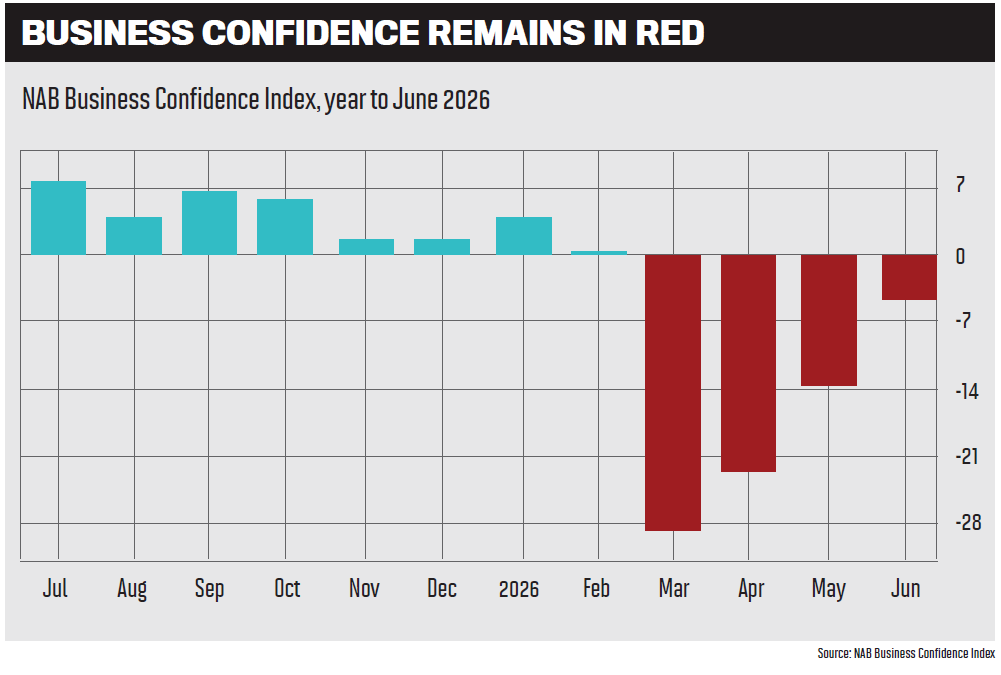
Thomas rounded out the topic by touching on how NAB has proactively surveyed customers through recent volatility. “The overall sentiment is that they are aware, concerned, reviewing, but customers are focused on continuing to execute.” He pointed to a “flight to quality” playing out at both the bank and broker level, with time and attention increasingly directed towards the relationships that matter most.
Broker question from MacLeod: While it’s predominantly an issue in the consumer space, we’d be foolish to think the current storm around AI-enabled fraud is not going to rub off in the commercial space. How is this playing out in commercial in regard to accreditations, lender policy and due diligence?
Australian home lending has heightened its focus on fraud in 2026, with compliance reviews uncovering falsified loan applications, including some reportedly AI-generated. Equifax’s 2025 Fraud Index recorded a 25.5% year-on-year increase in first-party fraud, even as lenders stopped more than $1.5 billion in fraudulent applications, while regulators have warned that AI is lowering the barrier to executing sophisticated attacks.
It’s a problem that has, so far, played out almost entirely in residential lending, but as the roundtable made clear, nobody in commercial lending believes that will last.
MacLeod made her concerns apparent: brokers are increasingly expected to catch AI-generated fraud (in her words, “we have to be detectives”), yet “we don’t have the technology at our desks to pick up certain frauds yet”, she said. She believes brokers shouldn’t carry that burden alone, since “we’re in this AI mess like you guys are too”, and noted that aggregators are now asking brokers to fund cybersecurity cover on top of their existing professional indemnity insurance.
For their part, no one at the table treated it as a broker problem to solve alone, and the conversation that followed largely validated MacLeod’s assertion that responsibility needs to be shared.
Bannister questioned a premise much of the industry has taken for granted: the need for speed. “Practices that can feel a little archaic may actually be the best detection measure – old-fashioned human contact,” he said. “It does make you revisit the premise of needing finance in 48 hours on what are typically 60- or 90-day transactions.” In his view, the industry’s race towards faster approvals may partly explain why things may get missed, and he predicted the market would eventually “reset somewhere in the middle” between speed and scrutiny, particularly in commercial lending.
“The strongest brokers will be the ones helping customers understand what this means for my cash flow, my structure and my next lending decision”
Kaz Carter, BOQ
“We could be reaching the point where we’re realising that when you go too fast, things may get missed or perhaps not be scrutinised as they otherwise would, and that can lead to critical issues,” added Bannister.
Constantinou offered up a phrase she’d recently heard that struck a chord. “The gap between laziness and negligence amongst the industry is getting smaller as AI becomes more prevalent.” Her point was that using AI to work faster doesn’t remove the broker’s responsibilities. “We still have to make sure we’re doing our duty of care, our KYC and our due diligence to make sure that we as brokers cover all of our bases,” she said. “If there are brokers cutting corners by using AI to become more efficient, you have to make sure you’re not being negligent to your clients.”
Carter said, “The industry benefits when participants can share fraud intelligence and emerging risk indicators within appropriate legal and privacy frameworks.”
Harrison picked up the fraud-response theme, backing greater information-sharing while flagging the legal complexity. “There are legislative constraints around what lenders can share, so we need to be careful not to assume wrongdoing before the facts are established,” he said, stressing that lenders shouldn’t assume that every fraudulent application starts with a broker. Until the facts are clear, it’s important not to jump to conclusions about where responsibility sits. Still, he supports the idea of a national register for genuine repeat offenders. “If there’s a demonstrated pattern of deliberate misconduct, the industry should have a way of identifying repeat offenders,” he said.
“Clients aren’t just asking whether to invest any more. They’re stepping back and reassessing how and where they structure and hold their assets”
Siobhan Williams, Pepper Money
Thomas argued that, for all the talk of technology, some of the oldest tools remain the most effective. “Much of the fraud we’re seeing could be detected through people visiting people ... walking the floor of businesses, seeing the trading assets moving,” he said, calling for strong due diligence and know-your-customer practices across the industry.
Thomas said that discipline needs to be consistent across every part of the lending process: “Robust due diligence and genuinely knowing your customer remain our best protection. That standard needs to apply consistently, not just in the areas under the most scrutiny right now.”
Heinnen framed the challenge in terms of pace and scale rather than any single fix. “The challenge for the industry is that a small group of bad actors has never been so capable,” he said, adding that while Liberty has been fortunate so far, it understands that “the challenge of staying in front of these issues requires ongoing focus and diligence” and will continue to refine its processes to minimise risks for brokers and customers.
Stavroulakis rejected the idea that any single lender could solve the problem in a silo. “I’m not sure that’s going to be a solution,” he said of proprietary fraud-detection technology built in isolation, arguing instead for a shared approach, whether built jointly or made available as a common tool brokers can use to vet clients and documents. “It’s got to be a collective solution as opposed to individual,” he said.
Thomas called on the roundtable to remain diligent, saying, “A lot of fraud in the industry is mortgage-related, and I think the real wake-up call for everyone in this room is that, as responses start to tighten in that space, we need to be hypersensitive to that fraud moving into the commercial space. We’ve got to be super diligent and try to do everything we can in a coordinated way to get ahead of that likely outcome.”
“I’m actually excited – where there’s chaos, there’s opportunity”
Ben Mckell, Brighten
Scahill brought the discussion to its natural conclusion, describing fraud defence as inherently layered. “Our brokers are the front line of defence, so they need to understand their customers well,” he said, while noting that brokers will always lack certain detection tools that aggregators have at their disposal. The big four, meanwhile, “are going to have levels of AI sophistication that others won’t”.
For Scahill, the priority to come out of the discussion was simple: “How do we better share information” between lenders, aggregators and brokers so that confirmed fraud can be stopped from resurfacing elsewhere in the system?
Broker question from Isabella Constantinou: Over the next 18 months, what economic indicator will surprise the market the most, and what sort of impact will it have on the commercial lending market?
Constantinou got the next stage of the discussion in motion, turning the table’s attention to the 18 months ahead by asking which economic indicator – unemployment, rates, inflation, immigration or something else – was most likely to catch the market by surprise, and what that would mean for commercial lending.
The roundtable diverged on the answer to her question but converged almost entirely on the trajectory of the broker channel itself. Every participant backed some version of the same number: commercial broking is heading towards 50–60% market share within the next couple of years, mirroring the path residential broking has already travelled.
This growth will come from a mix of established brokerages training their own talent, residential brokers diversifying with real support, and experienced bankers re-entering the industry as brokers.
On the economic outlook, the room was more divided: some expected rates to stay broadly neutral with a slow drift down, others flagged persistent inflation due to housing supply pressure, and one lender pointed to on-the-ground optimism from developers that surprised even those closest to the sector.
Williams acknowledged just how uncertain the forecasting landscape currently is. “Right now, we’ve got differences in opinion from every major bank on what’s coming,” she said, challenging the premise of the question: rather than guessing what will surprise the market, she argued that brokers should “hedge your bets so that you’re successful either way”, serving both wealth creation clients and those under cash flow pressure by aligning with “a broad spectrum of lenders” instead of betting on a single scenario.
That advisory instinct, said Williams, is really an extension of how the broking industry has evolved into an advisory-led profession, driven by increased complexity, uncertainty and choice. In her words, borrowers now expect brokers to “go beyond sourcing funding and help connect the dots across credit, tax and cash flow”. In response, she is seeing brokers step into more strategic roles, focusing on portfolio reviews, refinance opportunities and broader capital strategy – and, increasingly, looking for lending partners “who can support that broader strategy, not just the transaction”.
Smith gravitated towards the more optimistic end of the spectrum on sentiment. “I think we will look through the tax changes once we’ve taken time to understand it,” he said, noting that “market fundamentals for future growth remain strong based on our Outlook Australia research, and so we should hopefully see a rebound in business and investor confidence, setting up a period of opportunity for SMEs”.
Bannister offered a detailed, yet cautious, forecast. He expects rate settings to stay “broadly neutral” over the next 12 months (or to see “maybe one more increase”) before holding, with inflation kept alive by housing supply pressure on rents. On commercial lending specifically, he predicted “slight improvement at the small-balance, entry-level end” as residential-type investors pivot towards assets like storage sheds – but believes the “larger end of the market will stay roughly the same”. He warned that the industry will “still be talking about housing affordability” well beyond the 18-month window.
“Net, there’s a material tailwind for the commercial sector and for the broker sector for all the reasons given. However, I think the impact of that will take longer than we expect”
Cory Bannister, La Trobe Financial
Lyall countered some of that caution by drawing on recent discussions with industry players. Development clients in Victoria, who were “arguably the worst hit over the past 12–18 months”, have struck him as unexpectedly buoyant. “They saw large opportunities,” he said, driven by the view that acquiring sites now, at lower prices, makes long-term feasibilities work again.
Asked directly for his 18-month prediction, Lyall said, “Everyone is very negative at the moment, [but] commercial borrowers are resilient; they have shown this over the years. Australia is a great place to live, with immigration at all-time highs and a huge undersupply of housing, so there’s going to be a huge need for development and construction. Looking 18 months ahead, there will be more confidence in the market, costs will have stabilised, and development will be in its next growth cycle.”
Mckell kept his answer grounded in what brokers should actually be doing in the next quarter rather than forecasting rates. “It’s very important now that you’re giving [clients] the right advice, checking in with them, getting on the front foot,” he said, urging brokers to renegotiate rates and reassess loan terms before clients even ask – a practice he believes builds the loyalty that generates repeat business.
Carter predicted continued strength in health and pockets of resilience in retail. “We continue to see resilience in health-related sectors,” she said, adding that certain geographic retail markets might “surprise” the industry given prevailing sentiment.
Looking at the commercial property space more broadly, Stavroulakis noted that secured business loans are becoming increasingly relevant as borrowers and brokers look for practical financing options. Industrial, in his view, remains relatively strong on ongoing demand for logistics and warehousing, while retail is still performing in pockets even as broader economic headwinds risk softening momentum. Office space, by contrast, continues to warrant a cautious approach given elevated vacancy rates. Strong regional commercial property, Stavroulakis said, can still appeal to investors chasing yield, provided the underlying asset and tenant profile are sound. And as regulatory scrutiny around private lending increases, he believes secured business loans can offer a comparable solution with the added confidence of institutional funding behind it.
On market share specifically, Scahill set the number the rest of the room measured themselves against. “We had a view in ’23 that broker share [would get] to 50% by ’28,” he said – a target he now believes is “probably happening a bit quicker than that”, despite the difficulty of forecasting in a genuinely contestable market.
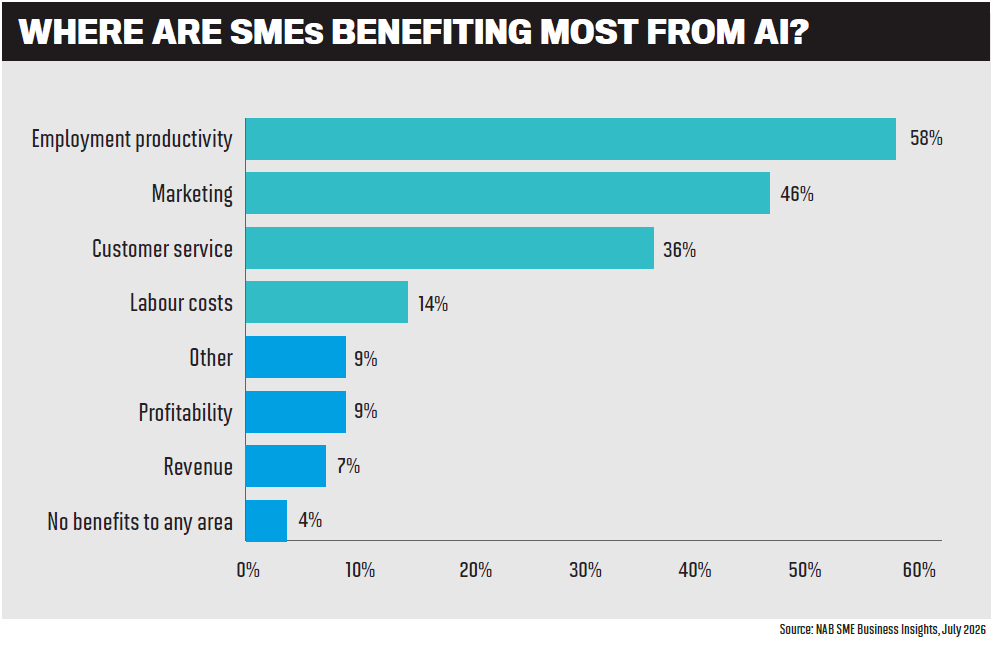
Harrison agreed that 50% commercial market share for brokers feels inevitable, but “the question is how quickly we get there”. He argued that more sophisticated brokers will capture share as clients increasingly value brokers who can provide independent advice and help them navigate a broader range of options.
For Thomas, there’s only one simple way for brokers to reach their potential in the commercial lending market: “And that’s know your customer. If you’re creating value, the customer will follow.”
Stavroulakis also pointed to the value of experienced commercial brokers in more complex property transactions, where structuring, strategy and long-term planning often matter as much as securing funding. “The broker plays more of an advisory role,” he said, noting that there can often be multi-hour conversations about structure rather than simply sourcing funds. “It’s not something clients should have to tackle on their own”, he said, which is exactly why commercial broking’s value proposition, and by extension its market share, keeps strengthening.
Stavroulakis sees that same relationship-led approach playing out across Resimac’s own book, particularly among borrowers now working through exit-strategy hurdles on secured business loans and equipment finance, where transactional broking is proving less effective for clients who need guidance and a clear pathway forward rather than a single product solution.

Smith returned later in the discussion to address how that growth is delivered in practice, describing commercial as “a specialised conversation ... a tailored conversation” that demands real-time investment. He pointed to three channels for growth: established brokerages training and developing their own people, residential brokers diversifying into commercial with proper support, and experienced bankers re-entering the industry through broking. From there, “the onus really comes down to us as the lenders” to deliver the accreditation and training that ensures new entrants understand the space and are equipped to support the full needs of their clients.
Notably, none of the projections floated around the table treated 50–60% as a ceiling so much as a waypoint. The comparison to residential broking’s trajectory – now sitting at close to 80% penetration after a decade of steady growth – was raised more than once as evidence that commercial lending is simply earlier in the same curve, not on a fundamentally different one.
“The more sophisticated, knowledgeable brokers are likely to thrive in [today’s] environment”
Stephen Scahill, LMG
Regardless of the segment, the best brokers, in Carter’s view, are the ones “simplifying complexity” – translating policy changes, lender appetite, security options and economic risk into plain English – with the relationship shifting “from transaction to partnership”. She flagged one emerging risk in that shift, too: as broker penetration in commercial lending matures, she expects to see more brokers poaching each other’s clients, creating refinance risk and a loss of trail income for brokers who don’t stay close to their books.
What differed most between speakers was less the destination than the mechanism for getting there: some framed it as a function of client demand for independent advice outpacing bank-only relationships, others as a supply-side story of lenders and aggregators finally building the training infrastructure to support brokers making the jump from residential to commercial.
Taken as a whole, the closing exchange left little doubt that the panel viewed commercial broking’s growth as a matter of ‘when, not if’ – even as the broader economic picture remains, by the room’s own admission, genuinely uncertain.