Results show Big Four losing ground as non-majors snap up larger share of aggregator’s volumes

ASX-listed broker group AFG saw a sequential dip in lodgement volumes in the June quarter, as the double whammy of rate hikes and tax overhauls bit into investment appetite.
Brokers in the AFG network lodged $28.1 billion in home loans nationally in the three months to 30 June, per the latest results, down from $29.5 billion in the March quarter. Even so, it was AFG's strongest June quarter on record.
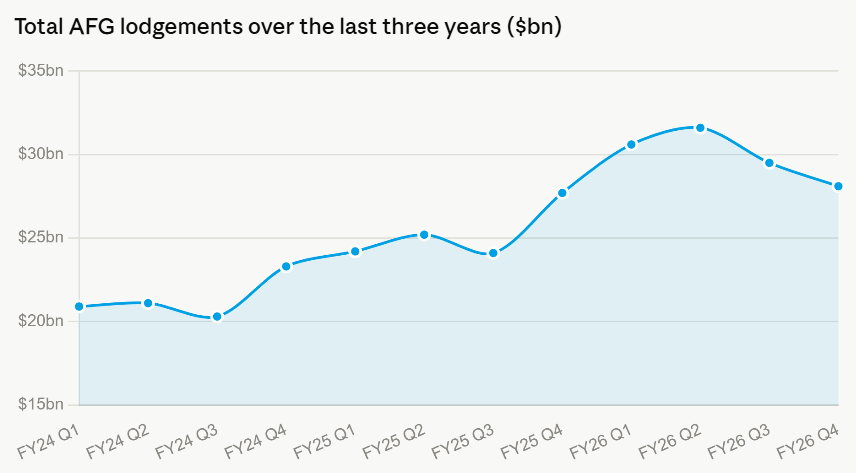
"Following the strongest March quarter on record, some easing in June was expected, especially after the Federal Budget announcements on 12 May and during a tightening rate cycle," said AFG chief executive David Bailey (pictured). "Despite divergence across states and shifting borrower sentiment mid-quarter, we delivered positive year-on-year growth and a record-high average loan size."
Investor lending volume fell sequentially to an estimated $9.54 billion in the June quarter, down from around $10.34 billion in March – a drop of roughly 7.7% – as the investor share of total lodgements eased from 35% to 34%.
The government's move to wind back negative gearing arrangements for established residential property purchases made after Budget night gave investors a genuine reason to pause, but Bailey framed the resulting softness as transitional rather than the start of a longer downturn.
"We believe the fiscal policy changes announced during the quarter will represent a period of readjustment rather than a structural shift in underlying demand," he said. "We have seen patchy investor volumes as the market absorbs the new settings, and the data is consistent with some borrowers pausing or reassessing plans. We view this as transitional, and broker demand has remained resilient."
Layered on top of the tax changes was the effect of the Reserve Bank of Australia (RBA)'s run of cash rate increases earlier in 2026, which has continued to weigh on borrower confidence.
Refinancing activity nudged higher off a plodding March quarter, “potentially signalling the floor in the long-running refinancing downtrend”, Bailey said. "It is still at the lower end of the long-term averages and as interest rate movements kick into household budgets, our expectation is that this will lift."
Non-majors gain
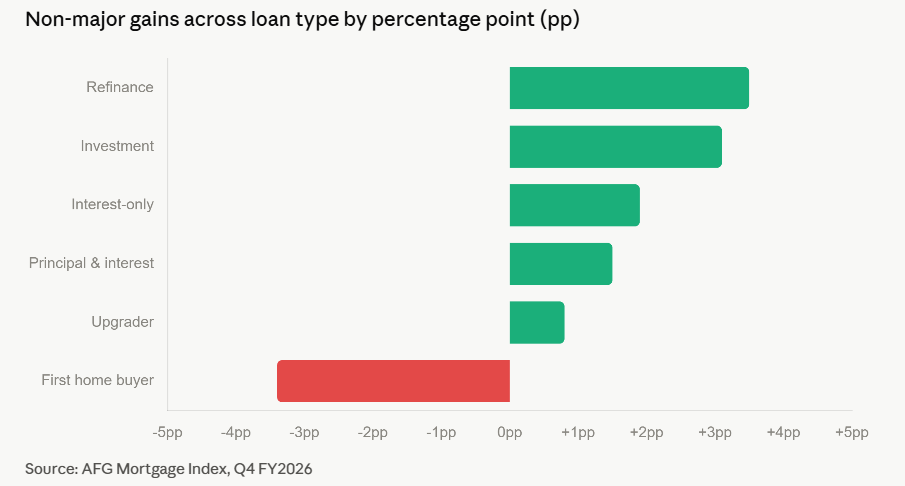
The results show that non-major lenders are continuing to take share from the Big Four banks and their associated brands.
Across investment lending, refinancing, upgrader activity, interest-only loans and principal and interest loans, non-major lenders lifted their share of the market compared with the same quarter last year, extending a pattern that has defined AFG's index over recent quarters.
The one exception is first home buyer lending, where major banks strengthened their grip, a reminder that the shift toward non-majors is broad-based rather than universal.
Bailey pointed to Western Australia as evidence that confidence has not evaporated everywhere.
"Western Australia's continued strength, driven by its resource-sector economy and supply-constrained housing market, reinforced its position as a standout contributor to national volumes," he said, noting it was the only state to grow both quarter-on-quarter and year-on-year.
New South Wales, Victoria and Queensland all recorded softer lodgements than a year earlier, underscoring the geographic divergence Bailey described as the quarter's "defining feature”.
AFG Home Loans: A growth story
Inside the numbers, AFG's own white-label arm AFG Home Loans delivered another standout quarter, growing lodgements strongly year-on-year and lifting its share of total AFG broker business to the highest level recorded in recent years.
"The continued growth in AFG Home Loans reflects the strength and breadth of our product portfolio and the trust our broker partners place in our proprietary offering," Bailey said.
AFG Securities, the group's lending and warehousing arm, also closed the financial year with a record loan book, growing by nearly a third over twelve months, while Bailey said the book maintained "disciplined credit standards and good arrears performance”.
Looking ahead, Bailey struck a more confident tone about the position brokers are in heading into the new financial year, despite the quarter's softer sequential result.
"As we move into the new financial year, we remain focused on what we can control – supporting brokers with competitive products, strong service levels and funding certainty," he said. "Australians retain confidence in property as a long-term asset class, and the role of brokers has never been more important to borrowers navigating significant change."
He added that AFG enters FY27 "with a broader and more resilient earnings base”, pointing to growth in broker services and a net interest margin ahead of the group's own long-stated target.
AFG shares edged 1% higher following the announcement.