First-time buyers see modest gains as lenders expand low-deposit options

UK house prices were broadly flat in May, with a monthly decline of 0.1% — matching the fall recorded in April — to leave the average property value at £298,806, according to the latest Halifax House Price Index. Annual growth edged up slightly to 0.5%.
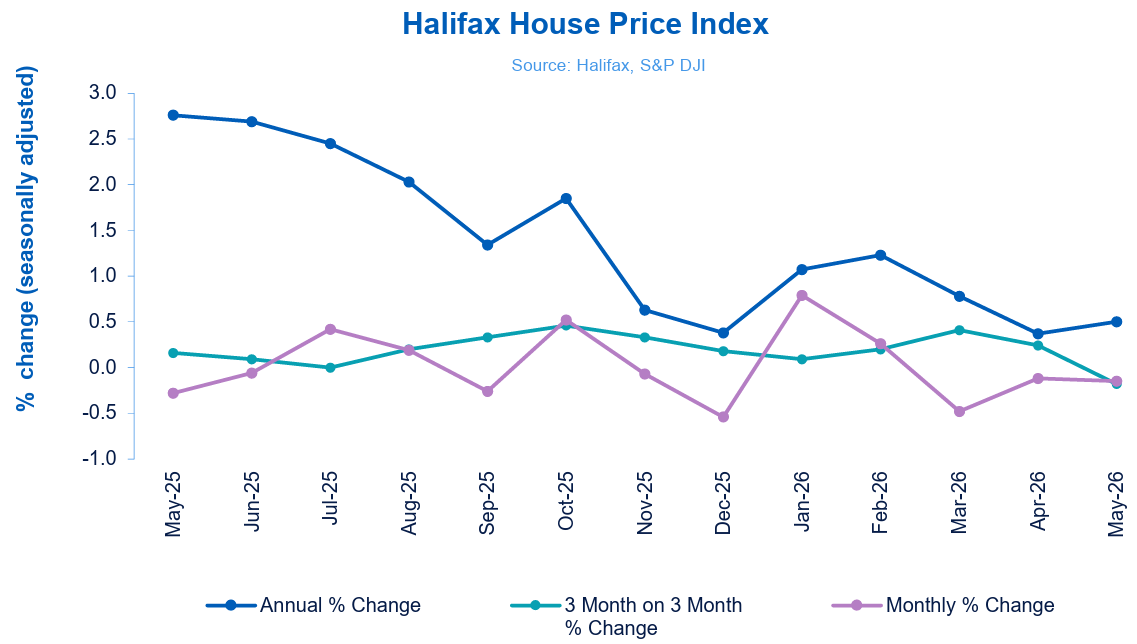
"Property price trends continue to reflect the uncertainty linked to developments in the Middle East," said Amanda Bryden, head of mortgages at Halifax. "Despite recent cuts to mortgage rates, higher inflation expectations have kept borrowing costs above the level seen at the start of the year, continuing to stretch affordability for many buyers and temper demand.
"Even so, overall activity has held up well, reflecting the underlying resilience of the UK housing market. Latest industry figures show transaction levels remain relatively stable, suggesting buyers and sellers are still moving."
 Bryden (pictured right) noted that first-time buyer activity remained subdued, with annual price growth in that segment running at just 0.3%. "While getting onto the property ladder remains a big challenge, there has been increasing support from lenders, including more flexible affordability checks and a growing range of low deposit options," she said.
“The housing market has become a marathon rather than a sprint, but buyers are still crossing the finish line," commented Marc von Grundherr, director of estate agent Benham and Reeves.
"While we're not seeing the consistently strong monthly rates of growth seen in previous years, house prices continue to strengthen on an annual basis and market activity remains remarkably resilient."
On the outlook, Bryden added: "Borrowing costs and consumer confidence are likely to continue shaping activity in the coming months, with house prices expected to be broadly stable while interest rates stay elevated. The housing market remains closely tied to wider global developments, with a return to sustained house price growth dependent on an improvement in the inflation outlook and a fall in mortgage costs."
Mark Harris, chief executive of mortgage broker SPF Private Clients, pointed to the ongoing downward pressure on fixed-rate pricing. "As swap rates, which underpin the pricing of fixed-rate mortgages, continue to fall, so lenders continue to trim their mortgage rates, which is helping ease affordability," he said.
"However, the steadiness in house prices suggests buyers are still prepared to negotiate hard and are not willing to pay over the odds."
"First-time buyers will be encouraged as house prices remain steady rather than soar. Lenders are working hard on offering solutions to those trying to get on the ladder for the first time, which is leading to a small improvement in their numbers."
Northern Ireland outpaces all UK regions; southern markets continue to contract
Price performance continues to diverge sharply by region, with the May Halifax House Price Index showing strong growth in the North and weaker conditions in the South.
Northern Ireland leads UK annual house price growth, supported by constrained supply and relative affordability, with prices up 7.8% over the past year to £227,177 — the highest rate of annual growth recorded in six months.
Scotland also posted solid annual gains, with prices up 3.8% to an average of £222,650. Wales saw growth slow markedly, with annual price increases of just 0.1% bringing the average to £230,355.
Within England, the North East recorded annual growth of 3.1%, with prices averaging £181,703, while the North West was up 3.0% to £248,304. Southern markets continued to weaken, with the South East seeing prices fall 2.1% year on year to £382,704, and London recording a 1.5% decline to £534,375.
Want to be regularly updated with mortgage news and features? Get exclusive interviews, breaking news, and industry events in your inbox – subscribe to our FREE daily newsletter. You can also follow us on Facebook, X (formerly Twitter), and LinkedIn.