Geopolitical shocks and soaring oil prices cloud a modest April market uptick, warns Dominion Lending Centres' chief economist

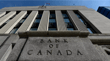
Canada's housing market inched forward in April, but the gains were shadowed by surging oil prices, geopolitical turbulence from the conflict in Iran, and the spectre of a Bank of Canada rate hike. Together, these forces threaten to cap any meaningful recovery this year.
National home sales rose 0.7% month over month in April 2026, according to the Canadian Real Estate Association (CREA).
Shaun Cathcart, CREA's senior economist, noted that while the monthly gain was modest, it masked a more encouraging internal dynamic.
Sales momentum built as April progressed, with falling days on market and stabilising prices pointing to a stronger handoff into May, though he cautioned that higher mortgage rates and renewed global uncertainty would keep this year's rebound muted.
Dr. Sherry Cooper, chief economist at Dominion Lending Centres, offered a sobering read of what lies beneath those headline numbers.
"Housing market weakness will remain a drag on overall economic activity," she warned, pointing to the unresolved Ontario condo supply overhang, lower prices across the province, and buyers whose hesitation is increasingly shaped by forces beyond the country's borders.
Read more: Spring stirs Canadian home sales, but uncertainty keeps recovery muted
The stagflation threat
The most acute near-term risk comes from outside the housing market entirely. The ongoing conflict in Iran has sent oil prices higher, with Brent crude trading above US$100 per barrel in recent weeks.
Bank of Canada governor Tiff Macklem has warned that persistently high oil prices could force rate hikes to contain inflation, though weaker growth or adverse trade outcomes might prompt cuts instead.
Inflation rose to 2.4% in March, driven by fuel costs, and is expected to peak around 3% in April before easing if energy prices fall as projected.
Cooper flagged the downstream consequences for Canadian households: gasoline costs are already highly visible, and supply disruptions in nitrogen fertiliser, plastics, aluminium, and helium point to broader cost pressures ahead.
Central banks in Japan, Norway, and Australia have already moved to tighten policy in response to the energy shock, while the Federal Reserve, the European Central Bank, the Bank of England, and the Bank of Canada all cut rates in 2025 and have been on hold so far this year.
Read more: Bank of Canada right to hold, says C.D. Howe Institute
Whether the Bank of Canada will remain on the sidelines may hinge on the April CPI reading due May 29.
"If it confirms the 3.8% y/y US inflation, the Bank of Canada will seriously consider a 25 bps rate hike despite weakness in the labour market. The Bank is mindful of the negative impact of higher rates on already weak housing activity; this reduces the chances of a rate hike, but it cannot be ruled out."
The Bank of Canada held its policy rate at 2.25% in April, with the prime rate sitting at 4.45%, even as oil prices remained near $103 per barrel due to the Iran conflict.
Cooper noted that minutes from the Bank's April 29 meeting show the Governing Council came close to raising rates then – a signal, she argued, of how seriously policymakers are taking the inflation threat, notwithstanding the acknowledged drag that higher borrowing costs would impose on an already fragile housing sector.
Make sure to get all the latest news to your inbox on Canada's mortgage and housing markets by signing up for our free daily newsletter here.