EPC 'A' or 'B' rated homes fetch only £4,500 more than 'D' rated equivalents, Nationwide research finds

Energy performance certificate (EPC) ratings have a limited effect on owner-occupied house prices, according to new research from Nationwide Building Society, despite rising consumer interest in energy efficiency.
The lender's analysis of English property transaction data found that homes rated 'A' or 'B' attract a premium of just 1.6% over comparable 'D' rated properties — equivalent to roughly £4,500 based on average house prices in England.
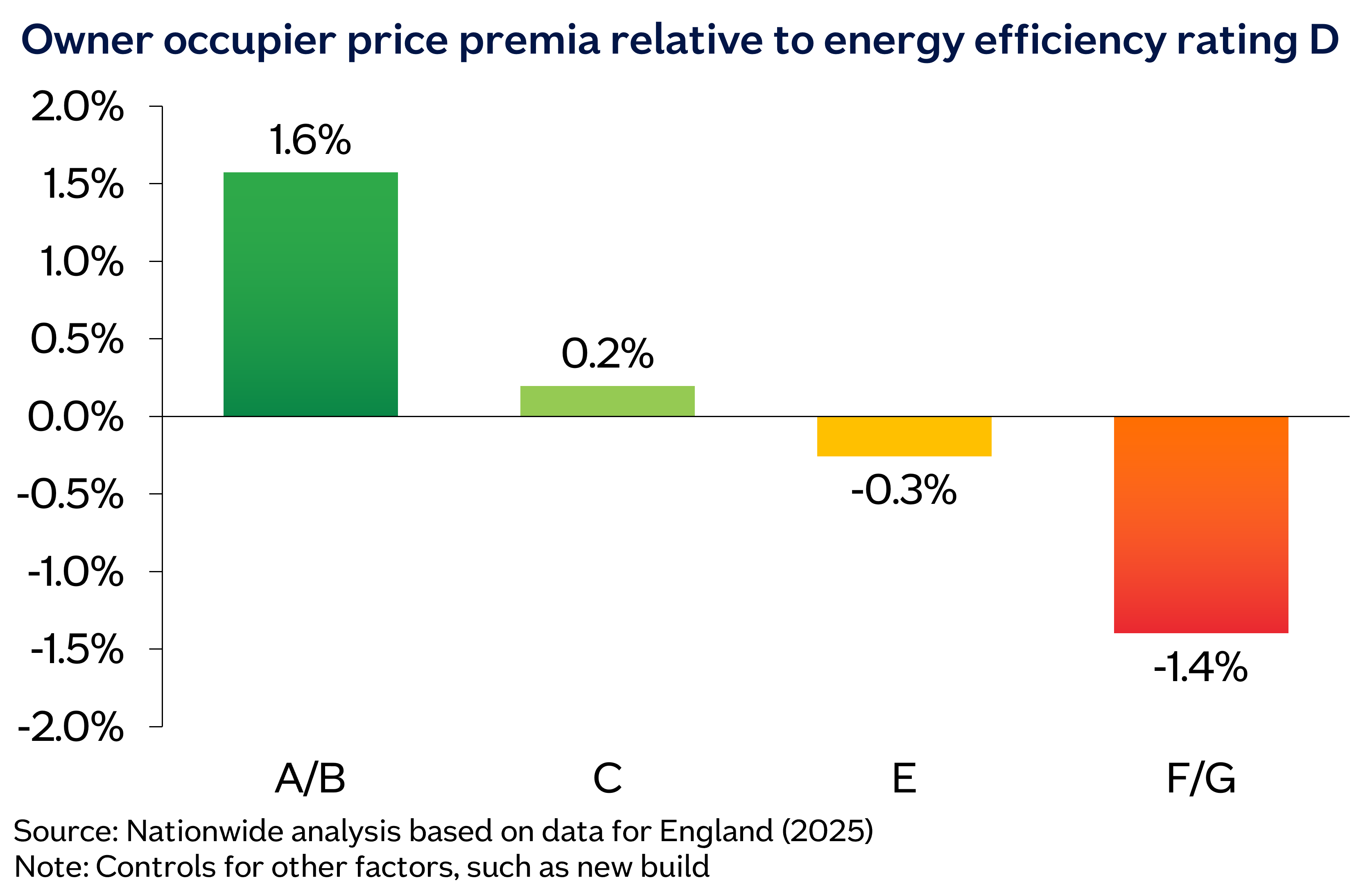
Properties rated 'C' or 'E' showed little price difference relative to 'D' rated homes, while those rated 'F' or 'G' traded at a discount of approximately 1.4%, or around £4,000.
The findings contrast sharply with the buy-to-let sector, where 'A' or 'B' rated properties command a 12.2% premium — a gap Nationwide attributes to the greater regulatory and cost pressures facing landlords.
 "Decarbonising and adapting the UK's housing stock remains critical if the UK is to meet its net zero target by 2050, especially given that emissions from residential buildings account for 15% of the country's greenhouse gas emissions," said Andrew Harvey (pictured right), senior economist at Nationwide Building Society.
"In this report, we analyse the latest data on the energy efficiency of the housing stock, the progress made and the motivation for and barriers to making 'green' home improvements."
State of the housing stock
According to the English Housing Survey, 53% of owner-occupied homes in England are now rated 'A' to 'C', up from 21% a decade ago.
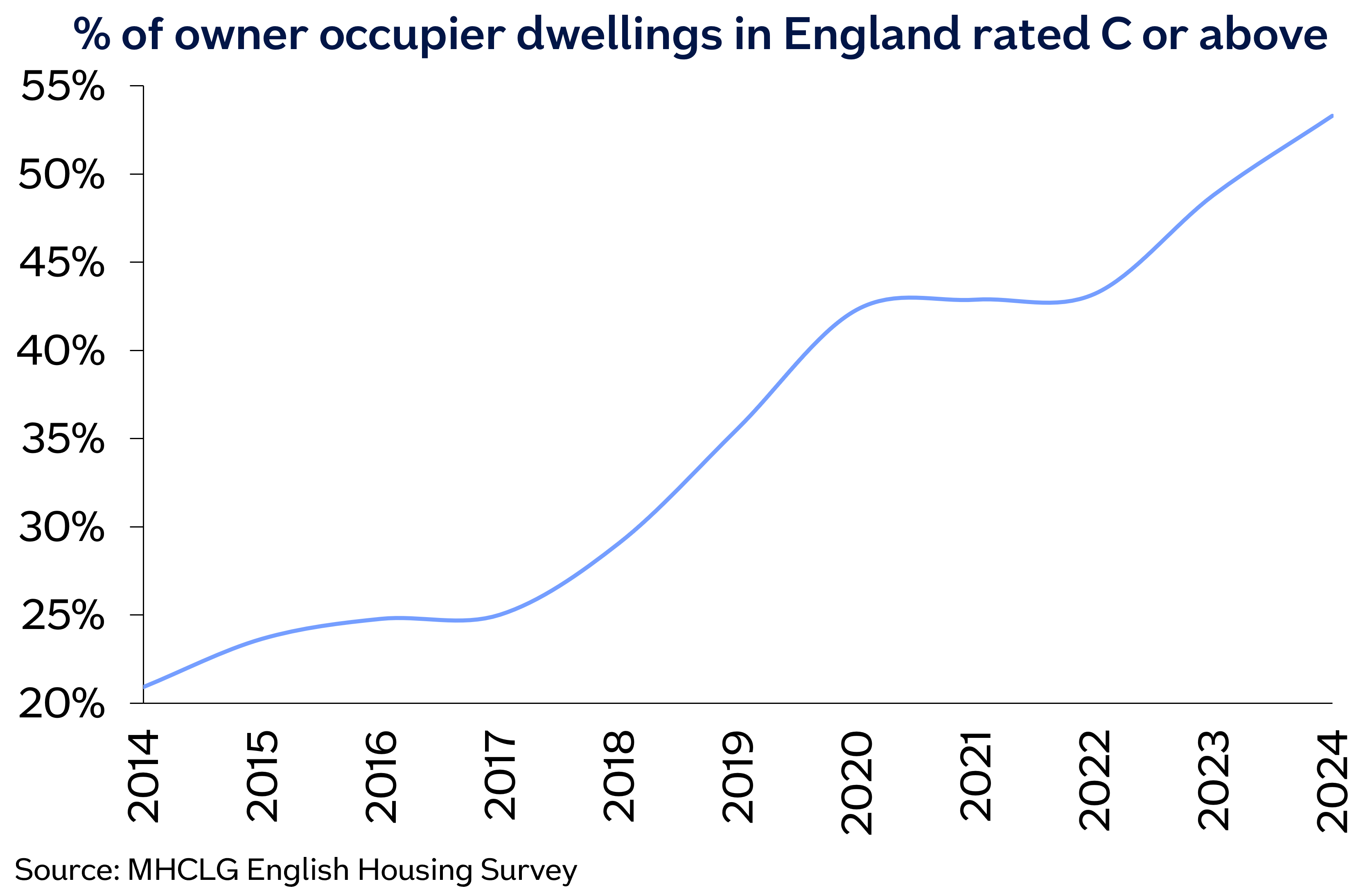
Newly built properties account for much of this improvement, with around 97% rated 'C' or above. Older stock remains a challenge: approximately 24% of dwellings built before 1919 carry an EPC rating of 'E' to 'G', compared with just 2% of those built after 1990.
The same survey data suggests 42% of existing dwellings could be upgraded to EPC band 'C' or above at an average cost of around £7,500, implying a total national cost of approximately £81 billion. Properties currently rated 'F' or 'G' face substantially higher upgrade costs — around £17,000 on average, versus £6,000 for 'D' rated homes.
The government's 2026 Warm Homes Plan targets upgrades to five million homes by 2030, though Nationwide noted the current rate of improvement falls well short of the scale required.
Buyer attitudes and green improvements
Despite limited price impacts, buyer interest in energy efficiency is growing. Nationwide's market research found that 78% of homeowners expect purchasers to pay more for an energy-efficient home, a view held most strongly by younger buyers: 32% of those aged 25 to 34 expected buyers to pay significantly more, compared with just 5% of those aged 55 and over.
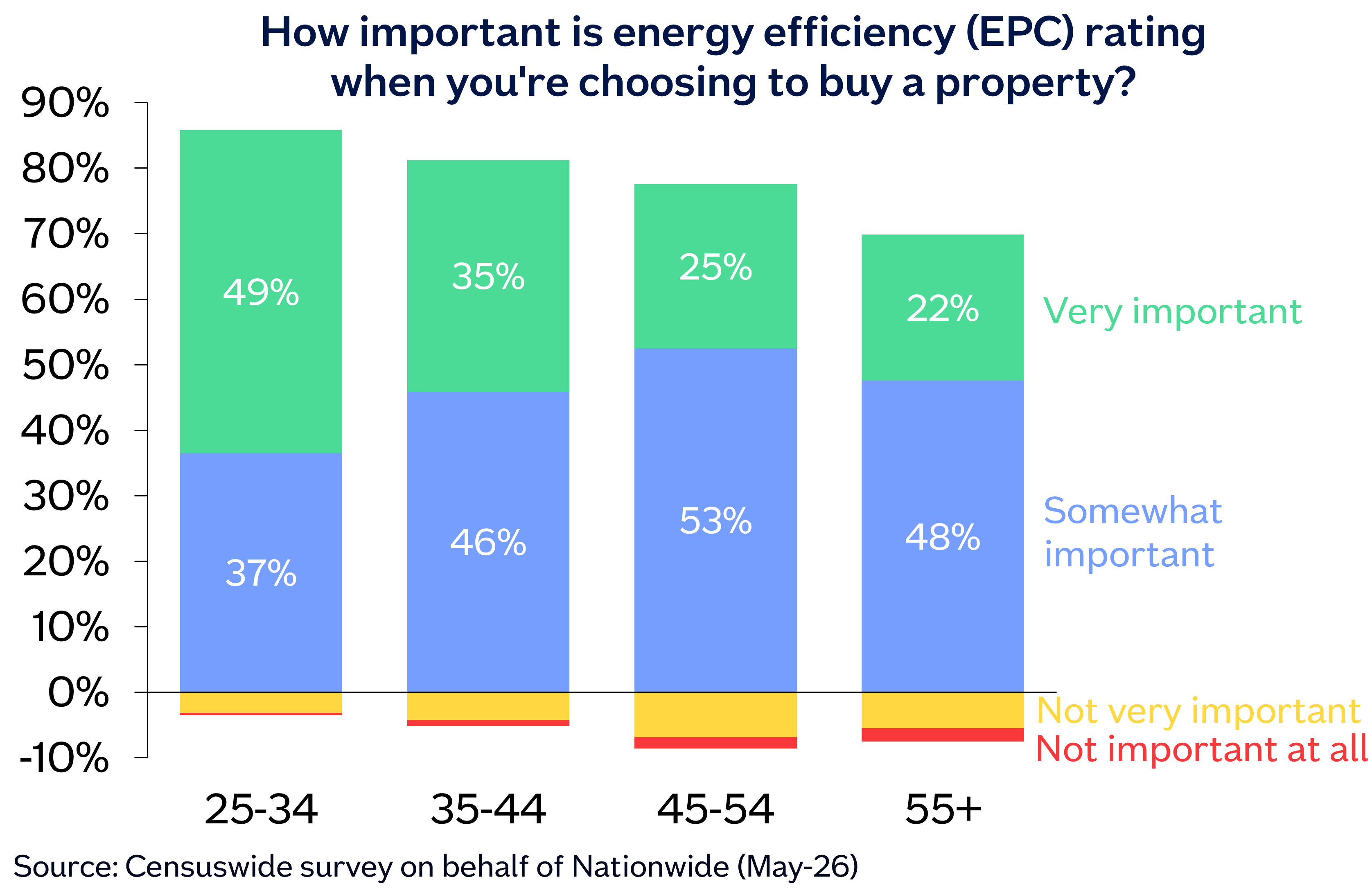
Some 77% of respondents said EPC ratings would be an important consideration when selecting a future property, with 49% of those aged 25 to 34 describing it as "very important". However, more than half of homeowners surveyed (54%) were unaware of their own property's current EPC rating.
Of those who had made energy efficiency improvements in the past 10 years, the most common measures were solar panels, improved insulation, and energy-saving windows and doors. Just over half (55%) had installed solar panels, typically within the last two years, at an average cost of around £11,000. A quarter had added a heat pump, with 68% of these installed within the last two years.
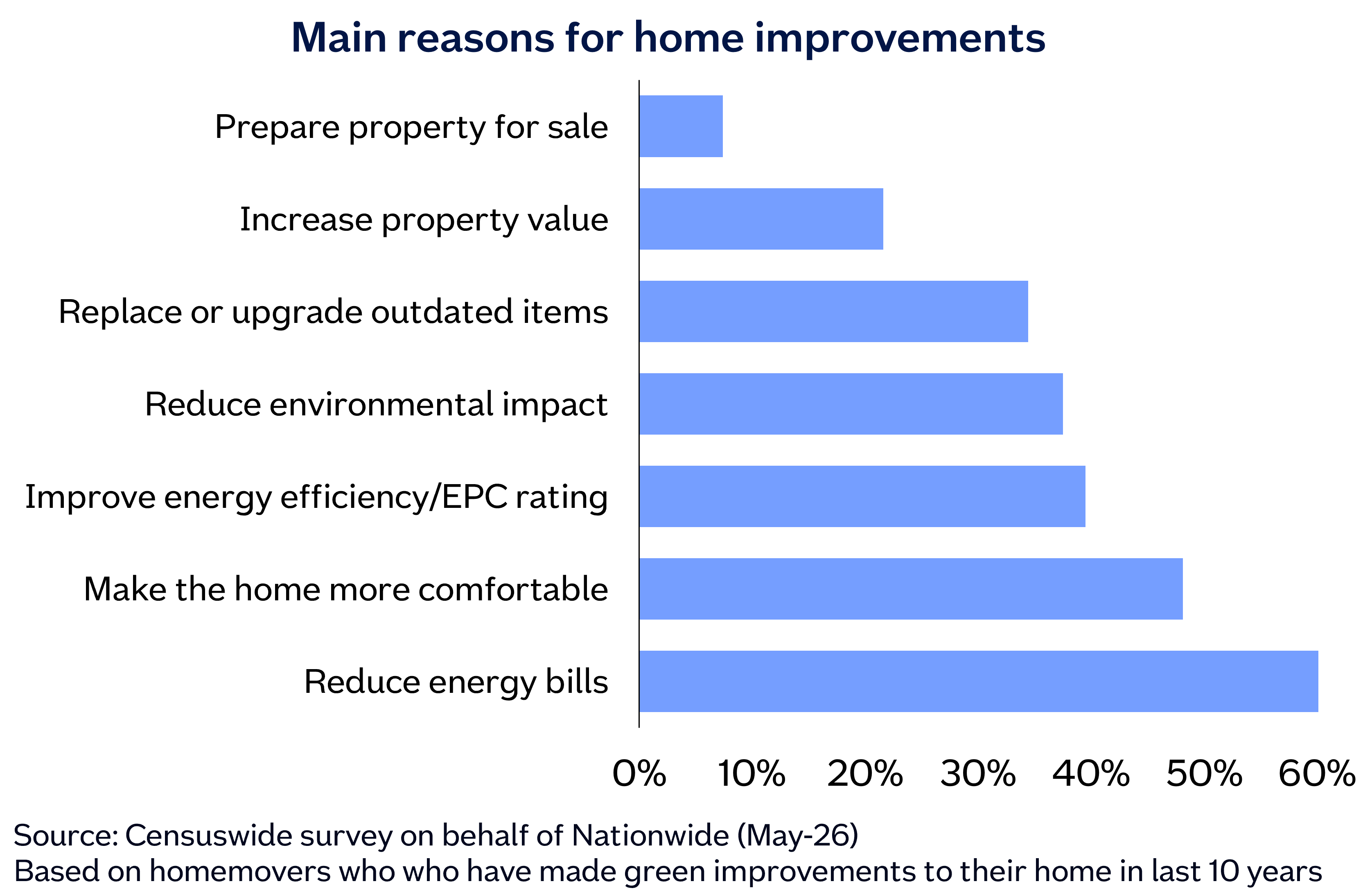
The primary motivations cited were reducing energy bills (60%) and improving home comfort (48%). Nearly three quarters (73%) reported lower energy costs following the improvements, consistent with government data showing median fuel costs for 'A' to 'C' rated properties are around £400 per year lower than for 'D' rated homes and £1,200 lower than 'E' rated ones.
Only 22% said increasing property value was their main reason for making improvements, and fewer than one in 10 (7%) did so in preparation for a sale.
Barriers to uptake
Among homeowners who had not made any green improvements, upfront cost was the most commonly cited barrier, with 54% saying they could not afford the initial outlay. A quarter said such improvements were not a priority, while 19% believed they would not reduce bills significantly. Around 21% said they were uncertain which improvements would be most effective, and 17% cited a lack of information.
“These findings reinforce the need for practical support to help homeowners improve the energy performance of their properties, especially where upfront costs remain a significant barrier,” Ian Harris, president of industry body NAEA Propertymark.
Want to be regularly updated with mortgage news and features? Get exclusive interviews, breaking news, and industry events in your inbox – subscribe to our FREE daily newsletter. You can also follow us on Facebook, X (formerly Twitter), and LinkedIn.