Specialist lender's analysis finds public brownfield land can support fewer than two-thirds of Labour's housing target
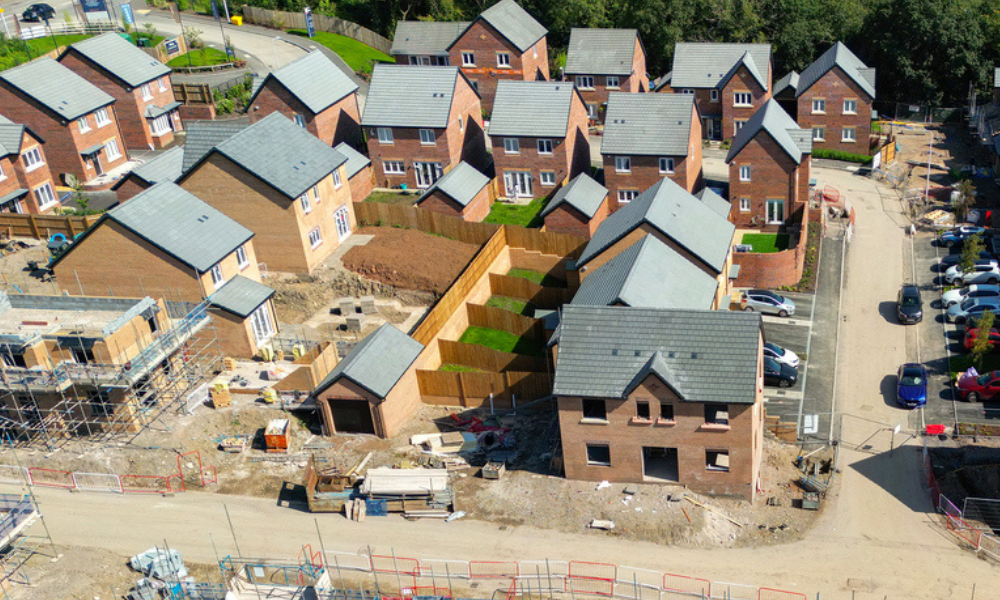
Publicly owned brownfield land in England has capacity for at most 187,000 to 207,000 homes, which is fewer than two-thirds of the 300,000 social and affordable homes Labour has previously committed to building, analysis by specialist lender Together has found.
The analysis, based on figures from property data platform Searchland, suggests that a council housebuilding programme relying primarily on vacant public land would leave a significant shortfall, with a third or more of any such programme requiring land bought at current market value.
The distribution of available public land compounds the problem. A small number of local authorities account for a disproportionate share of the national total, with Birmingham leading on 185 sites with capacity for around 11,500 homes. In around two-thirds of the 20 areas with the greatest housing shortfalls, Together found little or no significant public land available.
Conversely, much of the largest public landholding sits in authorities already meeting or surpassing their housing targets, including Leeds, Wandsworth, Waltham Forest, Newcastle and Nottingham. Together identified only five authorities — Birmingham, Bristol, Bradford, Lewisham and Kirklees — that combine a serious housing deficit with a meaningful public land holding.
| Bournemouth, Christchurch and Poole | South West | ~4,550 |
| Greenwich | London | ~3,880 |
| Newham | London | ~2,870 |
| Leicester | East Midlands | ~2,280 |
| Sandwell | West Midlands | ~2,220 |
| Thurrock | East of England | ~2,020 |
| Southend-on-Sea | East of England | ~1,980 |
| Basildon | East of England | ~1,760 |
| Portsmouth | South East | ~1,660 |
| Southampton | South East | ~1,580 |
Delivery shortfall = homes required minus homes delivered over the latest Housing Delivery Test window. None of the above appears among the 20 authorities with the most public land. Source: Searchland.
 "Building on vacant public land is a sensible idea, but our analysis shows it can only ever be part of the answer," said Ryan Etchells (pictured right), chief commercial officer at Together. "There isn't enough public land to deliver a programme this size, and that's before considering that the places with the greatest need tend to have the least land. As it stands, whether this pledge reaches your community is close to a postcode lottery.
"The areas falling furthest behind won't be rescued by land the state happens to own. They need sites to be assembled and bought, existing land intensified, and the wider public estate brought into play — and all of that needs finance that moves quickly and understands complex, non-standard sites.
"If the ambition is genuinely national, the plan has to look well beyond vacant public land, otherwise many of the families on today's waiting lists will be left exactly where they are."
Together noted that a programme built on scattered brownfield plots — typically sized for one to 50 homes — would fall largely to small and medium-sized (SME) builders and regional contractors rather than volume housebuilders. Access to finance, it argued, represents the single biggest constraint on SME developers after planning, with mainstream banks having retreated from SME development lending following the 2008 financial crisis.
"Making more public land available is an important part of boosting housing supply, but land alone doesn't build homes," Etchells added. "Developers need access to funding that can keep pace with the realities of a project, whether that's navigating planning delays, drawing down finance in stages or moving quickly when a site becomes available.
"In many high-demand areas, developers also need acquisition finance to bring sites together before a scheme can get off the ground. These are often complex opportunities that don't fit a standard lending model, which is why specialist lenders have such an important role to play. If the funding isn't there, even the most promising sites can struggle to move from allocation to construction."
Want to be regularly updated with mortgage news and features? Get exclusive interviews, breaking news, and industry events in your inbox – subscribe to our FREE daily newsletter. You can also follow us on Facebook, X (formerly Twitter), and LinkedIn.