Homes priced £2m to £10m saw the steepest falls, as buyers weigh a looming mansion tax and higher borrowing costs

Sales of £1m-plus homes in London fell 26.8% in the 12 months to November, as higher property taxes, shifting overseas demand and a coming levy on £2m homes made wealthier buyers more cautious.
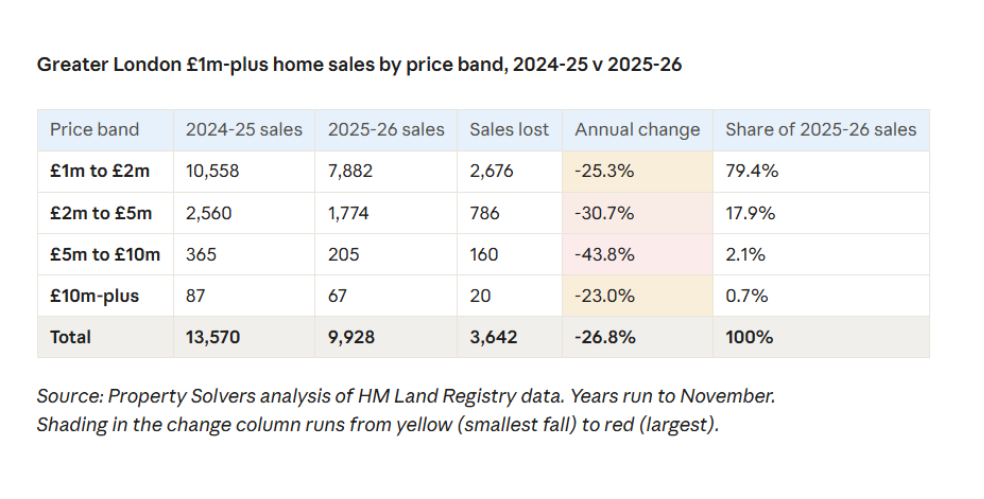
Some 9,928 homes in Greater London sold for £1m or more over the period, down from 13,570 a year earlier, according to analysis of HM Land Registry data by Property Solvers, a property buying company and auctioneer. It is the first time yearly sales have dropped below 10,000 in the five years the firm has tracked, leaving sales 4,832 below the 2022-23 peak.
The money spent on these homes fell faster than the number of sales, from about £25.18bn to £17.98bn. London still accounts for about half of all £1m-plus sales tracked, but its share slipped three percentage points to 51%, as towns such as Guildford, Tunbridge Wells and Reading took a larger slice of the top end.
London's £1m market falls to a five-year low
The decline has been building for three years. Million-pound sales in Greater London peaked at 14,760 in 2022-23, dropped to 12,762 in 2023-24 and recovered briefly to 13,570 in 2024-25 before falling to 9,928. That leaves the market almost a third smaller than at its peak.
Outside the capital, Guildford, Tunbridge Wells, Hemel Hempstead, Slough and Reading recorded the most £1m-plus sales. All five are within commuting distance of London, so brokers with high-value clients may see more of that business move to the Home Counties.
Tax changes and choosier buyers behind the fall
The money is still there. What has changed is what buyers are willing to pay, and the extra costs that come with buying and owning an expensive home.
"There remains considerable wealth in the capital's housing market, but buyers have become increasingly selective in recent years," said Ruban Selvanayagam, co-director of Property Solvers.
He pointed to several pressures arriving at once. "Higher stamp duty costs, changing demand from overseas purchasers, the abolition of the former non-dom tax regime and the forthcoming mansion tax on properties worth £2 million or more are all likely to be weighing on buyer confidence, particularly at the upper end of London's property market."
Stamp duty is charged in slices, so the biggest bills land on the most expensive homes. The government left stamp duty rates and thresholds unchanged at the October Budget, so there is no relief in sight for buyers at this level.
The £5m to £10m band took the biggest hit, losing 160 of its 365 sales. Homes above £10m held up better, and buyers at that level are less likely to need a mortgage, which may help explain the gap.
Mansion tax threshold puts pressure on £2m-plus sales
From April 2028, owners of homes in England worth £2m or more will pay a yearly charge on top of council tax. Under the government's High Value Council Tax Surcharge plans, the charge starts at £2,500 a year for homes worth £2m to £2.5m and rises to £7,500 for homes above £5m. It is based on what a home was worth in 2026 and is set to rise with inflation from 2029-30.
The sales figures fit that pressure. Sales of £2m to £5m homes fell 30.7%, from 2,560 to 1,774, faster than the 25.3% drop for homes priced between £1m and £2m.
A buyer choosing between a £1.9m house and a £2.1m one now has a reason beyond the price tag to stay under the line. More deals are likely to be negotiated to land just below £2m. Brokers have already warned that the mansion tax risks freezing the housing ladder by putting owners off moving.
The £1m to £2m band still makes up almost 80% of London's million-pound sales, with 7,882 deals. But it lost 2,676 sales in a year, the largest drop in raw numbers of any band, and it is the part of the market where buyers are most likely to borrow.
Valuation gaps and slower chains ahead for brokers
Sellers will need to price realistically. "Many sellers remain anchored to price expectations formed during stronger market conditions," Selvanayagam said. "However, even properties in desirable locations can struggle to attract interest when asking prices are out of step with what buyers are prepared to pay."
That gap shows up in valuations. When an agreed price runs ahead of what a lender's valuer will accept, the buyer has to find a bigger deposit, renegotiate or walk away. Brokers with clients in the £1m to £2m bracket should prepare them for that before an offer goes in.
Borrowing is also getting dearer. The Bank of England raised Bank Rate from 3.75% to 4% on 5 November, its first rise since August 2023. Almost all of the sales in this data went through before that decision, so its effect is not in these figures yet.
Brokers with clients weighing a purchase or remortgage can view the latest mortgage rates for the UK in our database for more.
Homeowners who already own a £2m-plus property face a different question: higher holding costs from 2028 and, for those with a mortgage, the prospect of a more expensive remortgage if rates keep rising.
See our residential mortgage news and analysis section to see how this story develops or what's happening right now.