New research maps the markets where growth momentum remains strongest amid a national slowdown

Low-investor suburbs in Perth and Adelaide are on course to breach the million-dollar median house price threshold within 12 months, even as broader market conditions point toward slower growth, according to analysis by Ray White.
The research identifies a clear divergence between suburbs with high investor concentration and those dominated by owner-occupiers. Suburbs where investors hold above 28% of stock are recording annual growth of 6.9% on average, against 9.5% for suburbs where investor concentration falls below 19%.
Investor ownership is concentrated in inner-city markets. Melbourne Inner holds the highest number of investor-owned households nationally. Sydney's City and Inner South leads by share at 42%, followed by Brisbane Inner City at 41%. By contrast, suburbs with investor shares below 19% tend to be more affordable and owner-occupier-driven.
| # | Statistical Area Level 4 | Total | Investors | Investor share |
|---|
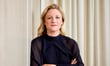
 "Suburbs with the highest investor concentration are already recording the weakest annual growth at 6.9%, compared to 9.5% for the lowest investor band," said Atom Go Tian (pictured right), economist at Ray White. "They are also the most expensive, with a median house price of $1.58 million versus $1.01 million."
The divergence is also apparent in price falls: 31% of suburbs with investor concentration above 28% have already recorded negative annual growth, compared with 14% of those in the lowest investor band.
Ray White's analysis focused on capital city suburbs priced between $900,000 and $1 million with investor shares below 19% and sufficient growth momentum to cross $1 million within 12 months.
| SA2 | Capital City | Investor % | Median House Price | 1Y Growth | 5Y Growth |
|---|
Perth accounts for the majority of qualifying suburbs. The city's inner suburbs have already exceeded $1 million, pushing growth outward into previously affordable areas. Qualifying Perth suburbs carry investor shares ranging from 12 to 18%.
In Adelaide, Sheidow Park–Trott Park and McLaren Vale in the south, and Golden Grove in the north, all meet the criteria. Each carries an investor share of 11 to 13% and is growing at 10 to 12% annually.
Darwin's Howard Springs also qualifies. With a median house price of $956,000 and annual growth of 14.6%, the suburb has just 9% investor exposure — the only qualifying location outside Perth and Adelaide.
Sydney, Melbourne, and Brisbane produce no qualifying suburbs. In Sydney, the only low-investor-exposure suburbs in the relevant price range are on the Central Coast and in the Blue Mountains, growing at just 5 to 7% annually. Melbourne candidates in the outer Yarra Ranges are growing at under 10%. Brisbane has no suburbs that meet the criteria at all.
Go Tian cautioned that the resilience of these suburbs should not be mistaken for immunity. "The risk for these suburbs is not investors leaving," he stressed. "It's affordability. At $920,000 to $975,000, they are approaching the ceiling of what many owner-occupier households can finance, particularly if interest rates remain elevated."
"What the data tells us is that these suburbs are the least exposed to the specific headwind the market now faces," Go Tian said. "Where investors are thin, the pullback has less to work with. That is not a guarantee of continued growth, but in a market about to slow unevenly, it is the strongest position to hold."
Want to be regularly updated with mortgage news and features? Get exclusive interviews, breaking news, and industry events in your inbox – subscribe to our FREE daily newsletter. You can also follow us on Facebook, X (formerly Twitter), and LinkedIn.