Report points to easing jobs growth and a quits rate in decline, even as minimum wage increases loom

Australian wage growth remained stable in June, though Commonwealth Bank economists have flagged that conditions could shift in coming months, according to the bank's latest Wage and Labour Insights report.
Wages rose 0.8% over the three months to June, with annual growth holding at 3.1%, suggesting elevated inflation has yet to feed through to stronger pay outcomes.
"The next few months will be important to watch," said Harry Ottley, economist at CommBank. "The increase in minimum and Award wages of 4.75% will likely see Q3 wages pressure pick up. The quarterly rate of growth showed no signs of higher actual and expected inflation having translated into higher wages pressure at this stage."
 CBA economists nonetheless anticipate an upward shift soon. "We forecast WPI growth of 1.0%/qtr in Q3 and we will get an early read on this in next month's CBA Wage and Labour Insights report, well ahead of the official data due in November," Ottley (pictured right) said.
Employment growth is also slowing. The CBA Labour Insights series recorded jobs growth of 17,000 in June, down from 18,000 in May — marginally below the level needed to prevent unemployment from rising. CBA economists project the unemployment rate will climb to 4.8% by Q4 2027, from 4.4% currently.
"We expect employment growth to continue to ease going forward," Ottley said. "The economy is slowing due to higher interest rates and a cooling housing market. And business confidence remains very low."
CBA's internal quits rate proxy — which tracks large wage increases as a signal of job-switching activity — continued to fall, pointing to a labour market that has been cooling since 2022. "Overall, the data supports our broader view that the labour market continues to loosen gradually but remains a little too tight for comfort for the RBA," Ottley said.
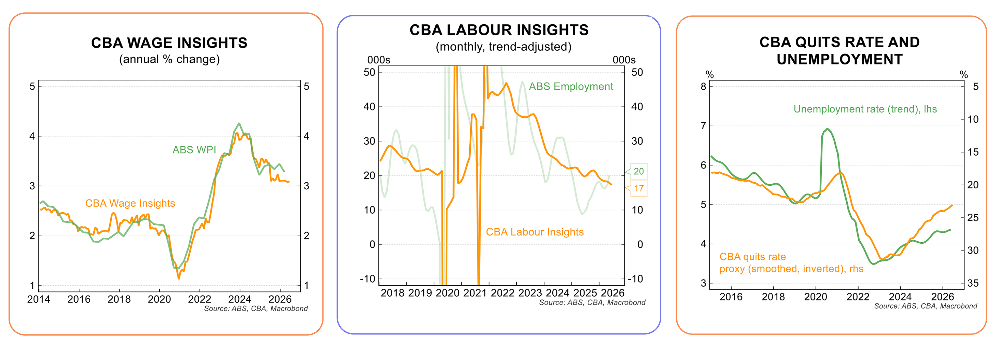
Wage and employment data shape RBA cash rate decisions by signalling inflationary pressure and labour market conditions. Strong wage growth can prompt the central bank to hold or raise rates, keeping mortgage costs elevated, while softening employment figures strengthen the case for cuts. Lenders also track wage trends independently, as income growth affects serviceability assessments and borrower risk profiles.
Want to be regularly updated with mortgage news and features? Get exclusive interviews, breaking news, and industry events in your inbox – subscribe to our FREE daily newsletter. You can also follow us on Facebook, X (formerly Twitter), and LinkedIn.