Domain report points to a split housing market as borrowing limits reshape demand

Sydney and Melbourne recorded quarterly falls in house prices in the March quarter, ending recent growth runs in Australia’s two largest housing markets, according to Domain’s March Quarter House Price Report.
Sydney’s median house price slipped 0.04%, or $772, over the quarter to $1.79 million, its first quarterly decline after three years of growth. Melbourne’s median house price fell 0.6%, or $6,357, to $1.083 million, its first quarterly fall in 18 months.
| Houses Stratified Median Price | |||||||
|---|---|---|---|---|---|---|---|
| Capital city | Mar-26 | Dec-25 | Mar-25 | Quarterly change | Annual change | Price peak achieved | Price from peak |
| Sydney | $1,791,643 | $1,792,415 | $1,681,183 | -0.04% | 6.6% | Dec-25 | -0.04% |
| Melbourne | $1,082,728 | $1,089,085 | $1,037,453 | -0.6% | 4.4% | Dec-25 | -0.6% |
| Perth | $1,178,522 | $1,114,907 | $945,726 | 5.7% | 24.6% | Mar-26 | 0.0% |
| Brisbane | $1,212,195 | $1,162,884 | $1,007,166 | 4.2% | 20.4% | Mar-26 | 0.0% |
| Adelaide | $1,099,293 | $1,045,371 | $944,599 | 5.2% | 16.4% | Mar-26 | 0.0% |
| Source: Domain | |||||||
The movements were small but point to weaker momentum in the two markets most exposed to affordability limits and interest rate pressures. Annual growth remains positive, at 6.6% in Sydney and 4.4% in Melbourne, but buyers are showing more caution as borrowing capacity and household budgets remain under pressure.
Unit markets showed more resilience, particularly in Sydney. The city’s median unit price rose 0.6%, or $5,151, in the quarter to a record $848,227. That marked 13 straight quarters of growth, the longest run since the early 2000s. Annual unit growth in Sydney rose to 3.5%, the fastest pace in 18 months.
| Units Stratified Median Price | |||||||
|---|---|---|---|---|---|---|---|
| Capital city | Mar-26 | Dec-25 | Mar-25 | Quarterly change | Annual change | Price peak achieved | Price from peak |
| Sydney | $848,227 | $843,076 | $819,663 | 0.6% | 3.5% | Mar-26 | 0.0% |
| Melbourne | $611,182 | $613,856 | $579,440 | -0.4% | 5.5% | Dec-25 | -0.4% |
| Perth | $700,351 | $660,494 | $547,843 | 6.0% | 27.8% | Mar-26 | 0.0% |
| Brisbane | $800,500 | $762,830 | $650,704 | 4.9% | 23.0% | Mar-26 | 0.0% |
| Adelaide | $651,699 | $633,737 | $548,930 | 2.8% | 18.7% | Mar-26 | 0.0% |
| Source: Domain | |||||||
Melbourne’s unit market fell 0.4%, or $2,674, over the quarter, its first decline in nine months. However, annual growth increased to 5.5%, the strongest result in more than four years. Units have also outpaced houses in Melbourne for two consecutive quarters.
The data suggests buyers in the eastern capitals are shifting towards lower-priced options as mortgage limits weigh on purchasing decisions.
Perth continued to move in the opposite direction. Its median house price rose 5.7%, or $63,615, in the March quarter to a record $1.179 million. The rise extended Perth’s house price upswing to 14 consecutive quarters, the longest such run since the 2000s. Annual house price growth in the city reached 24.6%, the strongest of any capital.
Perth’s median unit price also increased sharply, rising 6%, or $39,857, over the quarter to a record $700,351. Annual unit growth reached 27.8%, the strongest national result and Perth’s highest since 2006.
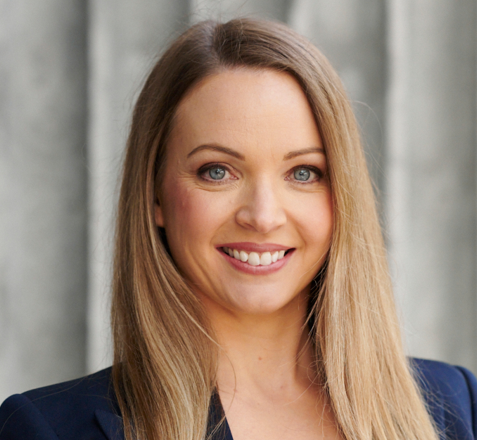 “The declines we’re seeing in Sydney and Melbourne is as much about changing sentiment as it is about borrowing limits,” said Nicola Powell (pictured right), chief residential economist at Domain.
“Buyers haven’t disappeared, but they’re behaving very differently. There’s less urgency, more negotiation and a much sharper focus on affordability.
“In contrast, Perth remains a standout. Prices continue to rise strongly due to extremely low supply, above-average population growth and affordability constraints being far less binding than in Sydney and Melbourne.
“Houses in the most expensive markets are feeling the interest rate pressure first, while units are holding up better as buyers reset expectations and look for safer, more accessible price points.”
Want to be regularly updated with mortgage news and features? Get exclusive interviews, breaking news, and industry events in your inbox – subscribe to our FREE daily newsletter. You can also follow us on Facebook, X (formerly Twitter), and LinkedIn.