Detached housing showing relative resilience as apartments approvals drop 30%

Australia’s new housing pipeline weakened in March, with official figures showing a double‑digit fall in dwelling approvals as higher rates and cost pressures continue to weigh on construction activity.
Australian Bureau of Statistics data shows the total number of dwellings approved fell 10.5% in March (seasonally adjusted) to 17,300. ABS head of construction statistics Daniel Rossi said the downturn was driven by a sharp pullback in higher‑density projects.
“The fall in total dwellings approved was driven by a 26% drop in private dwellings excluding houses, following a 101.1% rise in this series in February,” Rossi said.
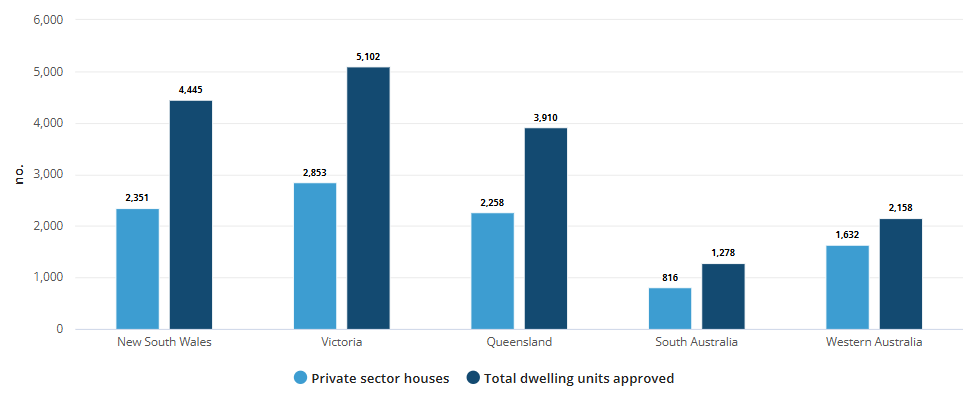
While the multi‑unit pipeline cooled, detached housing showed surprising resilience. Private sector house approvals rose 0.9% in March to 10,194 – the highest level since November 2021 and 12% above the level a year earlier.
New South Wales led the lift in house approvals, up 9.5% to their strongest level since August 2022 after several years of subdued detached activity. Western Australia recorded the largest monthly fall, down 8.6%, although house approvals there remain above the 12‑month average.
The weakness was concentrated in apartments and other attached stock. Private sector dwellings excluding houses fell 26% to 6,632 in March, unwinding part of February’s spike to the highest level since mid‑2018. Apartment approvals dropped 30.2% in original terms to 3,768, slipping 2.7% below their 12‑month average of 3,872.
By contrast, semi‑detached and townhouse‑style product held up, with new semi‑detached approvals edging 0.6% higher in March to 3,051. That is 5.9% above the average level of the past year, pointing to ongoing demand for medium‑density infill over larger apartment projects.
Across the states, Victoria recorded the highest number of total dwelling approvals in March at 5,102, followed by New South Wales (4,445), Queensland (3,910), Western Australia (2,158) and South Australia (1,278).