Trade Me data shows selective price strength

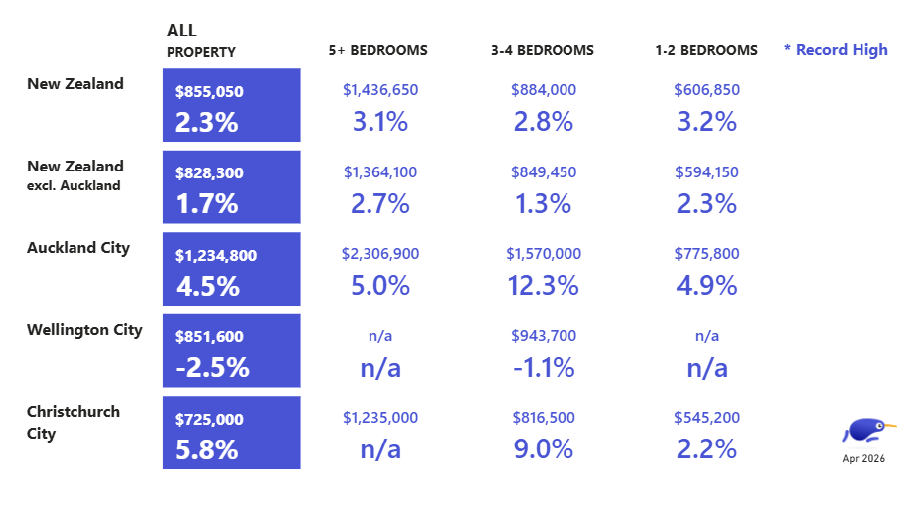
New Zealand’s residential property market remained broadly stable in April, with Trade Me Property reporting a national average asking price of $855,050, up 2.3% compared with a year earlier. New listings rose 3.3% over the same period, pointing to improved choice for buyers.
Trade Me Property customer director Gavin Lloyd (pictured) said the figures indicate a balanced environment.
“We’re seeing a steady annual climb in prices alongside a healthy increase in stock. This combination gives buyers more options and suggests a level of confidence from sellers as we head toward the cooler months,” Lloyd said.
Despite the balanced picture in the Trade Me data, separate survey evidence from the latest NZHL Property Report by Tony Alexander highlights softer sentiment, with agents reporting weaker price expectations and investor caution. Alexander concludes that “We are solidly in a buyer’s market,” with vendors typically the more motivated party in negotiations.
Regional standouts highlight volatility
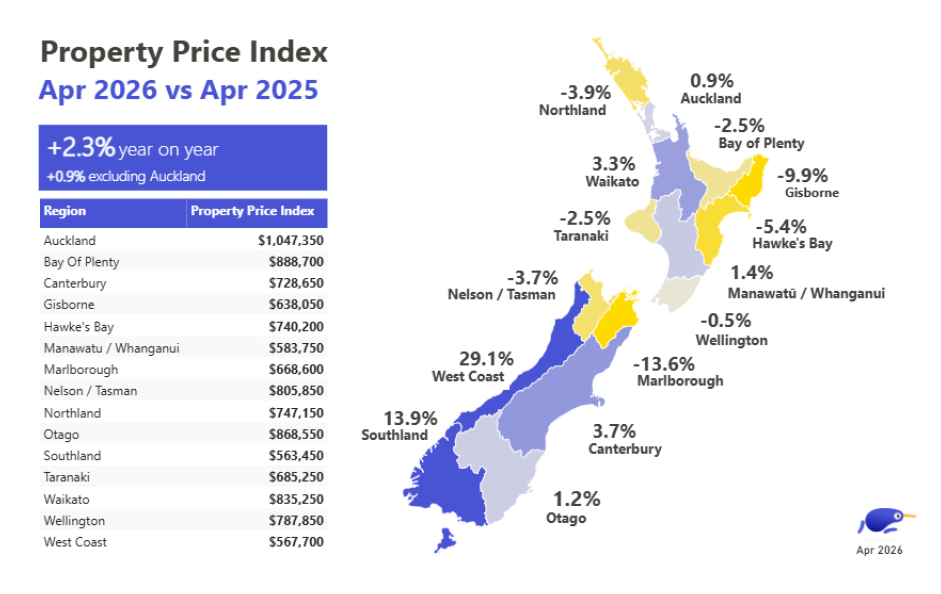
Southland recorded one of the strongest performances, with average asking prices in the region rising nearly 14% year-on-year to $563,450 in April. The West Coast saw an even larger annual jump of 29%.
Lloyd noted that movements in smaller centres need to be read with care.
“Smaller markets like the West Coast often see higher volatility because even a small shift in the volume or type of stock can significantly impact the average asking price,” he said.
In Auckland, conditions were more subdued. The city’s average asking price slipped 2% month-on-month but remained above the million‑dollar mark at $1,047,350, a 0.9% increase on April.
Small homes outpace larger dwellings
The report shows stronger price growth for smaller, more affordable properties. Asking prices for one–two-bedroom homes climbed 3.2% over the year to $606,850, outstripping three–four-bedroom properties, which rose 2.8% on average.
“The one-two-bedroom segment is a key indicator of market health, as it's often the entry point for first-home buyers. Seeing this segment outperform the national average highlights where the current competitive energy is focused,” Lloyd said.
Stay informed with the latest housing market trends and mortgage insights — subscribe to our free daily newsletter.