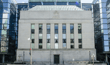
Most expect no rate move until 2027, but one analyst says December is now in play

Five of Canada's leading economists responded swiftly to the Bank of Canada's (BoC) seventh consecutive rate hold on September 2. While the consensus view favours no policy change through year-end, the language coming out of Bay Street has grown noticeably more hawkish, with one analyst now flagging December as a live possibility for a hike.
The central bank kept its overnight rate at 2.25%, unchanged since December 2025, citing two competing forces: an improving domestic economy and a sharpening inflation picture.
Canada's gross domestic product expanded 3.3% on an annualized basis in Q2 2026, rebounding from 0.3% in the first quarter, according to Statistics Canada.
At the same time, the Consumer Price Index climbed to 3.0% in July from 2.8% in June, while core CPI — excluding food and energy — edged up month-over-month to 1.9% from 1.8%.
New US tariffs targeting approximately 5% of Canadian goods exports and sustained energy inflation tied to the Iran conflict complicated the picture further.
Read more: What the BoC's latest rate hold means for your mortgage
A hawkish read — but not a unanimous one
Benjamin Reitzes, managing director and Canadian rates and macro strategist at BMO Capital Markets in Toronto, called the statement's tone "slightly hawkish," pointing to the Bank's focus on oil price passthrough and tariff-driven inflation risk even as financial conditions tightened from rising global bond yields.
"Upside risks to inflation have increased, while new tariffs make growth prospects more uncertain" — the BoC's own words, which Reitzes said leave policymakers "pinned to the sidelines" into 2027.
Avery Shenfeld, chief economist at CIBC Capital Markets in Toronto, agreed there was "little prospect for a policy change in either direction over the rest of the year given that both the oil and trade war stories could still shift in the months ahead."
He noted that Governor Tiff Macklem appeared to place greater emphasis on inflation upside than on growth downside, but argued the two risks effectively cancel each other out for now.
Nathan Janzen, assistant chief economist at RBC Economics, took a more measured read. Janzen wrote that the BoC's base case view remains unchanged by either risk: "There has been limited spillover of higher energy prices to-date into the prices of other consumer goods and services. And Canadian consumers and businesses have shown signs of adapting to life under increased trade uncertainty — business investment strengthened in Q2 and consumer spending has remained resilient."
RBC's base case holds that the overnight rate stays at 2.25% through 2026, with the next move a gradual hike from 2027 — "conditional on the Canadian economic backdrop continuing to improve," Janzen noted, adding that "the BoC is clearly still highly data dependent and the evolution of interest rates will depend on the path of domestic Canadian growth and inflation data."
Philip Petursson, chief investment strategist at IG Wealth Management in Canada, was more direct about the direction of travel: "The next move will be a hike. This might not materialize until 2027, with the Bank of Canada waiting to see what happens with tariffs and energy prices."
Stephen Brown, chief North America economist at Capital Economics, pushed that timeline earlier, suggesting "an interest rate hike at the final meeting of the year, in December, is arguably now looking more likely" than a delay to mid-2027, contingent on energy prices holding near current levels.
Etienne Bordeleau-Labrecque, vice president and portfolio manager at Ninepoint Partners in Canada, characterised the Bank as choosing the path of least resistance: "Talk hawkish, do nothing, maintain credibility."
He expects the overnight rate to remain at 2.25% through late 2026 or early 2027, with hikes contingent on whether Q2's strength proves durable.
What the economist split means for mortgage clients
Marc Ercolao, economist at TD Economics in Toronto, framed the hold as deliberate flexibility preservation: "We continue to expect rates to remain unchanged through next year, while the Bank preserves the flexibility should conditions deteriorate or inflation prove more persistent than anticipated."
The next decision on October 28, arrives alongside a fresh Monetary Policy Report — the first updated economic projections since July — making it the most consequential remaining announcement of the year.
Make sure to get all the latest news to your inbox on Canada’s mortgage and housing markets by signing up for our free daily newsletter here.