Q2 growth hit 3.3% annualized, the fastest in three years, but trade headwinds loom for brokers
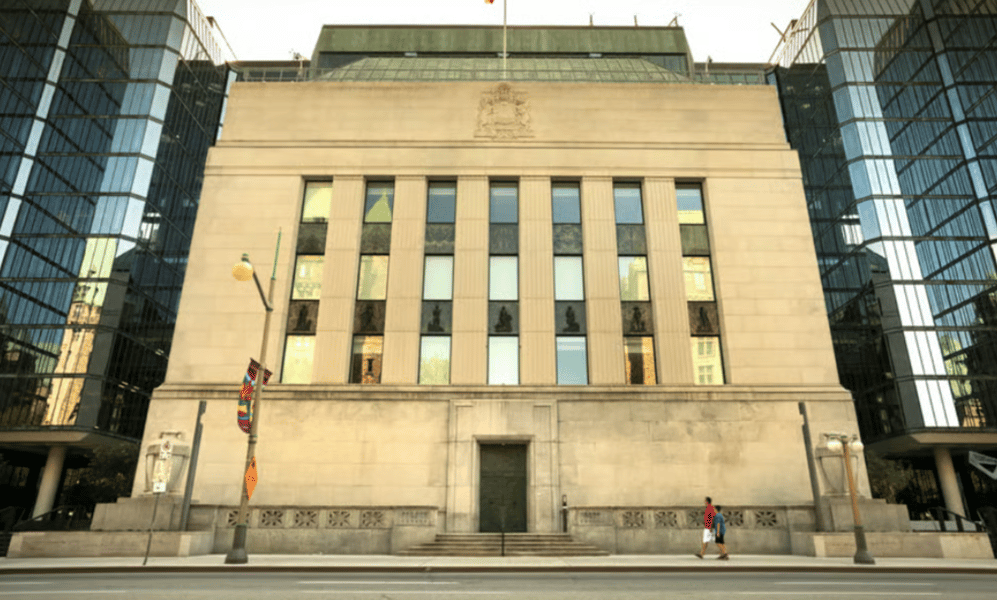
Canada's economy posted its strongest quarterly expansion in more than three years in the second quarter of 2026, erasing recession fears and hardening the case for the Bank of Canada (BoC) to hold its policy rate at 2.25% when it meets on September 2.
Statistics Canada reported that real gross domestic product (GDP) grew at an annualized rate of 3.3% between April and June. In a separate revision that settled months of uncertainty, the agency moved the first-quarter figure from an initial contraction to a modest 0.3% gain, effectively ruling out the technical recession that had dominated industry conversation earlier this year.
The economy is stronger than feared, but a fresh wave of trade escalation with the United States threatens to pull momentum in the opposite direction before the year is out.
Sherry Cooper, Chief Economist at Dominion Lending Centres Group, says higher US government borrowing, corporate debt issuance, and inflation concerns are putting upward pressure on long-term bond yields that could spill over into Canada.https://t.co/LtwETkjmhe
— Canadian Mortgage Professional Magazine (@CMPmagazine) August 28, 2026
What drove the rebound
Exports rose at an annualized 15.1% in the second quarter, according to Statistics Canada, the strongest gain in more than three years, led by higher auto shipments and a jump in data-centre equipment imports.
Business investment in nonresidential structures, machinery, and equipment climbed 12.3% on a quarterly basis, snapping five consecutive quarters of decline.
Residential investment advanced 10.4%. Household consumption grew 3.3%, supported by spending on vehicles and rent. Corporate profits rose 9.6% from the previous quarter, the largest quarterly gain since early 2021, with the energy sector leading the charge.
Per capita GDP rose at an annualized 3.8% rate, its fastest pace since late 2021, as Canada's population declined for a third straight quarter.
For the month of June alone, GDP grew 0.3%, Statistics Canada reported. A preliminary estimate for July, however, showed growth was flat, a signal that second-quarter momentum may already be fading.
Rate hold expected, but tariff risk clouds Q3
The data arrive days before the Bank of Canada's next rate decision, where the central bank is widely expected to maintain its overnight rate at 2.25% for a seventh consecutive meeting.
"Overall, the Q2 report confirms that the economy entered this latest period of trade disruption from a stronger starting point," Abbey Xu, economist at RBC Economics, said.
"Our base case remains for a gradual cyclical recovery, but national growth figures will mask much more difficult adjustments for affected industries, communities and workers. We continue to expect the Bank of Canada to keep interest rates unchanged through the remainder of 2026."
Doug Porter, chief economist at BMO Capital Markets in Toronto, welcomed the revised first-quarter results. "The so-called technical recession has been sent to the trash bin," Porter wrote in a note to economists. But he added that stronger second-quarter numbers offer no shelter from what is coming.
"The third quarter is thus off to a tougher start, and it won't get easier in August and September with the wave of downbeat headlines," he wrote.
New US tariffs of 50% on approximately $20 billion in Canadian goods took effect after negotiations broke down, with Canada announcing retaliatory measures set to begin September 8.
The tariffs target some of the same export categories that helped power Q2 growth, raising the risk that the third quarter looks markedly weaker.
A Bank of Canada hold keeps variable-rate mortgage pricing stable in the near term. But if Q3 data confirm the slowdown suggested by July's flat reading and if trade escalation accelerates, rate-cut expectations could resurface by year-end.
Make sure to get all the latest news to your inbox on Canada’s mortgage and housing markets by signing up for our free daily newsletter here.