Deputy governor Toni Gravelle says over-reliance on forward guidance can distort market signals
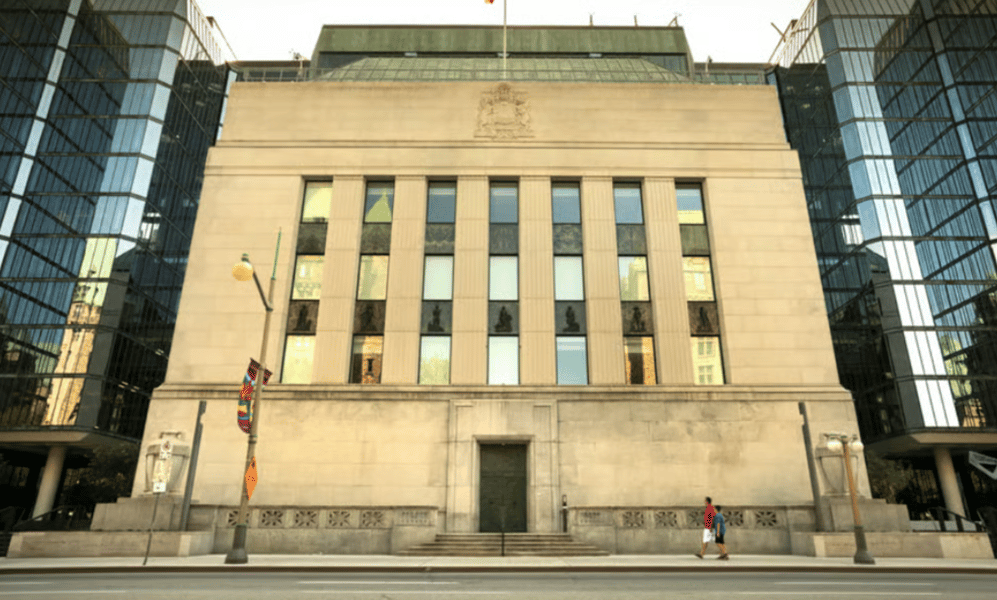
The Bank of Canada is urging financial markets to exercise independent judgment on the rate outlook rather than simply reflect the central bank’s own signals.
Deputy Governor Toni Gravelle, speaking before the Edmonton Chamber of Commerce in Edmonton, Alberta, on November 18, warned that too much forward guidance — public signalling of where the overnight rate may head next — risks eroding the independent analysis markets must apply.
The speech follows the Bank’s decision to raise its overnight rate 25 basis points to 2.50% at its October 28 announcement, its first hike in more than three years. The final rate announcement of the year set for December 9.
“In a sense, they stop doing their homework,” Gravelle said. “As a result, central banks can lose an important source of information about how investors view the economy.”
The comments echo warnings issued by Kevin Warsh, the new chair of the United States Federal Reserve, who argued in August that forward guidance risks locking policymakers into future decisions.
When scenarios replace explicit guidance
Rather than committing to a rate path, Gravelle said the Bank of Canada has leaned more heavily on scenario analysis — alternative economic projections that show how monetary policy might react if key risks materialize.
A scenario published in the April Monetary Policy Report (MPR) assumed oil prices, then near US$100 per barrel, would ease to roughly US$75 per barrel by mid-2027.
By October, the actual path had tracked the more adverse outcome.
“In the April high oil price scenario, inflation stays close to 3% for more than a year, and consecutive policy rate increases are needed to get inflation back to target,” Gravelle said. That scenario, he noted, had by October largely materialized.
Canada's annual inflation rate held at 3.1% in October, strengthening expectations that the Bank of Canada may pause at its December 9 rate decision as markets assess easing price pressures and softer economic data. https://t.co/jzZrTP5pgU
— Canadian Mortgage Professional Magazine (@CMPmagazine) November 17, 2026
What higher rates mean for brokers
According to the Bank of Canada’s Q3 Market Participants Survey, financial market participants revised their five-year Government of Canada bond yield} forecasts upward by 35 basis points quarter-over-quarter to 3.50%, with the consensus terminal policy rate settling at 2.75%.
Dr. Sherry Cooper, chief economist at Dominion Lending Centres (DLC) in Canada, told Canadian Mortgage Professional in September that clients should not wait on pre-approvals.
“So it is a time when we should encourage anyone that is interested in potentially buying a home that they get pre-approved, because today’s rates, even though they’re a little above what they were last week and the week before, they’re only going higher,” she said.
Marc Ercolao, economist at TD Economics in Toronto, Ontario, said the October rate hike was designed to buy time.
“We think this hike buys the Bank a few months to assess whether higher energy and input costs are actually filtering through to consumer prices,” he said, projecting one further 25-basis-point increase in Q1 2027.
Make sure to get all the latest news to your inbox on Canada’s mortgage and housing markets by signing up for our free daily newsletter here.