Cheaper, faster and more flexible than a decade ago, bridging finance is coming into its own, just as the market demands it

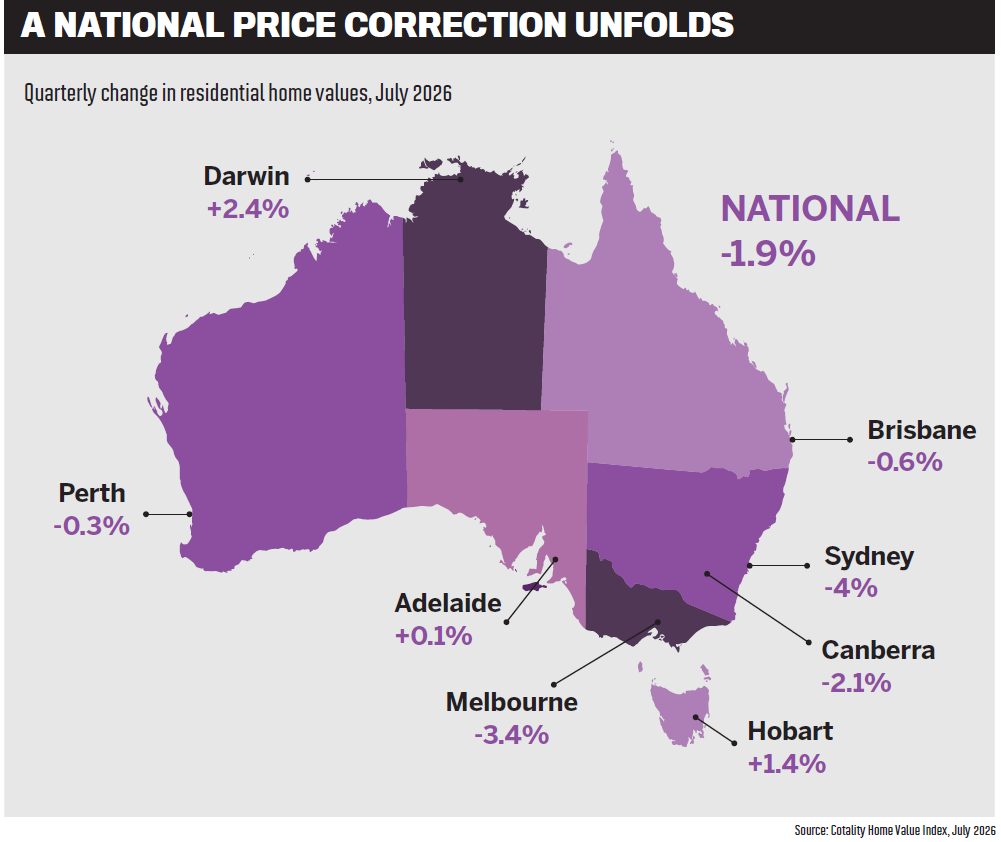
AUSTRALIA'S HOUSING market has turned a corner. Cotality's Home Value Index for July 2026 recorded the steepest monthly national decline in more than two-and-a-half years, with Sydney leading the fall in what was the market's third straight monthly retreat.
For homeowners used to a decade of near-uninterrupted growth, that shift is forcing a rethink of how they buy and sell. Enter bridging finance, which, once considered a niche, last-resort product, is increasingly the tool brokers are reaching for to help clients navigate an emerging buyers' market.
A cooling market
In a market where properties are sitting unsold for longer, bridging finance allows a homeowner to purchase their next property before selling their existing one, using the equity in their current home to bridge the gap between the two transactions.
That flexibility is becoming more valuable, not less. James Green, founder and chief executive of new-to-market bridging finance specialist Clinch, reckons the reversal from 2025's strong conditions is opening a genuine opportunity for brokers to reposition bridging finance as a strategic tool rather than a stopgap.
"Rather than feeling pressured to sell first, borrowers can use bridging finance to secure their next property while taking advantage of increased choice and potentially discounted purchase prices," says Green. "If buyers believe the current market presents value, bridging finance allows them to buy now at a discount and sell later, rather than trying to perfectly time both transactions."
Chris Meaker, head of sales and distribution at Brighten, notes that vendors are feeling the same pressure from the other side of the transaction. "In a buyer's market, properties often take longer to sell, and vendors can face increased pressure on pricing," says Meaker.
Bridging finance can remove that pressure. Meaker continues, "It allows borrowers to secure their next property first and take a more measured approach to selling their existing home, rather than accepting the first offer that comes along. In changing market conditions, having additional time and flexibility can be a significant advantage."
The timing advantage is not lost on Green. "A softer market doesn't mean borrowers should panic," he says. "Bridging finance gives homeowners the flexibility to buy with confidence today and sell when the timing is right."
Meaker goes a step further, describing bridging as far more than a simple buy-before-you-sell fix. "We increasingly see bridging as a strategic liquidity tool that allows borrowers to unlock equity and act when opportunities arise," he explains. "That might mean securing a property in a competitive market, completing renovations before sale, or managing major life events without being forced into rushed decisions. The key benefit isn't just convenience; it's control."
"A softer market doesn't mean borrowers should panic. Bridging finance gives homeowners the flexibility to buy with confidence today and sell when the timing is right" — James Green, Clinch
Transport-hub density plans open a new pipeline
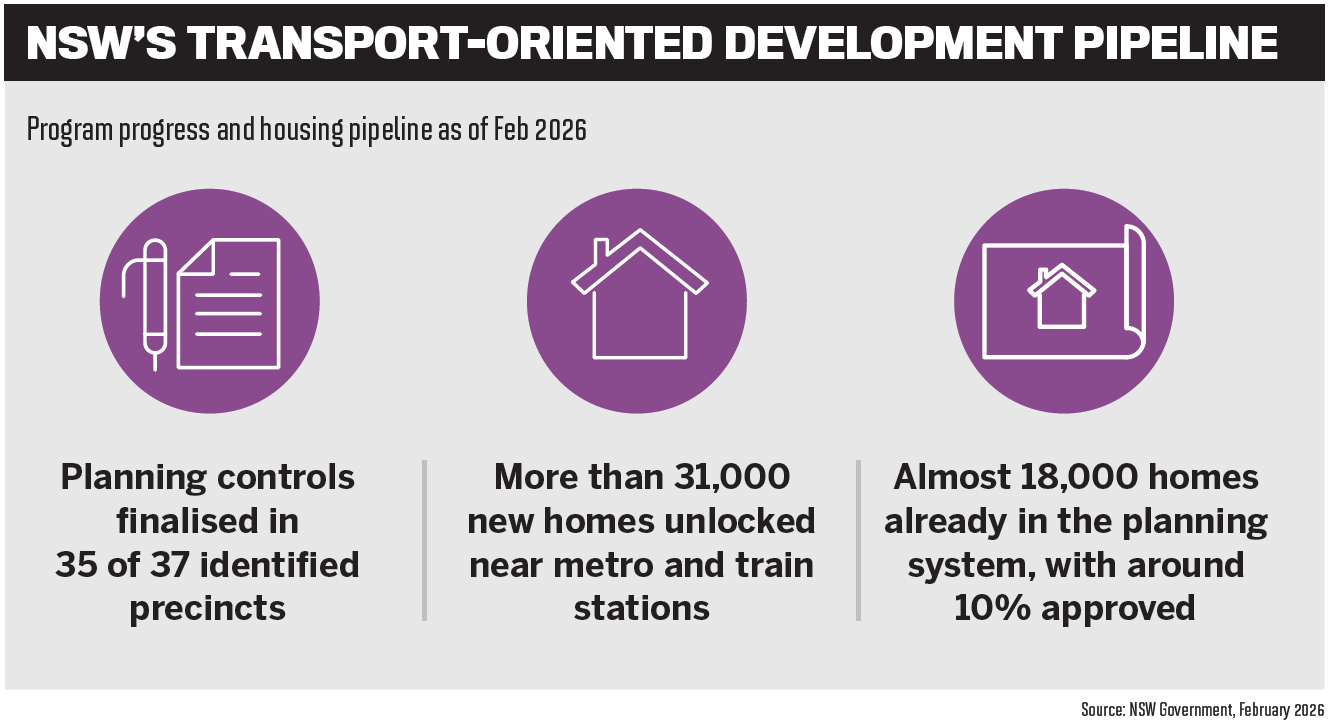
Beyond current market conditions, structural change is also creating opportunities for bridging finance. The New South Wales Government's Transport Oriented Development program, which has now finalised planning controls across 35 of 37 identified precincts, is on track to unlock more than 31,000 new homes near metro and train stations, with almost 18,000 already in the planning system and roughly 10% approved. The program allows higher-density apartments, townhouses and shop-top housing within a short walk of rail and metro stations across Sydney, Newcastle and the Illawarra.
Green believes this pipeline of new, well-located stock is likely to become a meaningful source of bridging demand.
"The NSW Government's push to increase housing density around transport hubs will create a larger pipeline of new apartments, townhouses and downsizer-friendly housing in well-connected locations," he says. "For older homeowners, this can unlock practical opportunities to move from larger family homes into lower-maintenance properties close to transport, health services and amenities."
At Brighten, Meaker is already seeing the effect play out. "We're seeing situations where homeowners are looking to secure a newly completed apartment or townhouse before their existing property has settled, while others may be selling established homes in areas undergoing rezoning or redevelopment," he says.
"As urban renewal projects continue to reshape key metropolitan corridors, we expect demand for flexible short-term funding solutions to increase alongside them."
The timing mismatch between securing one of these new-build opportunities and selling an existing property is exactly the gap bridging finance is designed to close. "As urban consolidation occurs, bridging finance will play an increasingly important role in helping homeowners transition into the next generation of housing," says Green.
The affordability question
One of the biggest barriers to broader adoption of bridging finance has historically been price. But experts say that reputation is now out of step with the market.
"Bridging finance has changed significantly over the past decade," Green explains. "Historically, it was often viewed as a product of last resort, with interest rates commonly exceeding 15% per annum, strict credit criteria and limited competition."
That's shifted as more specialist and non-bank lenders have entered the market. "Increased competition and specialist lenders have driven rates down to around 8% to 9% per annum for many borrowers, while product innovation has made bridging finance considerably more accessible," says Green.
Meaker agrees the product still carries a premium but notes that the conversation around it has matured. "Today's borrowers are increasingly focused on value rather than simply headline rates," he says.
For brokers, Meaker believes the most effective approach is to frame the cost within the broader transaction. "If the product allows a client to secure a desired property, avoid temporary accommodation costs, reduce moving expenses or achieve a better sale outcome, those benefits need to be considered alongside the cost of the facility."
Stressing that point, Green adds, "Rather than asking, 'What does it cost?', brokers should help clients consider, 'What is the cost of not having this option?'"
"We increasingly see bridging as a strategic liquidity tool that allows borrowers to unlock equity and act when opportunities arise" — Chris Meaker, Brighten
Ignore at your peril
Between a softening market, a growing pipeline of transport-linked housing stock and repricing across the bridging sector, the conditions for the product's next phase of growth appear to be aligning.
Clinch's launch and Brighten's expanded single-security Brighten Connect loan offering reflect a broader trend of lenders sharpening their bridging products, and both companies expect the product to keep moving further into the mainstream.
Read more: Why Clinch is betting on bridging
"The future of bridging isn't just about helping people buy before they sell," Green says. "It's about empowering Australians to make better property decisions by giving them greater flexibility over how, when and why they move."
Meaker agrees, predicting brokers will start raising bridging earlier in client conversations rather than reaching for it only once a timing problem emerges.
"Traditionally, bridging has often been considered only when a client encountered a specific problem," says Meaker.
"Going forward, I think we'll see brokers proactively discussing bridging as part of strategic property planning much earlier in the customer conversation. The result will be a broader understanding of bridging finance, not as a last resort but as a practical and strategic solution that helps borrowers move forward with confidence."