Four defences, all rejected. The documentation made the difference

A private lender just won a $692,592 judgment after a borrower's "sham" defence fell apart in every direction.
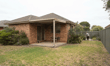
The Supreme Court of Victoria on November 26, 2026 ordered repayment of $692,592.80 plus continuing interest, and granted the lender possession of a residential property in regional Victoria that had secured the mortgage. A counterclaim - that the entire deal was a sham hiding a $1.25 million property sale - was dismissed.
A country couple, underwater
The couple at the centre of the case ran a general store and post office in Smiths Gully, northeast of Melbourne. They owned both the commercial property where the business operated and the house where they lived nearby.
By early 2023, they were drowning. They had borrowed $235,000 secured against their house and $570,000 secured against the shop from Primary Securities Ltd, trading as Private Mortgages Australia. The starting rates on those loans were 15.50% and 14.95% per annum. When the couple fell into arrears, those rates jumped - to 27.25% on one loan and 25.90% on the other.
They needed to get out. Through a mutual contact, the husband reached out to a director of Haste Nominees Pty Ltd, the trustee of a self-managed superannuation fund. That director connected them with Berkeley Capital Partners, known as BCP Finance, a Melbourne finance brokerage, to search for better terms.
BCP tried. They pitched the borrowers to Keystone Capital, which declined. Then Prime Capital, which also said no - citing the state of both properties, potential asbestos in the shop building, the regional location, and an estimated $70,000 in repairs needed on the house.
The rescue deal
By late March 2023, BCP had run out of mainstream options. The director of Haste Nominees proposed a two-part structure. Part one: Haste would purchase the shop property for $800,000 - the same figure as an independent valuation by JPM Valuers & Property Consultants dated March 21, 2023. Part two: Haste would lend the couple's company $500,000, secured by a second mortgage over the house, to clear the remaining debts.
The loan carried interest at 8% per annum, with a 4-percentage-point premium if they defaulted. Against rates above 27%, that was a sharp drop.
Both husband and wife signed a loan acknowledgment on June 21, 2023. The document laid out the arrangement in plain terms: a $500,000 loan from Haste Nominees, secured by personal guarantees and a mortgage over the house. Settlement ran through PEXA on July 3, 2023, with no fewer than six parties involved. The couple's own solicitor, Lewis O'Brien & Associates, had prepared the contract of sale and the lease of the shop property.
Six payments, then nothing
Interest payments ran for six months. In late January 2024, the wife emailed the broker saying the February payment would be delayed "due to cash flow issues caused partly by Christmas slow down." In early March, she reported a 21-day power outage at the shop that had killed income. Payments stopped entirely.
Then the marriage collapsed. In March 2024, the wife obtained a family violence intervention order against her husband. On April 2, 2024, he left Victoria and remotely shut down the business without warning, cutting off bank accounts and access to computer systems. He became bankrupt in October 2024. The couple divorced in April 2025. Both of their companies were eventually deregistered.
Haste Nominees' solicitors had served notices of default and demand on July 1, 2024.
The "sham" that wasn't
The wife, now representing herself, mounted four defences. The centrepiece was the sham argument: the shop had really been sold for $1.25 million, she claimed, and the loan paperwork was fabricated to disguise the true price.
The court found no foundation for it. The executed documents, the PEXA settlement records, the solicitor's trust account ledger, the BCP settlement statement, and the independent valuation all pointed to a genuine deal at $800,000. There was nothing - no document, no email, no written record of any kind - supporting the $1.25 million figure. The only evidence was the wife's testimony that her husband had told her so.
And the court found she had been far more engaged than her defence suggested. She had emailed the broker seeking a first right of refusal on the shop property. She had personally managed the payment of roughly 60 debts from the released funds, preparing a spreadsheet and confirming receipts. She had signed the loan acknowledgment confirming she understood its terms - as a person with 30 years of Victorian public sector experience, as the court noted.
The lender's director and BCP's executive director, a certified practising accountant, both gave evidence that the transactions were genuine. The court accepted their account. It noted that the husband, described as "heavily involved in the transactions," was not called as a witness.
Three more defences, three more rejections
The wife also argued the lender's default notices were defective under Victoria's property law. The court found otherwise - the defaults stretched back to February 1, 2024, and the notices were properly served by post and email to addresses the wife's own defence admitted receiving.
Her claim to an ownership interest in the shop property through improvements she said she had funded was dismissed as beside the point. This case was about the house - the property actually under the mortgage - not the shop.
And the argument that the shop sale could be reversed under federal bankruptcy law failed because that provision applies to individual debtors, not to the company that had sold the property at independently valued market price.
What the paper trail proved
For private lenders and mortgage brokers structuring SMSF-backed deals, this case reads as a documentation masterclass. Every step - the independent valuation, the loan acknowledgment signed by both borrowers, the borrower's own solicitor preparing the sale documents, the electronic settlement through PEXA, the email trail showing informed consent - built a record that the court found overwhelming against an unsupported oral claim.