Buyer interest steadies at the top end as investors retreat

Australia's property downturn looks to be shifting gear, with the high-end markets hit hardest by price falls now showing the first signs of steadying, even as buyer demand keeps softening in the more affordable areas favoured by investors.
Nerida Conisbee (pictured), Ray White Group chief economist, said national house values fell 3.3% over the three months to August, led by Sydney and Melbourne, but pointed to more recent data suggesting the top end of the market is starting to turn.
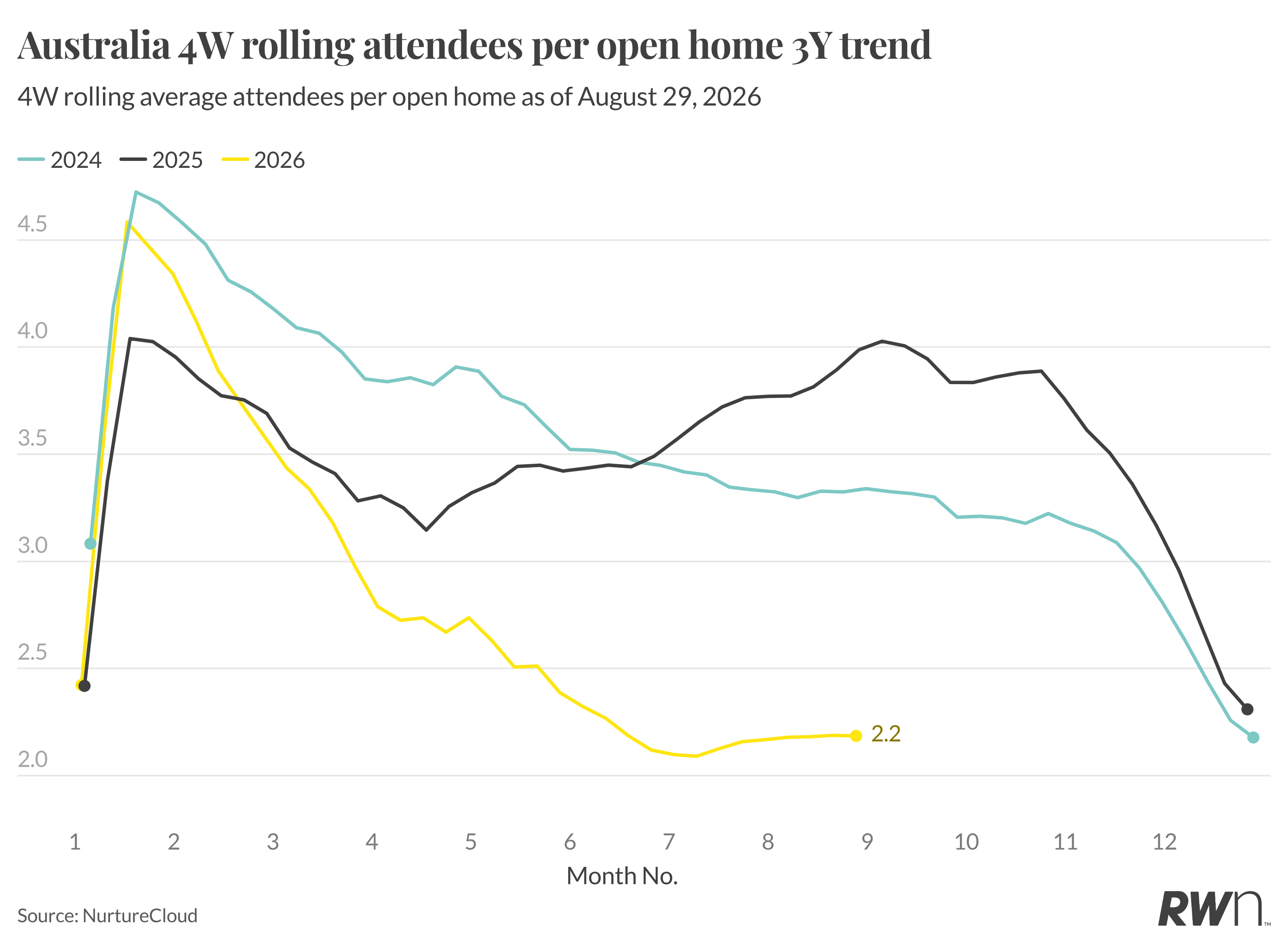
Conisbee's analysis draws on Ray White's open home tracking, which monitors roughly 13,000 inspections nationally each week. Attendance nationally fell sharply in the first half of the year, dropping from around 4.5 people per open home in January to close to 2 by July, before that decline stalled and attendance edged back up to about 2.2.
"Conditions remain much weaker than earlier in the year, but buyer demand is no longer deteriorating at the same pace," Conisbee said.
Sydney and Melbourne pull ahead of other capitals
The recovery is most visible in Sydney and Melbourne, where attendance has climbed back to, or above, pre-budget levels — 2.3 per open home in Sydney and 2.2 in Melbourne, with the strongest gains concentrated in high-end pockets such as Sydney's eastern suburbs and Melbourne's inner south.
Brisbane, Adelaide, and Perth, by contrast, "remain well below their pre-budget levels." Some of the sharpest declines in attendance are occurring in more affordable areas, including Adelaide South and Perth's north-west and north-east.
 Conisbee linked the divergence directly to the federal budget's changes to negative gearing and capital gains tax, which she said reduce the appeal of established housing to investors, with the impact felt most in markets where investor activity is concentrated.
"This is consistent with the impact we expected from the federal budget," she said.
Separately, national lending data now shows the scale of that pullback: new investor loan commitments fell 8.6% in the June quarter, the sharpest quarterly fall since September 2022, as reduced serviceability curbs borrowing capacity for established-property investors.
Early price gains follow the shift in buyer activity
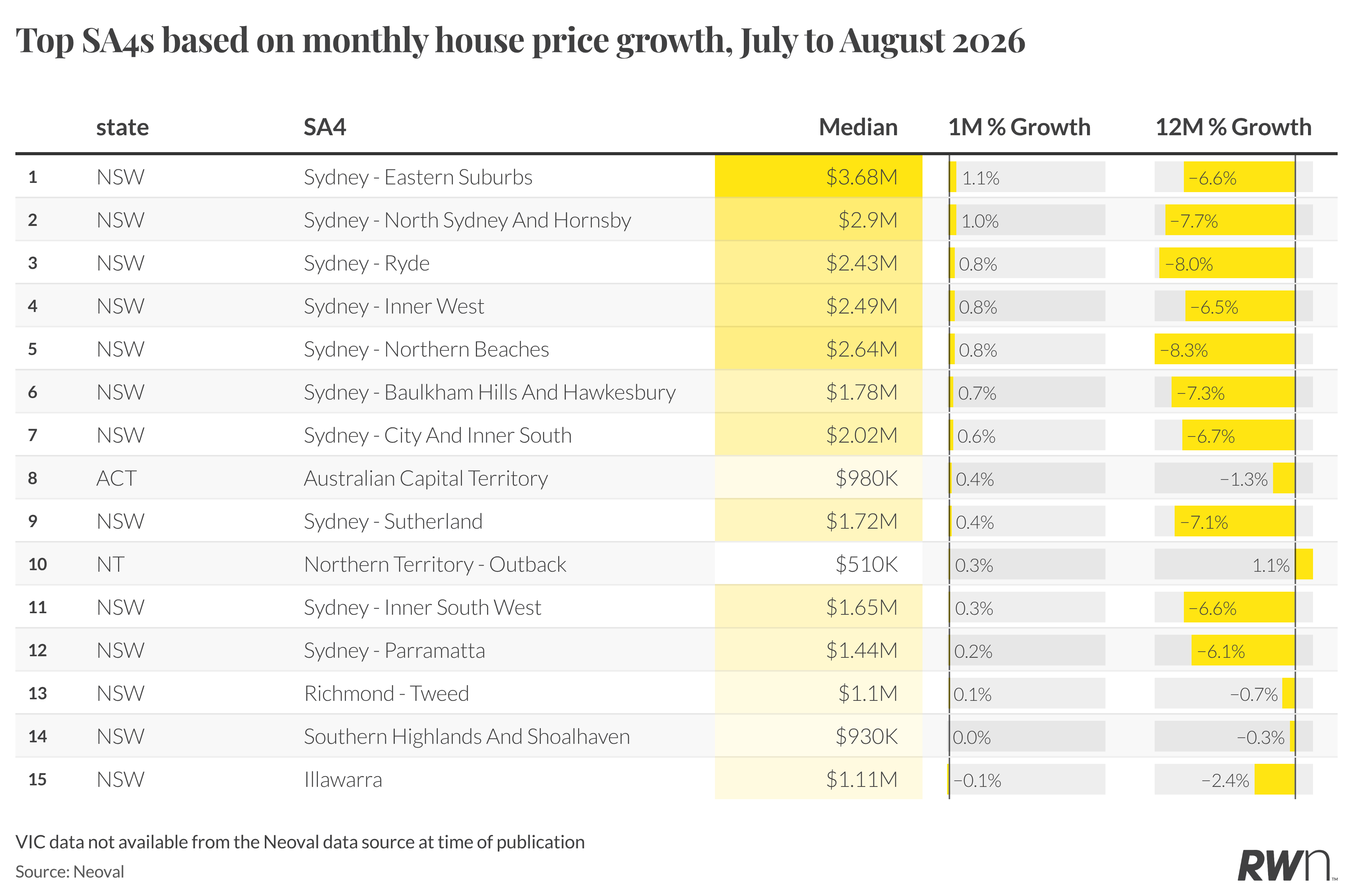
Pricing data is starting to reflect the same pattern. Premium Sydney suburbs, still falling in July, recorded some of the strongest monthly price growth in August, with the Eastern Suburbs up 1.1% and North Sydney and Hornsby up 1%, though annual declines of 6–8% remain substantial.
Herron Todd White's August review found lending conditions still softening across the board even after the RBA's August rate hold, a backdrop that lines up with Conisbee's own caution that the recovery remains fragile, "particularly at the premium end where borrowing capacity is highly sensitive to interest rates."