Bank forecasts flat prices nationally in 2026 as tax overhaul and rate rises compound market pressure

Tax changes in the federal Budget are set to trigger a sharp and sustained withdrawal of investor demand from Australia's housing market from mid-2026, according to Westpac's June Housing Pulse report.
The reforms remove negative gearing treatment for new investor purchases of existing properties — under which losses can be deducted from other income — and replace the current flat 50% capital gains discount with CPI indexation.
Existing investors retain access to negative gearing under grandfathering provisions, creating a strong incentive for this group to hold rather than sell. Newly built dwellings are exempt from the changes and are expected to attract greater interest from new investors.
 "Australia's housing markets are facing into a more challenging and uncertain outlook," said Matthew Hassan (pictured right), head of Australian macro-forecasting at Westpac. "Tax changes announced in the federal Budget are set to drive a major shake-up with investor demand now expected to see a sharp and sustained pull-back from mid-2026."
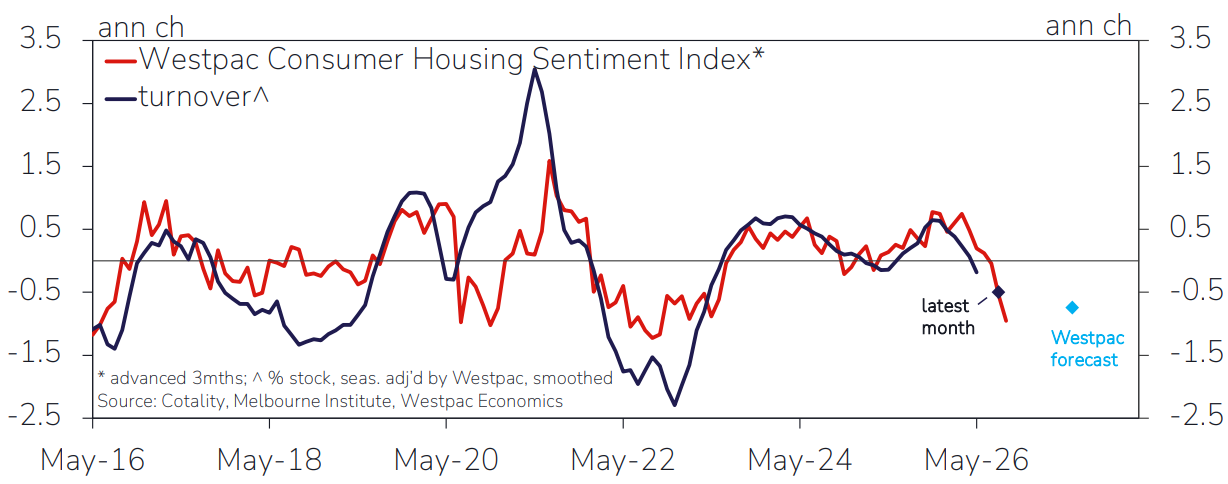
Westpac expects overall market turnover to fall by 20% and national prices to decline by approximately 2%, leaving them broadly flat across calendar 2026. More pronounced corrections are forecast in Sydney and Melbourne, while price growth in Brisbane, Adelaide and Perth is expected to slow but remain positive for the full year.
Consumer sentiment data supports the forecast. Westpac's Housing Sentiment Index has fallen sharply, consistent with the forecasted decline in turnover. House price expectations have pulled back but remain above the net negative levels recorded in 2022 and in prior cycles, suggesting prices are reasonably anchored. "Our June Housing Pulse report shows the initial sentiment reaction is broadly consistent with this assessment," Hassan said.
Supply constraints, population-driven demand and an anticipated reluctance among existing investors to sell are expected to limit downside risk. However, elevated uncertainty combined with a sharp drop in transactions could produce a more pronounced near-term market pause.
A second risk factor has emerged since Westpac's February report. A global energy shock linked to conflict in the Middle East is adding to domestic inflation pressures, increasing the likelihood of further interest rate rises. "With conditions already slowing in response to rising interest rates and more rate increases still on the cards, a more pronounced correction now looms," Hassan reiterated.
Want to be regularly updated with mortgage news and features? Get exclusive interviews, breaking news, and industry events in your inbox – subscribe to our FREE daily newsletter. You can also follow us on Facebook, X (formerly Twitter), and LinkedIn.