QV data shows flat national values as surveys point to a cautious buyer’s market.

New Zealand house prices have started 2026 in low gear, with national values effectively treading water against a backdrop of rising living costs, geopolitical risks, and a looming general election.
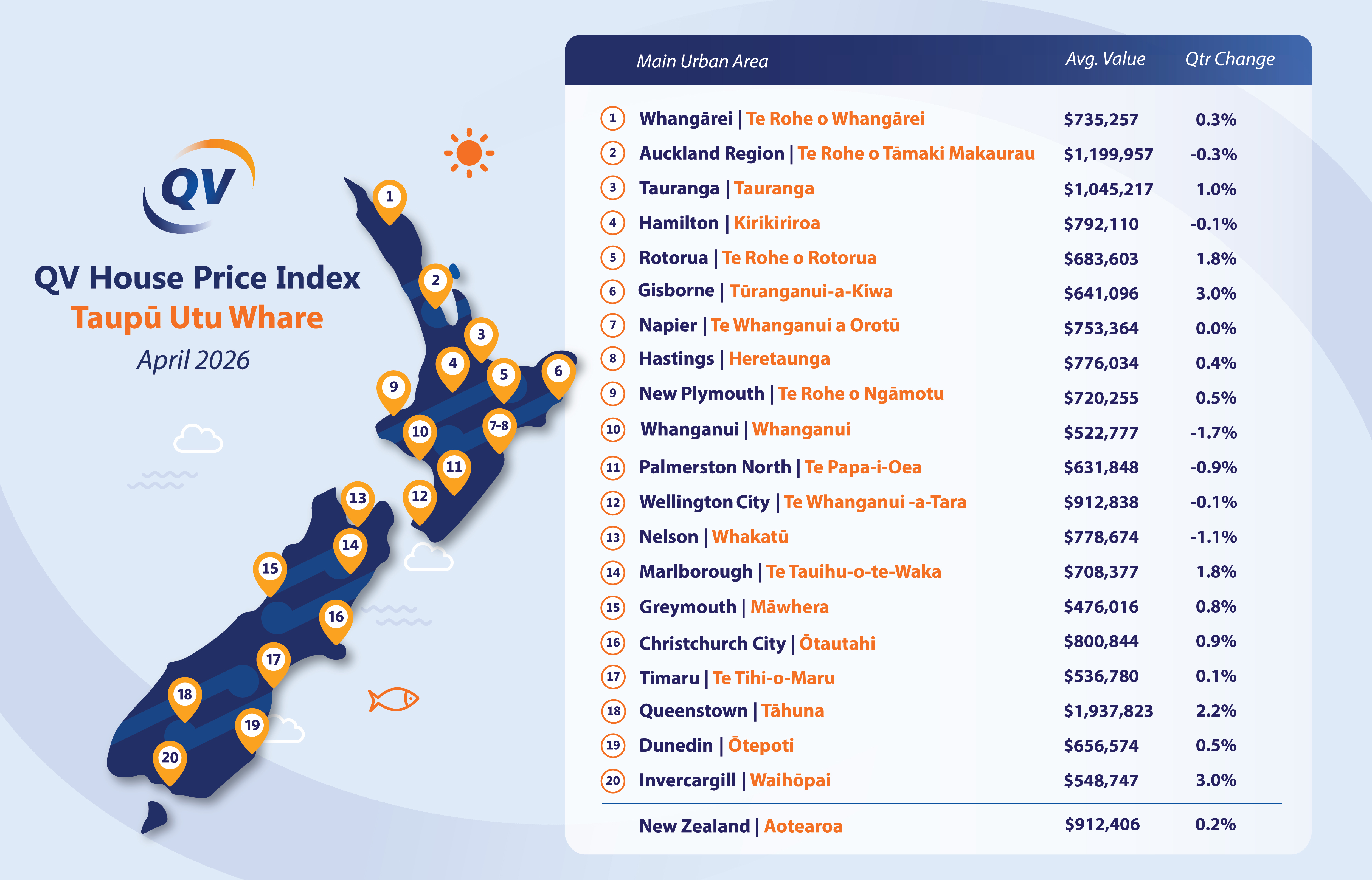
Quotable Value’s latest House Price Index shows the average national residential property value rose just 0.2% over the quarter to April, to $912,406. That is only 0.3% higher than at the start of the year and 0.2% below the level recorded a year earlier, after a run of flat or marginal monthly moves.
QV spokesperson Simon Petersen (pictured) said the figures reflected a market in no hurry to move.
“The housing market is essentially in a holding pattern at the moment, with no real sense of urgency from either buyers or sellers, just an abundance of caution,” Petersen said.
Petersen pointed to interest rates, cost‑of‑living pressures, and wider global tensions as key factors in that restraint, with buyers taking longer to commit and no clear catalyst for a sharp upswing in prices.
Survey evidence from the latest NZHL Property Report by Tony Alexander also points to a softer backdrop, with worries about mortgage rates and the risk of post‑purchase price falls weighing on buyer sentiment.
Auckland and Wellington soften, Christchurch edges ahead
Among the main centres, Auckland and Wellington recorded small quarterly declines, while Christchurch remained one of the few markets to post gains. The average value in Auckland fell 0.3%, leaving the region 2.8% below year‑earlier levels, while Wellington values eased 0.1%. Christchurch posted a 0.9% quarterly increase and is now above its level of a year ago.
Across the islands, the South continued to outperform. Most monitored South Island centres recorded either flat or mildly positive growth, with only Nelson showing a quarterly decline of 1.1%. Canterbury values rose 0.9% over the period, with Christchurch up 0.9% to $800,844 and 3.1% higher than a year earlier.
“Bunking the general flatness trend, certain pockets of the property market have carried some relatively modest momentum through the first four months of 2026, particularly in Canterbury, Otago, Southland, and on the West Coast,” Petersen said.
Regional markets steady but outlook still clouded
QV’s regional breakdown shows a similar picture of subdued but generally stable conditions.
Bay of Plenty values rose 0.9% over the quarter, led by Gisborne, Rotorua, and Tauranga, while Southland posted a 2.5% gain and Invercargill values rose 3% over the three months and 9.5% over the year.
In contrast, centres such as Hamilton, Napier, Hastings, and Palmerston North recorded flat or slightly negative quarterly changes, with annual movements clustered close to zero.
Recent Cotality–Westpac figures show first‑home buyers remain an important source of activity, making up 27.5% of purchases in Q1 2026, close to record highs even as overall sales volumes stay subdued.
Looking ahead, Petersen said much would depend on interest‑rate settings and how broader economic conditions evolve through the remainder of 2026.
“Looking at the rest of the year ahead, much will depend on what happens to interest rates and how broader economic conditions continue to evolve. But the most likely scenario in the shorter term is a continuation of the steady, balanced market we’ve seen so far this year,” he said.
Stay informed with the latest housing market trends and mortgage insights — subscribe to our free daily newsletter.