Economists argue that the Iran war oil shock has lifted inflation but not enough to justify another hit to borrowers
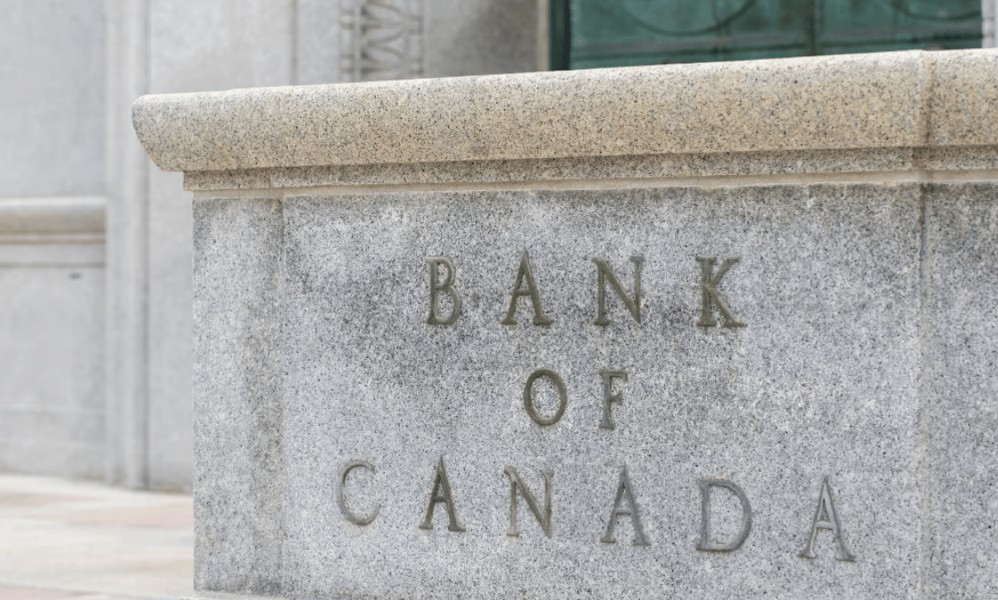
The Bank of Canada is expected to hold its policy rate at 2.25% on Wednesday, with economists arguing that the Iran war oil shock has lifted inflation but not enough to justify another hit to borrowers.
Canada’s headline inflation rate climbed to 2.4% in March. Higher crude costs pushed up gasoline prices, taking inflation to its highest level since December but still near the midpoint of the bank’s 1%–3% target range.
At the same time, growth has remained subdued after Canada narrowly avoided the recession many feared during the US tariff standoff.
Oil shock seen as a temporary test
Governor Tiff Macklem already signalled that policymakers would “look through” the initial pop in prices from the oil shock, provided inflation expectations stayed anchored. A majority of economists shared that view.
“What the bank is looking for is whether these expectations of inflation become ingrained among consumers and among businesses, and right now, we are not seeing that,” Gemma Stanton‑Hagan, director of economics and policy at PwC, said.
“There’s a lot of weakness in different areas of the economy,” she said, adding those factors appeared to support a hold by the Bank of Canada.
RBC assistant chief economist Nathan Janzen said he is expecting the bank to stay on the sidelines as it monitors how higher energy prices filter through the economy.
It would take a few months, he said, before knock‑on effects from the war spread beyond gas prices into other parts of the consumer basket.
BMO senior economist Shelly Kaushik point to the bank’s preferred core inflation measures as another reason to pause.
“Headline inflation did accelerate, but not as much as expected, given the outbreak of the war, and core inflation metrics were well‑behaved,” she said.
Derek Burleton, vice president and deputy chief economist at TD Bank Group, told a recent industry audience that policymakers appear comfortable with the current level of rates.
“The rate is at 2.25%. It’s been stuck there for a little while now. They’re at a level they’re kind of comfortable with,” Burleton said.
“It’s the low end of what they call the neutral rate.”
Derek Burleton, Vice President and Deputy Chief Economist at TD Bank, says the Bank of Canada is likely to maintain its 2.25% policy rate, viewing recent inflation driven by geopolitical tensions as a temporary shock.https://t.co/HEG4D9j2Gh
— Canadian Mortgage Professional Magazine (@CMPmagazine) April 27, 2026
Markets price hikes, economists stay cautious
Money markets are still pricing in the chance of a rate hike later this year, even as a Reuters poll showed most forecasters expect no move in 2026. That leaves a familiar gap between market bets and economist projections, centred on how long oil prices would stay elevated and whether wage growth and inflation expectations would drift away from the bank’s 2% target.
Tony Stillo, director of Canadian economics at Oxford Economics, said the central bank faces the classic supply‑shock trade‑off.
“Short‑term expectations are built off of ... grocery store prices, gasoline prices. Those are going to rise, and appropriately so, because in the near term, there will be an uptick,” he said.
“It’s the long‑term inflation expectations that are key to the Bank of Canada, and they’ll be monitoring those.”
Economists including IG Wealth Management’s Philip Petursson argued that, absent the Iran war, the bank might already have been debating rate cuts.
Others warned that if the conflict escalates or the Strait of Hormuz stays constrained for longer than expected, policymakers could be forced to choose between weaker growth and stubbornly higher prices.
Make sure to get all the latest news to your inbox on Canada’s mortgage and housing markets by signing up for our free daily newsletter here.